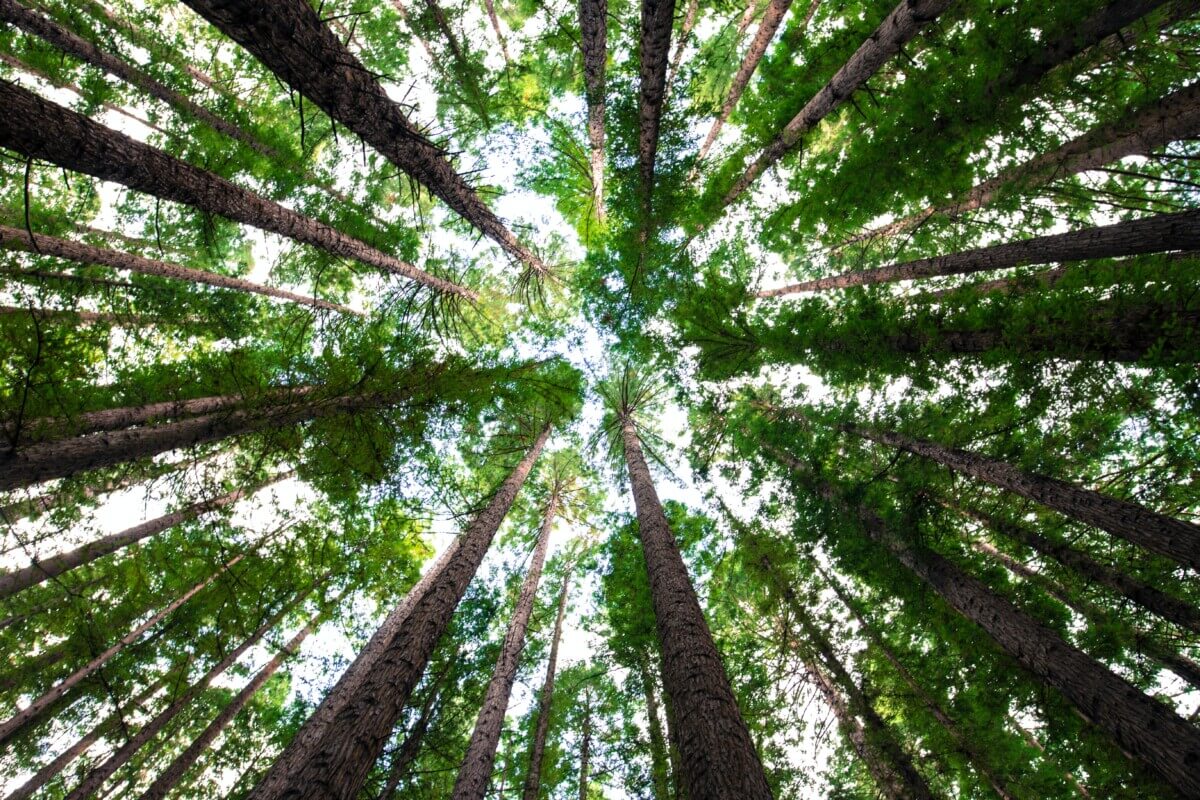
(Photo by Arnaud Mesureur on Unsplash)
In A Nutshell
- Tree planting’s climate role is smaller than once believed: A major Science study finds only ~389 million hectares worldwide are actually suitable for afforestation and reforestation, which is far less than earlier claims.
- Carbon savings are limited: Even if all that land were planted, forests would capture about 40 billion tons of carbon by 2050, just a little more than one year’s worth of global fossil fuel emissions.
- Location matters: Tropical countries like Brazil, Colombia, China, and India stand to benefit most from tree planting, while colder regions see slower growth and reduced impact.
- Implausible pledges: Many African nations have promised far more land for tree planting than is realistically suitable, often targeting ecosystems like savannas where forests may not survive and could harm biodiversity.
- Key takeaway: Planting trees can help, but it cannot replace deep cuts to fossil fuel emissions. Science-based guidelines are needed to ensure forests complement (rather than distract from) emissions reduction.
Planting trees is seen as a cornerstone of efforts to avert climate breakdown. But a major new study in Science finds their potential has been drastically overstated – and relying on forests to offset carbon emissions could distract from the urgent need to cut fossil fuel use.
The researchers, a team of scientists mostly based in China, looked at both afforestation (creating new forests) and reforestation (restoring cleared ones). Unlike earlier studies, they carefully limited the land assumed to be available to avoid unintended consequences.
For instance, planting trees in snowy regions darkens the surface, since trees are darker than snow. This reduces reflectivity and can actually lead to further warming. Forests can also compete with grassland for water or threaten biodiversity.
Previous studies varied hugely in the area of land that they thought was suitable for planting trees, ranging from 200 million to 2,000 million hectares. Once those unsuitable areas are removed, the new study calculates just 389 million hectares worldwide were left suitable for forestation.
If this whole area was planted, the carbon absorbed by 2050 would amount to about 40 billion tons – much lower than previous estimates. But even out of this smaller land area, only about 120 million hectares are currently earmarked for forestation, reducing the climate benefit to only 12.5 billion tons of carbon by 2050. That’s a big number, but it’s only slightly more than a single year of global fossil fuel emissions.
Nature-based solutions such as tree planting can help, but they are nowhere near enough to keep global heating below +1.5°C or even +2°C. Cutting emissions must remain the top priority.
Nevertheless, the authors argue that forestation incentives should be rolled out urgently in countries where the benefits are greatest – particularly Brazil, Colombia, China and India, where wet tropical conditions make trees grow fast. By contrast, in the U.S. and Russia, colder weather and slower tree growth means much more land would be needed to have the same impact.
Implausible Pledges
One of the most striking findings of this study is that across Africa, many governments have pledged far more land for forestation than the models consider suitable for tree planting.
For example, Ethiopia has committed to reforesting 10.2 million hectares but the study finds only 0.5 million hectares are actually suitable. Similar gaps are apparent in Cameroon, South Africa and other countries.
The gap arises because the new study only counts land that is naturally suited to forests, based on climate soils and existing vegetation. Many government pledges, by contrast, include ecosystems such as savannas or grasslands. Across Africa, 70 million hectares of land committed to tree planting – an area the size of France – fall into this category.
Savannas are constrained by low rainfall, and trees are kept in check by hungry herbivores and frequent fires. The height that a woody plant in a savanna needs to reach to survive the regular burning is called the “fire trap” for a reason, as many saplings do not make it above that threshold. Planting forests here is not only unlikely to succeed, it also risks damaging unique ecosystems and biodiversity. And crucially, replacing natural savanna with plantations is not equivalent to restoring or protecting a tropical rainforest.
One limitation is that the new study did not include agroforestry – integrating trees into farmland – which could add more potential for carbon storage. But the bigger lesson from news that the climate potential of forests may have been exaggerated is that planting trees should complement, not replace, rapid emissions cuts.
To make the most of forests, the world needs better science-based guidelines for where trees will thrive, and stronger commitments to act quickly. The clock is ticking.
Heiko Balzter, Director of Institute for Environmental Futures, University of Leicester. He receives funding from UK Research and Innovation, the European Space Agency, and Defra. He is affiliated with the Labour Party and is a member of Friends of the Earth.
This article is republished from The Conversation under a Creative Commons license. Read the original article.


