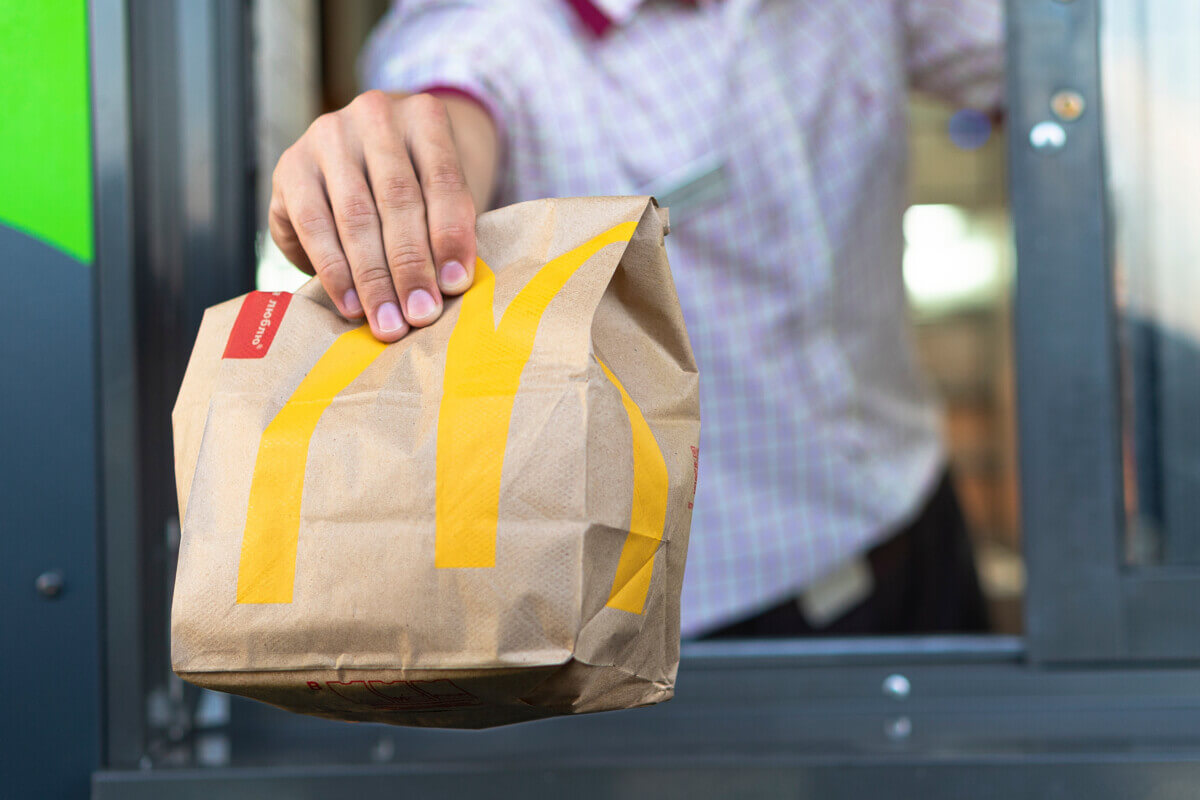
You may be more likely to visit McDonald's instead of grocery shopping if you experience heavy traffic. (© gargantiopa - stock.adobe.com)
In a nutshell
- Traffic delays make people more likely to choose fast food over grocery shopping. The study found that even a small increase in traffic congestion leads to a measurable rise in fast food visits and a slight drop in supermarket trips.
- The effect is strongest during the evening rush hour. Congestion between 5 and 7 p.m., right around dinnertime, had the most impact on food choices, especially for drivers heading away from downtown Los Angeles.
- Time lost to traffic may be quietly shaping public health. While the individual change is small, researchers estimate this adds up to 1.2 million extra fast food visits per year in LA County alone, reinforcing concerns about how everyday infrastructure affects diet and long-term health.
URBANA, Ill. — Every time you sit in traffic for an extra few minutes, you become slightly more likely to swing by McDonald’s instead of stopping at the grocery store. It sounds absurd, but new research tracking millions of food purchases across Los Angeles has found that traffic jams are quietly reshaping how America eats, one delayed commute at a time.
The study, published in the Journal of Urban Economics, reveals that when traffic gets worse, people are significantly more likely to hit up fast food restaurants instead of grocery stores. The effect might seem small on an individual level, but researchers calculate it translates to roughly 1.2 million additional fast food visits per year in LA County alone.
Time scarcity represents one of the strongest predictors of fast food consumption, and their findings provide the first solid proof that losing time to traffic congestion directly causes people to make unhealthier food choices.
With traffic congestion plaguing cities nationwide, this research suggests our clogged highways may be quietly contributing to the obesity epidemic that affects more than one-third of American adults.
Traffic and Food Choices
To figure this out, researchers from Vanderbilt University, University of Pittsburgh, and University of Illinois tracked an enormous amount of data over three years, from 2017 to 2019. They monitored daily visits to 20,865 food establishments across Los Angeles County—including fast food restaurants, full-service restaurants, convenience stores, and supermarkets—using location data from millions of smartphones.
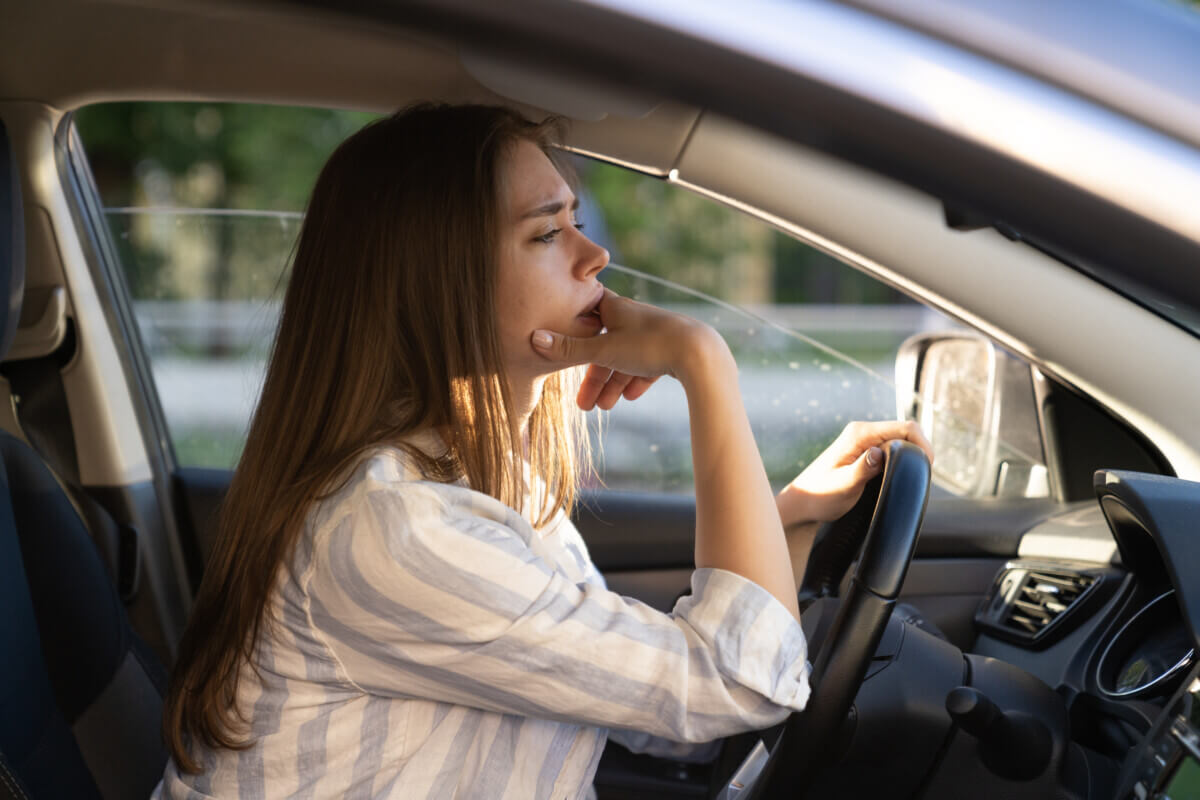
At the same time, they tracked traffic speeds at 2,546 highway monitors throughout the county, calculating how much extra time drivers lost when traffic slowed below normal speeds. Los Angeles proved an ideal testing ground since more than half of all driving in the greater LA area happens on highways, making highway speeds a key factor in overall commute times.
Researchers focused specifically on weekdays, when time constraints matter most for working Americans trying to balance commutes with meal preparation. Their analysis controlled for factors like weather, holidays, and seasonal patterns to isolate the pure effect of traffic delays on food choices.
This study is unique because it uses naturally occurring variations in traffic, meaning the day-to-day fluctuations in congestion that drivers can’t predict or control. These random slowdowns might result from minor accidents, debris on the road, or even “phantom traffic jams” where one driver braking slightly too late creates a ripple effect of delays behind them.
The Connection Between Rush Hour and Fast Food
Time pressure reshapes our eating habits. When traffic delays increased by one standard deviation, equivalent to adding about 31 seconds of delay per mile driven, fast food restaurant visits jumped by 1 percent. That might not sound like much, but it adds up quickly across a population of nearly 7 million registered drivers in LA County.
“It might not be intuitive to imagine what a 30-second delay per mile feels like,” says study author Becca Taylor from the University of Illinois Urbana-Champaign, in a statement. “I think of it as the difference between 10 a.m. traffic and 5 p.m. traffic.”
Meanwhile, supermarket visits decreased as traffic worsened, though this effect was smaller and less consistent. Convenience stores showed little change, while full-service restaurants saw a moderate increase in visits during heavy traffic periods.
The strongest impacts occurred during afternoon rush hour traffic, particularly on highways leading away from downtown LA, exactly when people are commuting home and deciding what to do about dinner.
“If there’s traffic between 5 and 7 p.m., which happens to be right around the evening meal time, we see an increase in fast food visits,” adds Taylor. “Drivers have to make a decision about whether to go home and cook something, stop at the grocery store first, or just get fast food.”
This makes sense when you consider the time trade-offs involved. The average American spends 37 minutes per day on food preparation and cleanup at home, while fast food typically takes less than five minutes to obtain. Grocery shopping requires an average of 41 minutes per trip, plus additional time for meal preparation afterward.
Health Costs of Traffic Congestion
These findings reveal how even forces outside our control, like transportation infrastructure, can shape our health behaviors. Americans already eat fast food at unprecedented rates, with the industry growing by more than 2 percent annually and serving meals to over one in three Americans daily.
Fast food tends to be higher in fat, sodium, and calories while being lower in fruits, vegetables, and nutrients compared to home-cooked meals. The average fast food visit packs 836 calories, 42 percent of the recommended daily intake for adults.
Research has linked increased consumption of food away from home to rising rates of obesity, heart disease, and diabetes. One study found that eating just one additional meal away from home per week translates to gaining an extra two pounds every year.
Currently, obesity-related health issues contribute to over $200 billion annually in healthcare costs and more than $4 billion in workplace absenteeism costs. Diet-related chronic diseases kill over one million Americans each year.
Researchers tested their findings using multiple approaches to ensure the results weren’t simply coincidental. They examined traffic patterns at different times of day, looked at inbound versus outbound traffic separately, and even used traffic accidents as a way to create random variations in congestion. All approaches pointed to the same conclusion: traffic delays cause people to choose fast food over healthier alternatives.
People weren’t simply shifting their fast food visits from one day to another in response to traffic. The study found no evidence that heavy traffic on Monday led to fewer fast food visits on Tuesday, suggesting the additional visits represent a net increase in fast food consumption.
Effects were consistent across different income levels up to the 75th percentile, though the wealthiest neighborhoods showed less sensitivity to traffic delays when making food choices.
Investments in transportation infrastructure could yield unexpected health benefits. Reducing traffic congestion through road improvements, expanded public transportation, or flexible work arrangements might help Americans make healthier food choices without requiring any direct changes to nutrition policies or food marketing.
Work-from-home policies, which became more common during the COVID-19 pandemic, also might have unintended health benefits by reducing the time pressures that drive fast food consumption.
This study provides a new lens for evaluating the true costs of gridlock. Beyond the obvious expenses of lost time and wasted fuel, traffic jams may be quietly undermining American health one drive-thru visit at a time. The drive-thru line starts in the highway backup, and the solution might be as simple as getting people home faster.
Paper Summary
Methodology
Researchers analyzed three years of data (2017-2019) from Los Angeles County, tracking daily visits to 20,865 food establishments using smartphone location data from SafeGraph, which covers approximately 10% of US mobile devices. They simultaneously monitored traffic speeds at 2,546 highway monitors throughout the county, calculating delays relative to a free-flow speed of 60 mph. The study focused on weekdays only and controlled for factors like weather, holidays, and seasonal patterns using statistical models with store, time, and location fixed effects.
Results
A one standard deviation increase in traffic delay (31 seconds per mile) led to a 1% increase in fast food restaurant visits, equivalent to 1.2 million additional visits annually in LA County. Supermarket visits decreased slightly during heavy traffic, while convenience stores showed little change and full-service restaurants had moderate increases. Effects were strongest during afternoon rush hours on outbound highways, confirming that time constraints during evening commute hours drive the pattern.
Limitations
The study only examined weekday traffic and store visits, potentially missing weekend substitution patterns. Data came from a single metropolitan area (Los Angeles), which may limit generalizability to other cities with different traffic patterns or food landscapes. The research measured store visits but not actual food purchases or consumption amounts. Additionally, the study couldn’t capture potential shifts to online food ordering or delivery services.
Funding and Disclosures
The authors declared no funding was received for conducting this study and reported no relevant financial or non-financial interests to disclose. The research was conducted independently without external financial support.
Publication Information
This study, “Slow traffic, fast food: The effects of time lost on food store choice,” was published in the Journal of Urban Economics (Volume 146, article number 103737) in 2025. The research was conducted by Panka Bencsik from Vanderbilt University, Lester Lusher from the University of Pittsburgh, and Rebecca L.C. Taylor from the University of Illinois, Urbana-Champaign. The paper was received in December 2023 and accepted in January 2025.


