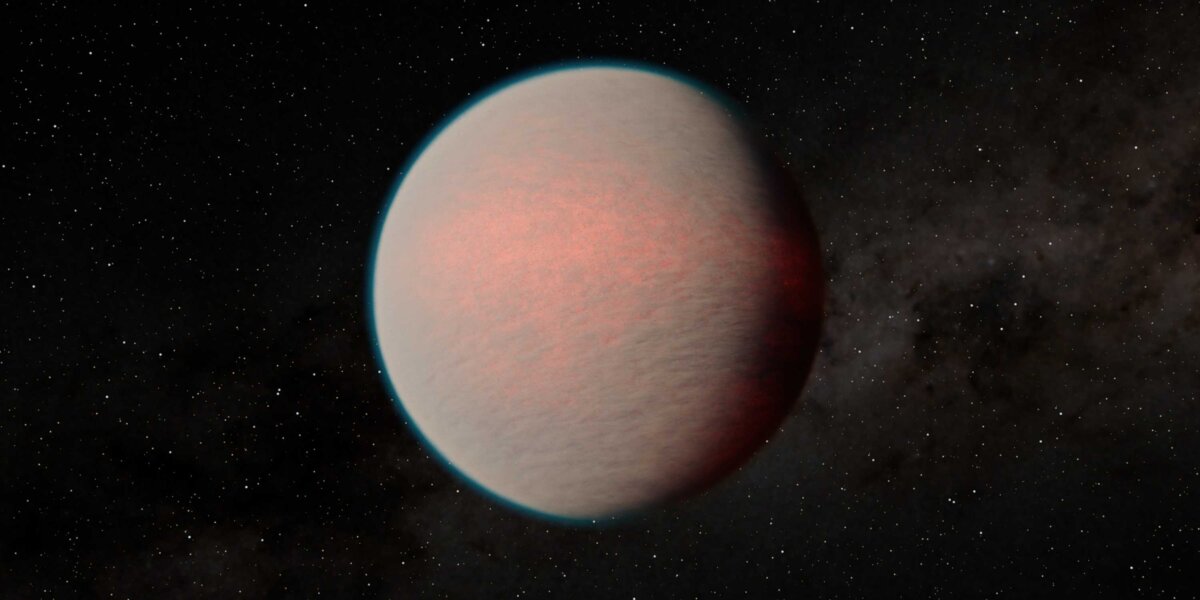
Magma ocean planets that contain water – like the earthlike exoplanet GJ 1214 b in this artist’s concept – will only host a tiny fraction of this water on their surface. The majority of it is stored deep in their interiors. (Image: NASA/JPL-Caltech/R. Hurt)
ZÜRICH, Switzerland — You need three necessities to support life as we know it: oxygen, food, and water. While scientists have found ancient traces of liquid water on the surfaces of planets like Mars, it’s never been enough to foster life. However, some astronomers think it still might be possible. Instead of relying on Earth as a model for life, an international team argues that perhaps it’s time to consider other paths for planets to potentially form and develop life.
This theory is the basis behind a new study published in Nature Astronomy. Using computer simulations, researchers have calculated a new model for water distribution on exoplanets — planets orbiting stars in other solar systems.
Scientists believe Earth’s water (the oceans) covers the surface of the planet, with an iron core surrounded by silicate bedrock underneath. For years, this model has been used to determine the habitability of exoplanets.
“It is only in recent years that we have begun to realize that planets are more complex than we had thought,” says Caroline Dorn, a professor for exoplanets at ETH Zurich, in Switzerland, in a media release.
Since most exoplanets are located close to their home stars, they are often scalding-hot worlds covered in magma. However, the high temperatures make it impossible for magma to cool and form a solid base of silicate bedrock like on planet Earth. Additionally, the scorching heat makes water evaporate in these magma oceans.
These conditions would typically make these planets a non-contender for supporting life. However, the new model used in the study found that water still exists on these young planets. Instead of the surface, it is found deep in the interior. When looking underneath the surface, researchers say the amount of water hiding inside exoplanets may be much higher than astronomers have thought.
Model calculations helped to uncover how water can continue to exist inside these extremely hot worlds. According to Dorn, the iron core inside the exoplanet takes time to form. A large chunk of iron starts as droplets in magma. The tiny bits of water merge with the iron droplets, allowing them to sink beneath the surface.
“The iron droplets behave like a lift that is conveyed downwards by the water,” explains Dorn.
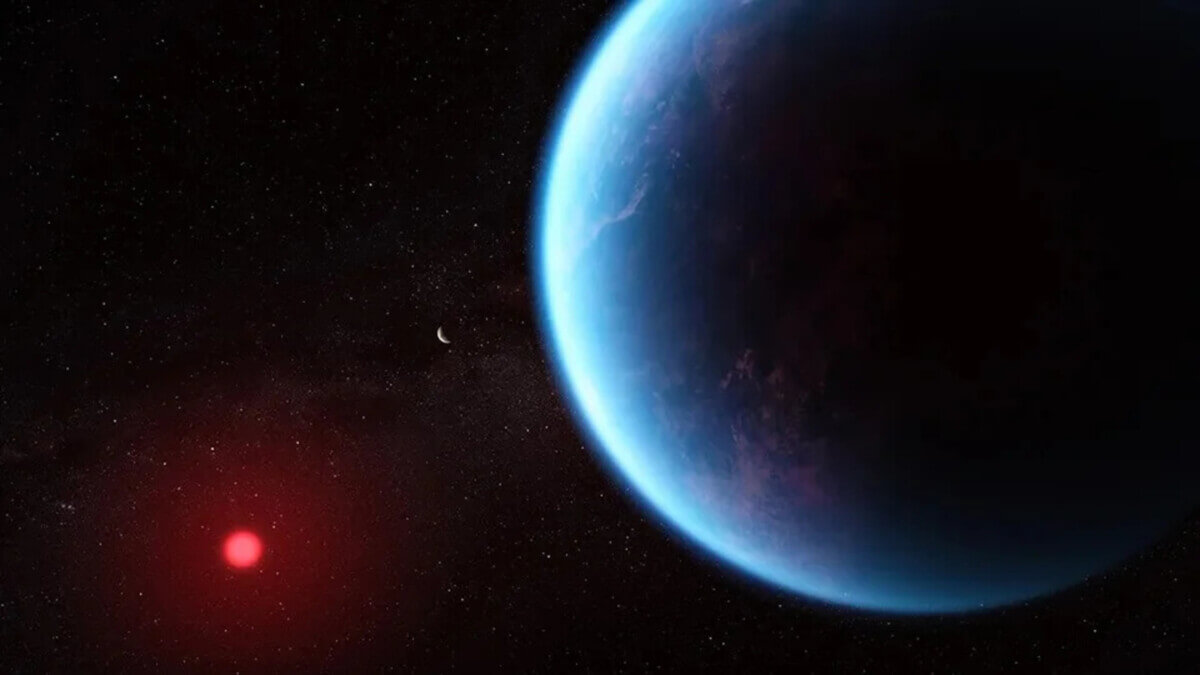
Scientists have long thought this phenomenon was only possible if a planet had moderate pressure, like what is seen on Earth. Until now, it was unknown if this reaction would happen on more giant planets with high-pressure interior conditions. The current study revealed that it still occurs. The greater the planet’s mass, the more water is absorbed into iron droplets and becomes part of the iron core.
Iron can absorb up to 70 times more water than silicates. However, this only occurs under specific conditions. With the high internal pressure in the core of exoplanets, water is still retained, but not in the presence of H20. Instead, it stays on as separate hydrogen and oxygen molecules.
The new results align with recent revelations about how planet Earth was formed. Four years ago, scientists made a surprising discovery: Earth’s oceans hold only a tiny amount of the planet’s water, mostly hidden deep in the planet’s core.
These new findings about where water is held on Earth made astronomers rethink their views of water distribution on other planets. Astronomers rely on telescopes to measure the weight and size of an exoplanet. Assuming certain conditions of these planets, these numbers are then crunched up to create mass-radius diagrams on a planet’s structure.
If the assumed conditions of solubility and water distribution are incorrect, then the volume of water may have miscalculated by up to 10 times the actual amount.
“Planets are much more water-abundant than previously assumed,” Dorn reports.
Understanding water distribution helps to understand a planet’s past and future. The presence of water helps compose a timeline of how these planets formed and developed. Water that has dropped to the interior of a planet is trapped forever. However, water dissolved in magma can find its way back up to the surface during mantle cooling. To put it simply, finding water on the surface of another planet means there’s probably a ton underground as well.
This idea is one goal of the James Webb Space Telescope. For two years, the telescope has been collecting data that could track down molecules in an exoplanet’s atmosphere. So far, scientists have only been able to measure molecules in the upper atmosphere, but this information could still be enough to understand a planet’s inner composition.
One planet that has caught the interest of astronomers is an exoplanet known as TOI-270d because of prior evidence of interactions between its magma ocean and atmosphere. Dorn and her team are also looking at planet K2-18b because of recent headlines that it could harbor potential life.
Looking beyond magma-rich exoplanets, the new findings could allow scientists to revisit the idea of life on super-Earths. These are planets with a larger mass than Earth and surfaces covered with deep oceans. It was assumed these water worlds could not harbor life because they contained high-pressure ice underneath that would stop the exchange of vital substances.
The current study suggests a low chance of finding a planet with deep water layers; more likely, water underneath a planet is trapped within the core. Therefore, it’s possible that planets with high water contents could produce Earth-like conditions which sustain life.


