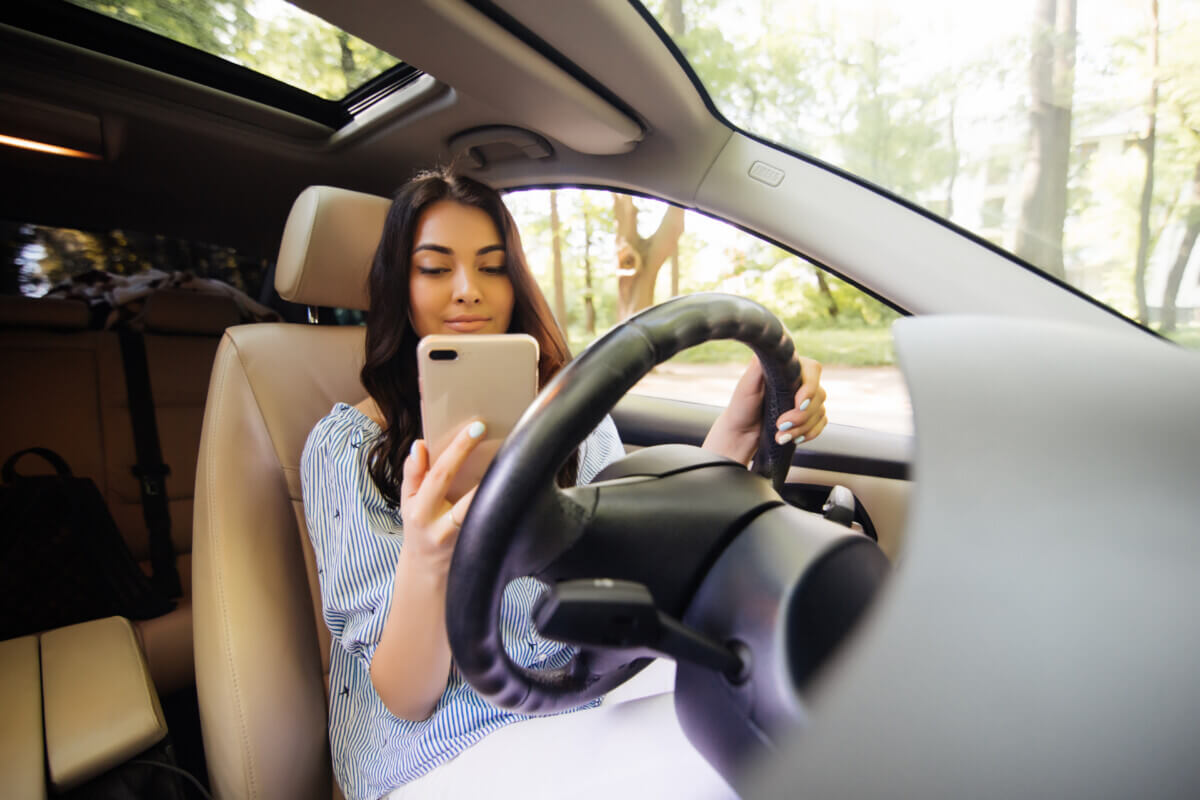
(© F8 Suport Ukraine - stock.adobe.com)
ANAHEIM, Calif. — The distracted teenage driver habitually glancing at their phone as they speed down the highway may sound like a cliche, but new research finds such scenarios are reality troublingly often. Study authors find that all teens, regardless of gender, were prone to risky behaviors like cellphone use and speeding while driving.
Among studied teen drivers, speeding occurred during roughly 40 percent of trips, while handheld phone use was noted in just over 30 percent of driving instances. Even worse, teens used a cellphone while speeding during five percent of studied trips.
“Our data gives us another insight into teen driving behaviors. Teens were speeding and using their cellphone while driving, but it did not occur in every trip. We want to encourage safe driving and find ways to help prevent those risky driving behaviors that can lead to a crash,” said lead study author Catherine McDonald, PhD, RN, FAAN, Associate Professor at the University of Pennsylvania School of Nursing and Co-Director of the PENN Injury Science Center, in a statement.
Study authors made use of a mobile app to track the driving skills of 165 adolescents living in Pennsylvania. On average, teens were aged 17.3 years old, and had held a driving license for eight months. Most trips taken by the teens were short; an average of under six miles per trip. Also, less than two percent of the trips were in the evening.
It’s worth noting that there were some observed driving differences between males and females. While hard braking and rapid accelerations occurred during about 10 percent of trips, males displayed such risky behaviors much more often. That being said, no notable differences were seen among males and females regarding speeding, cellphone use, or nighttime driving.
“Given the rapidly changing technology in the daily life of adolescents, this study also builds on previous research and helps to identify patterns related to cellphone use while driving among adolescents,” Dr. McDonald concluded. “Behavioral variations in this sample highlight opportunities for targeted interventions on risky driving.”
This research was presented at the 2022 American Academy of Pediatrics National Conference & Exhibition.


