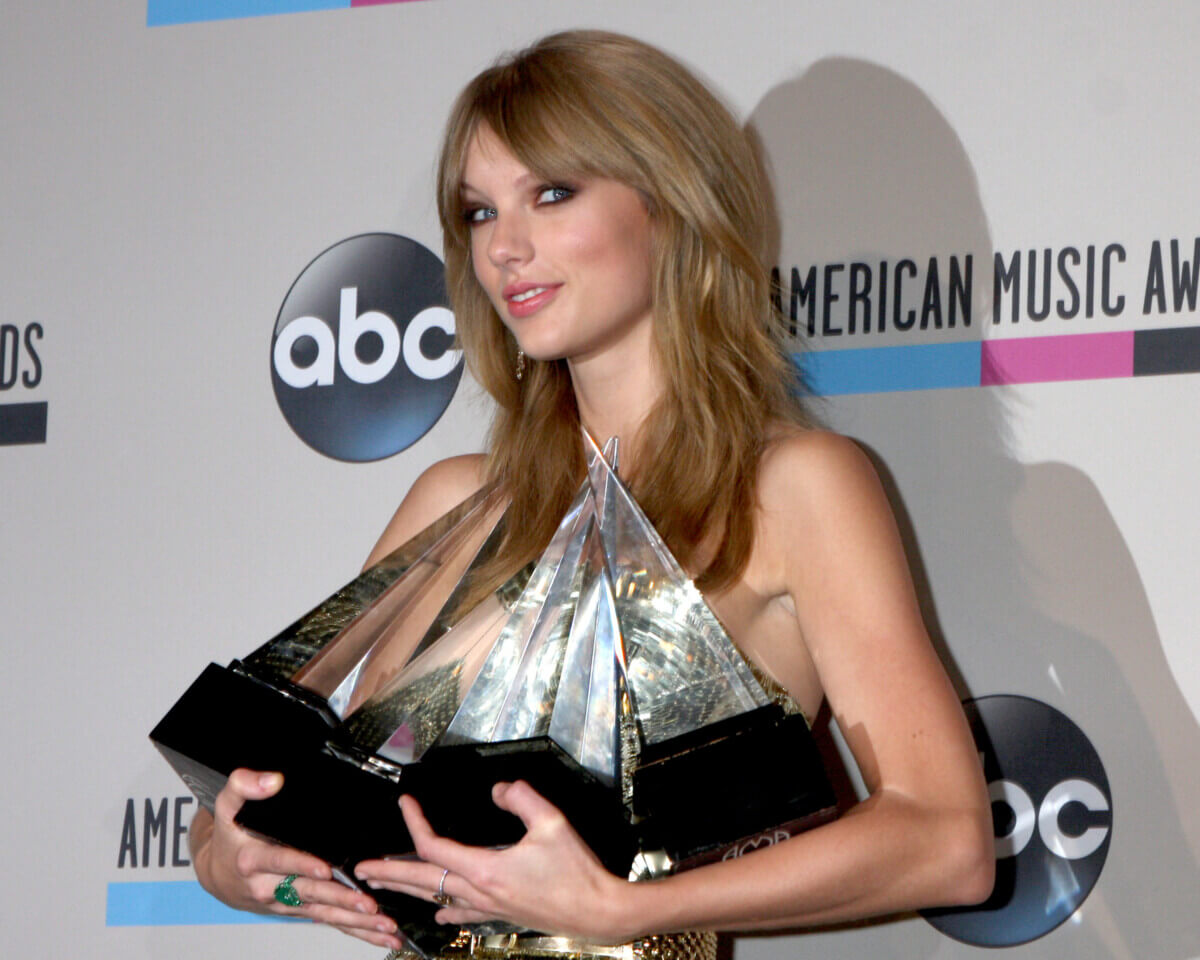
Taylor Swift at the 2013 American Music Awards (Kathy Hutchins/Shutterstock)
Why touring with superstars doesn’t guarantee stardom
In a nutshell
- Opening for major artists gives emerging musicians a short-term streaming boost—but it rarely leads to lasting fan growth. Developing artists saw spikes of up to 188% during tours, followed by steep post-tour drop-offs.
- Musical compatibility with the headliner matters. Opening acts whose style aligned with the main performer (like Phoebe Bridgers with Taylor Swift) were more likely to retain new listeners after the tour.
- Exposure comes at a cost. Nearly 40% of opening acts reported losing money on tour, and success often depended on factors like genre, audience alignment, and what the artist did after the tour to maintain momentum.
PHILADELPHIA — When an emerging artist opens for Taylor Swift on the Eras Tour, it seems like a fast-track to stardom. But according to new research from Drexel University, the cold truth about being an opening act for major music artists is that that initial spark of fame quickly fizzles out. While streaming numbers skyrocket during the tour, those gains typically evaporate once the spotlights dim and the tour buses roll out of town.
“There’s often a perception that opening for a major headliner is a guaranteed career boost for emerging artists—but the reality is far more complex,” says study author Jeff Apruzzese from Drexel University, in a statement. “There hasn’t been much research into how accurate that conventional wisdom really is. This research aims to unpack some of the less visible dynamics in the music industry—especially those that shape the career paths of rising artists.”
A recent study published in the Journal of the Music and Entertainment Industry Educators Association found that emerging artists who open for established performers experience significant increases in streaming during tours, sometimes jumping 188% for developing artists, but these bumps rarely translate into lasting success. For smaller artists especially, what goes up dramatically comes crashing down once the tour ends.
The research tracked streaming metrics for 57 opening artists using data from Pollstar, Songkick, and Chartmetric, providing some of the first quantitative evidence on whether opening slots actually help build careers in today’s streaming-dominated music industry.
“Taylor Swift Effect” Isn’t Enough to Sustain New Artists

Landing a coveted opening slot for a superstar like Taylor Swift does not automatically launch careers. The study specifically examined what Apruzzese calls the “Taylor Swift effect,” the phenomenon where association with Swift’s immense popularity impacts other artists and markets.
“Swift’s previous tours helped elevate artists like Ed Sheeran, Shawn Mendes, Justin Bieber and Florida Georgia Line early in their careers,” says Apruzzese.
One performer, Owenn (Swift’s former backup dancer who pivoted to music), saw streams plummet 75% after the tour ended despite initially enjoying a massive 188% surge while on the road.
The research provides a sobering reality check for artists trying to break through in a crowded music marketplace, where getting attention has never been more challenging despite more distribution options than ever.
To understand exactly how opening acts fare, Apruzzese examined streaming data for artists who opened on major tours in 2022 and 2023, including those supporting Taylor Swift, Ed Sheeran, Bad Bunny, Beyoncé, and Drake. He meticulously tracked their monthly Spotify listeners for the month prior to the tour, during the tour, and for four weeks after the tour concluded.
The smaller the artist, the bigger the streaming boost during the tour, but also the steeper the cliff they fell off afterward. Artists categorized as “developing” by Chartmetric saw streams jump about 18% leading up to and during tours in 2022, followed by a 6% drop post-tour. Similar patterns appeared in 2023 data.
Meanwhile, “superstar” artists who opened for other major acts actually continued gaining streams after tours ended, suggesting established acts benefit far more from these pairings than newcomers do. This points to what marketing experts call the “rich get richer” phenomenon.
Genre Matters
Genre also played a significant role in determining streaming success. Pop, rock, country, and hip-hop openers experienced the largest streaming increases in both 2022 and 2023, with Latin music showing particularly strong growth in 2023. This aligns with the overall dominance of these genres in the live music space over the past two decades.
Beyond the streaming numbers, Apruzzese surveyed 525 music consumers to understand how audiences interact with opening acts. While 81% of concertgoers reported arriving early enough to see opening acts perform, only 39% considered the identity of these openers when purchasing tickets.
It seems like ticket purchasing decisions aren’t significantly influenced by opening acts, but the concert experience itself provides valuable exposure to new artists for audiences.
The good news for struggling artists is that 68% of survey respondents said they’ve discovered new bands through their exposure to opening acts at concerts, and about half had subsequently purchased tickets to see an opening act when they returned to town as a headliner.
Musical Compatibility and Financial Realities
Compatibility between headliner and opener appears crucial for lasting success. Phoebe Bridgers, whose indie folk stylings share thematic and stylistic similarities with Swift’s recent albums like “Folklore,” saw more sustained streaming interest after opening for Swift compared to other acts with different musical styles.
For artists considering the financial implications of accepting an opening slot, the study delivered more sobering news: nearly 40% of surveyed artists reported taking a financial loss to open for larger acts. Unfortunately, this is the gamble many emerging performers make when accepting these opportunities.
With that being said, exposure through association with leading artists doesn’t mean sure-fire career advancement. Instead, it reveals a complex interplay of factors—genre compatibility, career stage, audience alignment, and concurrent activities outside the tour—that determine whether an opening act can convert temporary attention into dedicated fans.
Today’s music industry has been completely transformed by streaming platforms. While algorithms and playlists deliver personalized recommendations, live performance remains a powerful force for discovering new artists, even if that discovery doesn’t always stick.
Opening for established acts does provide valuable exposure, but it represents just one piece of the complex track to stardom. The temporary streaming spike might feel good in the moment, but converting those casual listeners into committed fans requires more than just borrowing someone else’s spotlight.
Paper Summary
Methodology
Apruzzese analyzed data from 57 opening artists on major tours in 2022 and 2023, utilizing information from music industry resources Pollstar, Songkick, and Chartmetric. The study tracked Spotify monthly listeners for four weeks before each tour began and four weeks after it concluded to measure changes in streaming engagement. Artists were categorized according to Chartmetric’s ranking system as “developing,” “mid-level,” “mainstream,” “superstar,” or “legendary.” Additionally, the research included two surveys: one with 525 music consumers about their concert attendance and engagement with opening acts, and another with 47 artists who had experience performing as opening acts. The study also compiled historical data about top tours from 2002 to 2023 to identify genre trends in live music.
Results
The study found that developing artists experienced significant increases in streaming numbers during tours (approximately 18% in 2022), followed by substantial declines after tours concluded (6% drop post-tour in 2022). Meanwhile, more established artists showed more stable engagement patterns, with superstar artists sometimes continuing to see streaming increases after tours ended. Pop/rock, country, and Latin music genres showed the largest streaming gains. Detailed analysis of Taylor Swift’s Eras Tour openers revealed varying impacts based on musical compatibility with Swift’s style. Consumer surveys indicated that while most attendees (81%) arrive early enough to see opening acts, only 39% consider openers when purchasing tickets, though 68% reported discovering new artists through these performances.
Limitations
The research acknowledged several limitations. The selection process for opening acts varies widely based on personal connections, business relationships, or commercial strategies, making it difficult to identify clear patterns of success. Multiple factors beyond touring can influence streaming metrics, including social media activity, festival appearances, and new music releases. The genre classification system used (AllMusic) combines pop and rock into a single category, potentially obscuring distinctions between these styles. Additionally, reliance on self-reported survey data introduces the possibility of response bias in consumer behaviors.
Funding/Disclosures
The paper does not explicitly mention any external funding sources or conflicts of interest. The research was conducted by Jeff Apruzzese of Drexel University.
Publication Information
The article “Did You Catch The Opener?…Exploring the Transformative Dynamics of Opening Performances: A Quantitative Analysis on Streaming for Emerging Artists” was published in the Journal of the Music and Entertainment Industry Educators Association (Volume 24, Issue 1, 2024, pages 1-13). It appears to be available through open access under the Creative Commons Attribution-NonCommercial-NoDerivatives 4.0 License.


