
Is one annual checkup really enough to ensure older adults are fit to drive? (Photo by Andrea Piacquadio from Pexels)
A Quiet GPS Device In Cars May Be The Next Big Dementia Detector
In A Nutshell
- Researchers tracked 298 older drivers with a plug-in GPS device that logged every trip for up to 40 months.
- Drivers with mild cognitive impairment gradually drove less, went out at night less often, and visited fewer unique places.
- Four simple driving metrics separated mild cognitive impairment from normal cognition with about 82% accuracy.
- Continuous driving data will not replace doctors, but it could give families early, objective clues that an older driver needs support.
Countless people get behind the wheel of a car every day and make it safely to their destination, but all it takes is the slightest mistake or unintentional movement for just another day to turn into an emergency. Older adults and the elderly are particularly prone to such mishaps, but few are willing to give up their keys nonchalantly. It usually takes a conversation (or several) with loved ones and medical professionals.
Now, research reports that a small GPS device plugged into the car dashboard might detect early cognitive decline before it shows up during an annual checkup.
Scientists tracked 298 older drivers for just over three years, logging every turn, speed change, and trip. Those with mild cognitive impairment drove less often, avoided nighttime travel, and steadily shrank their world. Those patterns distinguished them from cognitively healthy drivers with 82% accuracy.
“Driving integrates multiple cognitive, sensory, and motor systems and may serve as a real-world indicator of functional decline in aging,” wrote researchers from Washington University School of Medicine in a study published in Neurology
While doctors only see patients for 20 minutes once a year, a GPS device watches every drive, every day. And according to this research, daily driving patterns identified cognitive impairment almost as accurately as combining demographics, genetic risk factors, and formal neuropsychological testing.
GPS Tracking Reveals Dementia Warning Signs In Older Drivers
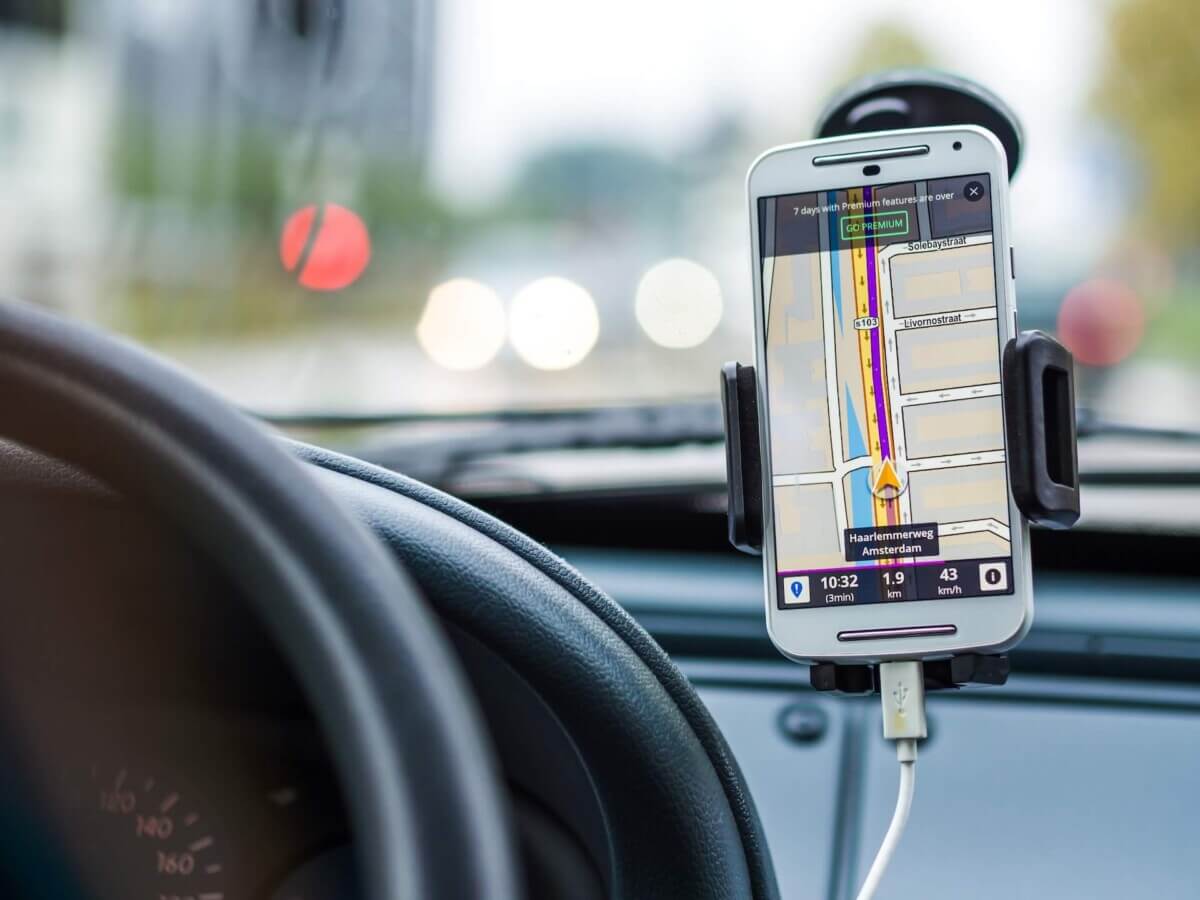
Researchers recruited 298 community-dwelling older adults and installed commercial GPS dataloggers in their vehicles. The devices were off-the-shelf units that plug into the car’s diagnostic port.
The dataloggers recorded when people drove, where they went, how fast they traveled, and whether they hit the brakes hard. Software calculated things like “entropy,” which measures how predictable someone’s driving destinations are, and “radius of gyration,” which tracks how far from home people venture.
Each year, participants visited a clinic for cognitive assessments. Among the 298 drivers, 56 had mild cognitive impairment at baseline. The remaining 242 maintained normal cognition throughout the study. Anyone who transitioned from normal cognition to MCI during the study was excluded from the analysis to keep the comparison groups clean.
The researchers compared how driving behaviors changed over 40 months between these two groups, controlling for age, sex, race, education, and the APOE e4 gene variant, which raises Alzheimer’s risk.
The Subtle Changes in Driving Habits That Emerged
Rather than tracking crashes, researchers focused on gradual changes in everyday driving habits.
Monthly trip counts dropped for both groups over time—that’s normal aging. But drivers with MCI showed different patterns in what kinds of trips they made. Those with normal cognition took more medium-distance trips, between five and 10 miles, at baseline. Over time, MCI drivers showed sharper declines in long trips over 10 miles.
Nighttime driving told a clearer story. Neither group differed much at baseline, but MCI drivers reduced nighttime trips more steeply as months passed. Daytime driving also declined in both groups over the study period.
Then there’s the “shrinking world” phenomenon. Drivers with MCI started with higher maximum distances driven and broader radius of gyration, covering more ground than their cognitively normal peers. But those numbers plummeted faster. Their “random entropy”—how varied their destinations were—also declined more sharply, indicating they visited fewer unique places and fell into more rigid routines.
Speeding patterns differed too. MCI drivers had fewer speeding events at baseline and this behavior remained relatively stable over time. In contrast, cognitively normal drivers started with more speeding events but showed much steeper declines. Researchers interpret the MCI group’s baseline caution as possible early awareness of declining abilities.
Driving Data Outperformed Traditional Biomarkers
When researchers tested whether driving data alone could identify who had MCI, they got results worth noting. Four key metrics—trips between 5 and 10 miles, speeding events, maximum distance traveled, and random entropy—achieved 82% accuracy in distinguishing MCI from normal cognition.
Adding demographic information, APOE e4 status, and cognitive test scores boosted accuracy to 87%. But driving data alone outperformed demographics, genetics, and cognitive scores combined when those factors excluded driving information. Those traditional markers achieved only 73% accuracy.
MRI scans, PET imaging, and spinal fluid tests can detect brain changes, but they’re expensive, burdensome, and usually happen after brain damage has already occurred. A plug-in GPS device is relatively inexpensive and works silently in the background.
What Families Should Know
About 22% of older adults have mild cognitive impairment, and roughly 10% have dementia. If those rates hold among drivers, that would mean nearly one-third of older drivers on the road have some degree of cognitive deficit. Many don’t know it yet.
Current screening catches only a fraction of at-risk drivers, usually after concerning crashes, memory lapses, or family reports. By then, the damage is done.
Continuous monitoring could change that calculus. Instead of waiting for annual checkups or alarming incidents, families and doctors could track gradual shifts in driving behavior and intervene earlier. That might mean cognitive rehabilitation, medication adjustments, or planned transitions to alternative transportation before a crash forces the issue.
The researchers acknowledge this sample was predominantly White and highly educated, which limits how well these findings apply to other populations. The technology also can’t capture qualitative aspects of driving performance that trained evaluators notice during road tests, like lane maintenance or hazard recognition.
And there’s the thorny question of what happens when your car reports you’re declining. Who gets that information? Insurance companies? The DMV? Employers?
But for families already worried about an older driver, the technology offers something concrete: objective data to start difficult conversations before tragedy strikes.
Paper Notes
Study Limitations
The research included a predominantly White, highly educated sample that may not represent the broader population of older drivers. The mild cognitive impairment group was relatively small (56 participants) after excluding those without 12 full months of driving data, which could limit the generalizability of findings. Driving behavior may be influenced by unmeasured factors such as caregiver recommendations, geographic location, vehicle characteristics, and social support, which were not controlled for. Data on participants’ medical histories or other potentially relevant covariates such as visual impairment, motor symptoms, sleep disorders, or medication use were not included, though these factors are known to influence driving behavior. Although driving patterns were monitored continuously, clinical diagnoses occurred only at annual visits, so cognitive transitions within that interval could not be captured in real time. PET amyloid and tau biomarker data were not available for the MCI group, which could have enabled stratification by pathologic status and direct correlation between digital driving metrics and biological disease markers. The study used descriptive LOESS-smoothed curves and area under the curve values that reflect within-sample discrimination rather than externally validated predictive performance and should be interpreted accordingly.
Funding and Disclosures
This work was funded by National Institute of Health/National Institute on Aging grants R01AG068183, R01AG056466, and R01AG067428 to G.M. Babulal. D.B. Carr serves as a consultant for the Traffic Injury Research Foundation, Medscape, and UpToDate and has received pharmaceutical industry support from Hoffman La Roche (Autonomy), Eisai (Clarity/Ahead), and Biogen (Engage/Embark). All other authors report no relevant disclosures.
Publication Details
Authors: Ling Chen, David B. Carr, Ramkrishna K. Singh, Semere Bekena, Yiqi Zhu, Kaylin Taylor, Jean-Francois Trani, and Ganesh M. Babulal
Affiliations: Division of Biostatistics, Department of Medicine, Department of Neurology, and Brown School of Social Work, Washington University School of Medicine, St. Louis, MO
Journal: Neurology, Volume 105, Number 12, December 23, 2025 DOI: 10.1212/WNL.0000000000214440 Study Design: Prospective, observational cohort study of community-dwelling older drivers enrolled in the Driving Real-World In-Vehicle Evaluation System (DRIVES) Project at Washington University.


