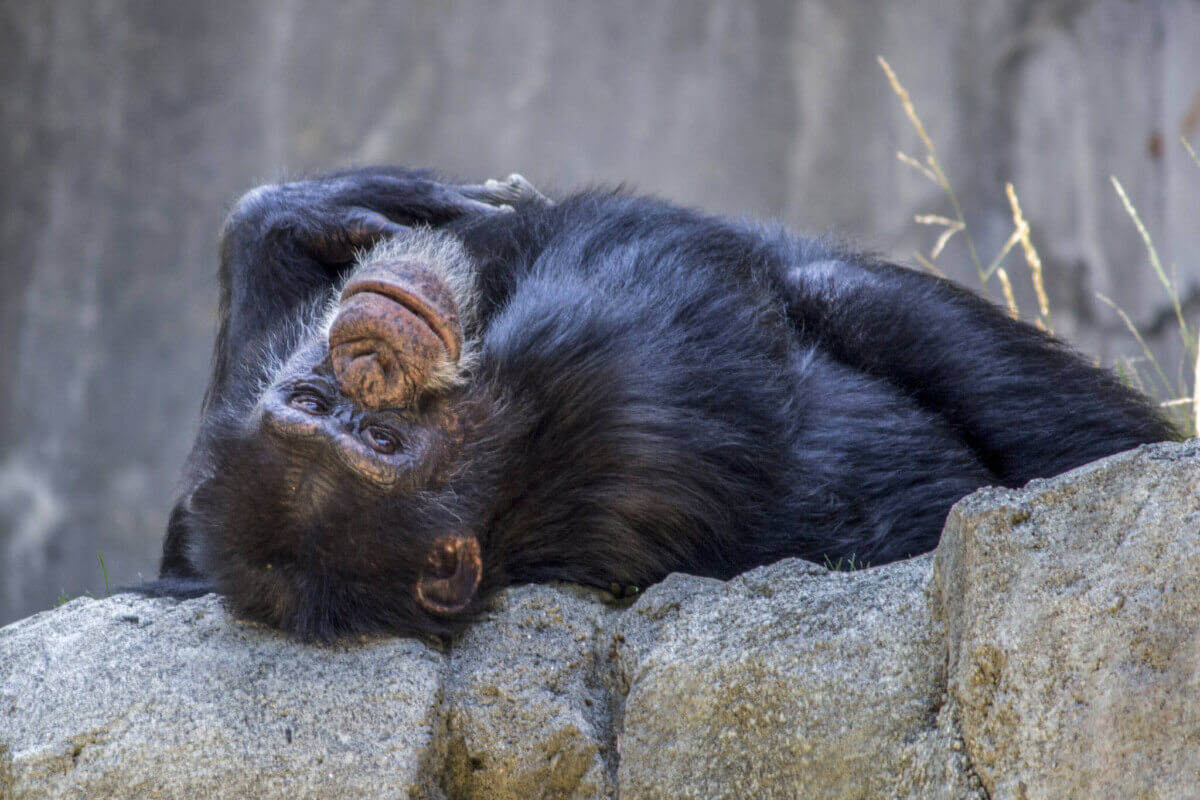
RALEIGH, N. C. — Would you feel cleaner if you slept in your own bed or one belonging to a chimpanzee? Believe it or not, you might be better off spending the night with chimps.
According to a recent study by biologists at North Carolina State University, chimpanzees tend to keep their sleeping areas very tidy, even tidier than most humans. Because of this, humans are more likely to spend the night rolling around in fecal and skin bacteria.
“We know that human homes are effectively their own ecosystems, and human beds often contain a subset of the taxa – or types – of organisms found in the home,” explains lead author Megan Thoemmes, a Ph.D. student at the university, in a statement. “For example, about 35 percent of bacteria in human beds stem from our own bodies, including fecal, oral and skin bacteria.”
For the study, Thoemmes and her team sought to measure the amount of microbes and arthropods present in chimp beds perched high in trees and compared it to average human beds.
“We wanted to know how this compares with some of our closest evolutionary relatives, the chimpanzees, which make their own beds daily,” she says.
Working with a team of researchers in Tanzania, the authors collected swabs of 41 chimp nests and tested for microbial biodiversity. The researchers also vacuumed 15 of the chimp nests to compare the number of insects and arachnids present.
While the sleeping areas of chimps were found to contain a much wider diversity of microbes, the nests had fewer fecal, oral, and skin bacteria present compared to humans. Instead they discovered a dearth of these types of bacteria in the chimpanzee nests, suggesting that the chimps are much better at keeping their sleeping quarters clean and safe than humans are.
“We found almost none of those microbes in the chimpanzee nests, which was a little surprising. We also expected to see a significant number of arthropod parasites, but we didn’t,” says Thoemmes. “This work really highlights the role that man-made structures play in shaping the ecosystems of our immediate environment. In some ways, our attempts to create a clean environment for ourselves may actually make our surroundings less ideal.”
The study was published May 16, 2018 in the journal Royal Society Open Science.


