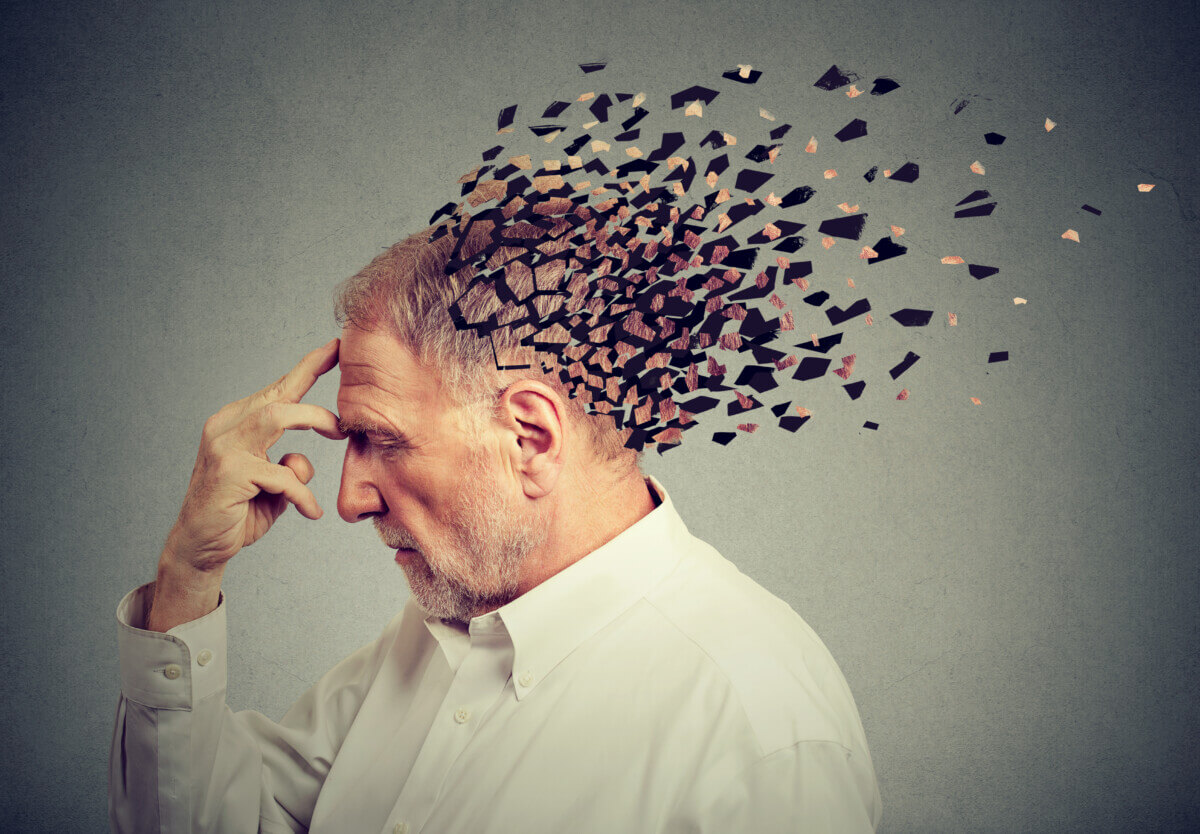
Researchers predict cases of dementia across the globe will triple by 2050. (© pathdoc - stock.adobe.com)
TORONTO — Ever wonder why you find yourself asking someone to “refresh my memory” when recalling the past? A new study sheds light on the reason why our brains have a problem recalling the more minor details of past experiences.
Researchers at the University of Toronto studied rats in the experiment and found that specific neurons exist in the part of the brain that is most linked with longterm memory — known as the medial prefrontal cortex (mPFC). Those neurons help store relevant information while losing the smaller details over time.
“Memories of recent experiences are rich in incidental detail but, with time, the brain is thought to extract important information that is common across various past experiences,” says Kaori Takehara-Nishiuchi, one of the study’s authors and an associate professor of psychology, in a press release. “We predicted that groups of neurons in the mPFC build representations of this information over the period when long-term memory consolidation is known to take place, and that this information has a larger representation in the brain than the smaller details.”
To find out, the research team studied how the neuron groups coded two different, but comparable, memories.
By giving the rats similar experiences with differing intervals between them — one that used a light and tone stimulus and another that involved physical stimulus — they were able to track the mPFC’s neuronal activity for up to four weeks and concluded the neurons initially code the memories of the experiences in the same way, but eventually drop the minor details.
“This experiment revealed that groups of neurons in the mPFC initially encode both the unique and shared features of the stimuli in a similar way,” adds lead author Mark Morrissey. “However, over the course of a month, the coding becomes more sensitive to the shared features and less sensitive to the unique features, which become lost.”
The findings are published in the journal eLife.


