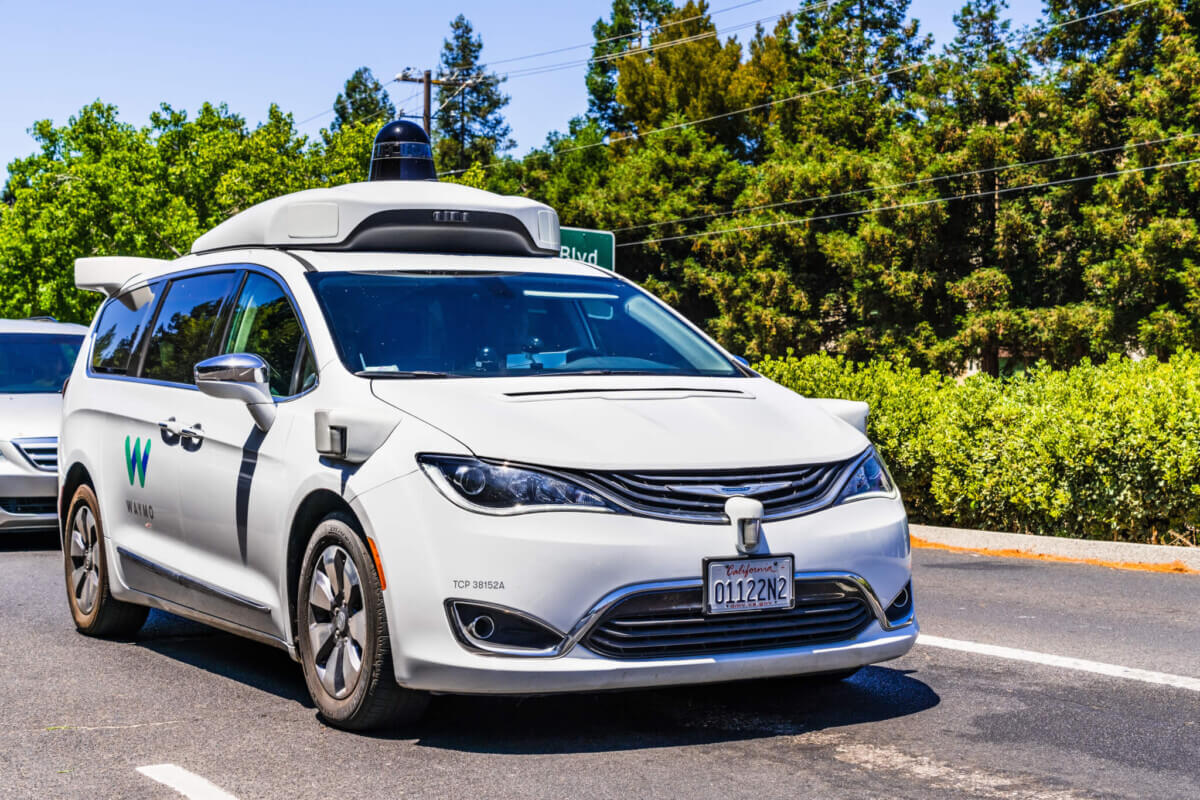
Waymo self-driving van (© Andrei - stock.adobe.com)
ADELAIDE, Australia — Self-driving cars are supposedly the way of the future, with multiple companies announcing extensive and expensive initiatives in recent years aimed at testing the vehicles throughout cities all over the world. These autonomous vehicles are supposed to make our lives easier, but a new study conducted at the University of Adelaide in Australia finds that driverless cars could actually lead to more traffic congestion in major cities.
The reason why? Most riders won’t be willing to share their ride, the study shows, ultimately resulting in more cars on the road.
The research team used the city of Adelaide as a test model, and questioned over 500 local commuters. This population sample included a combination of those who typically travel to work via their own car, as well as individuals who usually use public transit.
“Autonomous or driverless vehicles are likely to have profound effects on cities. Being able to understand their impact will help to shape how our communities respond to the challenges and opportunities ahead,” comments study co-author Dr Raul Barreto, from the University of Adelaide’s School of Economics, in a release.
The full investigative team, which also featured researchers representing the City of Adelaide itself, wanted to gauge local commuters’ views on driverless car use and ownership, ride sharing, and just how attached they are to conventional cars. Next, potential traffic flow was analyzed using a projected mixture of autonomous and conventional cars sharing Adelaide’s streets and highways under a number of different scenarios.
“Our findings show that Adelaide has the potential to significantly reduce the number of vehicles on the roads and improve traffic flows, however these benefits may not be achieved in the near to medium term for many reasons,” Dr. Barreto says. “The key factors affecting the transition to autonomous vehicles are commuter attitudes to car ownership and wanting to drive themselves, rather than have technology do it for them, as well as the price of new technology, and consumer attitudes to car sharing.
“Our evidence suggests that as riders switch to autonomous vehicles, there will be an adverse impact on public transport. With most commuters not interested in ride sharing, this could increase peak period vehicle flows, which is likely to increase traffic congestion over the next 30 years or so.” Dr. Barreto continues.
Interestingly, the study’s authors say that in all of their projected scenarios the overall number of vehicles in the city did eventually decline, but total car trips actually increased. Dr. Barreto and his team say their findings have far reaching implications beyond just the city of Adelaide, and hope that legislators all over the world take their research into account while drafting driverless car regulations and policies.
The study is published in the scientific journal Urban Policy and Research.


