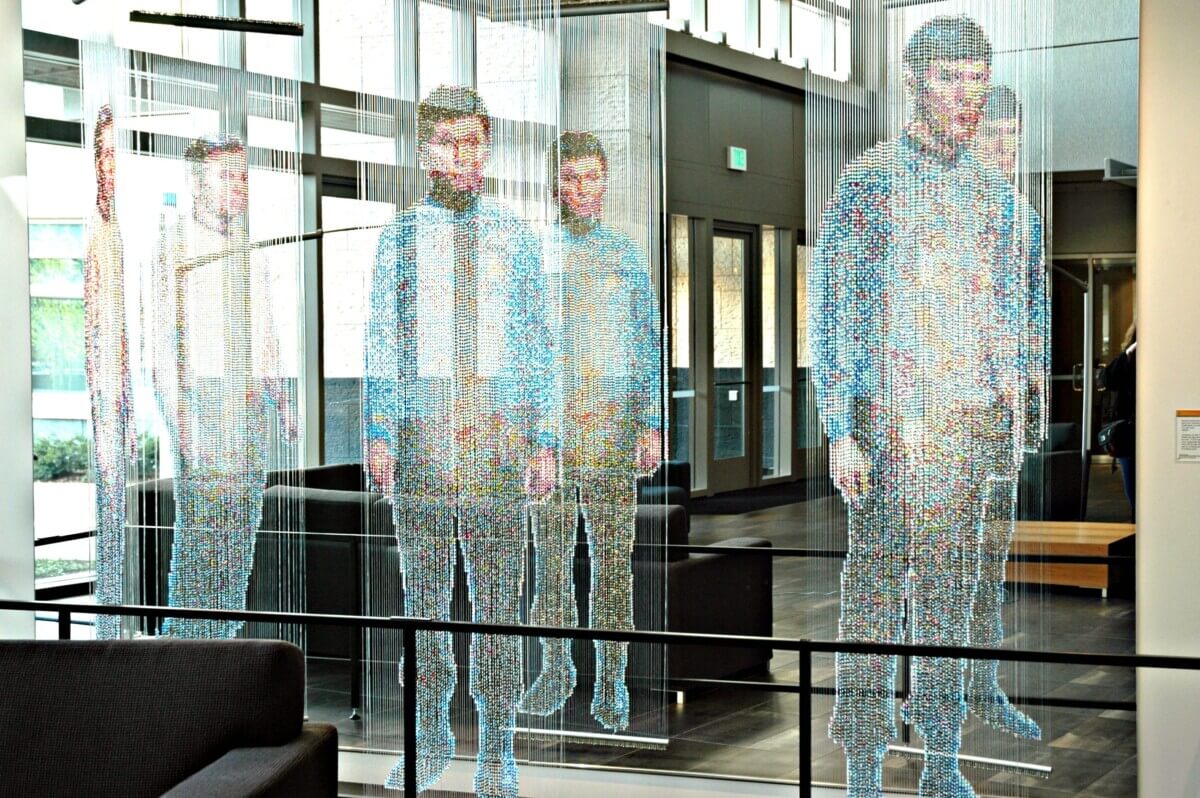
Star Trek sculpture by Devorah Sperber, Spock, Kirk and McCoy: Beaming-In (In-Between), Microsoft, Studio D, Redmond, Washington. (credit: Unsplash/Wonderlane)
JOHANNESBURG, South Africa — Beam me up, Scotty! Teleportation is finally becoming reality, as an international research team has achieved a groundbreaking feat in quantum communication. Their research demonstrates for the first time the ability to “teleport” images across a network without physically sending the image itself.
This cutting-edge technique involves the quantum transport of information in high-dimensional states, surpassing previous limitations of quantum communication. Unlike traditional methods where information is physically transmitted, this new approach utilizes a teleportation-inspired configuration, ensuring the information doesn’t physically travel between the communicating parties.
Quantum communication, essential for information security, has been previously confined to two-dimensional states (qubits) transmitted over long distances, even between satellites. This method, akin to sending classical bits (1s and 0s), has limitations. However, quantum optics can expand the “alphabet,” enabling the encoding of more complex systems, like a fingerprint or a face, in a single transmission, according to researchers from the University of the Witwatersrand in Johannesburg and The Institute of Photonic Sciences (ICFO) in Spain.
“Traditionally, two communicating parties physically send the information from one to the other, even in the quantum realm,” says lead principal investigator Andrew Forbes, professor at Wits University, in a university release. “Now, it is possible to teleport information so that it never physically travels across the connection — a ‘Star Trek’ technology made real.”
Previously, teleportation has been limited to three-dimensional states, requiring additional entangled photons for higher dimensions. The study marks the first experimental demonstration of quantum transport in high-dimensional states using just two entangled photons, making it seem as though information is “teleported” from sender to receiver.
A key advancement is the use of a nonlinear optical detector, which eliminates the need for extra photons and works for any “pattern” that needs to be sent. They’ve achieved a new record of 15 dimensions, with potential for even higher dimensions.
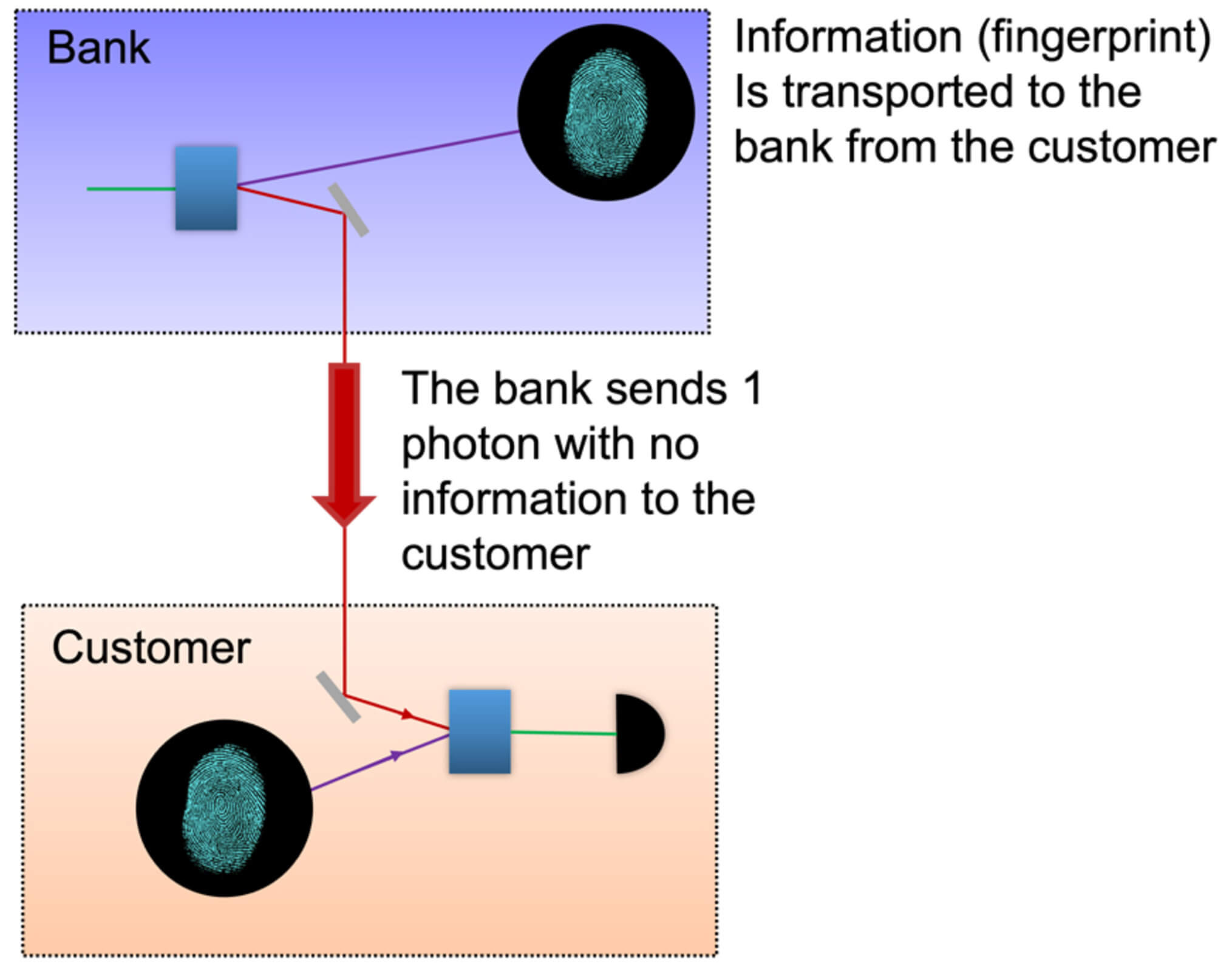
One practical application of this technology is in banking. For example, a customer can send a fingerprint to a bank without physically transferring the information. The bank sends an entangled photon to the customer, who then uses a nonlinear detector to combine it with the information to be sent. This results in the information appearing at the bank as if it were teleported. This method prevents interception, as no information is physically sent.
“This protocol has all the hallmarks of teleportation except for one essential ingredient: it requires a bright laser beam to make the nonlinear detector efficient, so that the sender could know what is to be sent, but doesn’t need to know,” explains Forbes. “In this sense, it is not strictly teleportation, but could be in the future if the nonlinear detector could be made more efficient.”
“We hope that this experiment showing the feasibility of the process motivates further advances in the nonlinear optics community through pushing the limits towards a full quantum implementation,” says Dr. Adam Vallés from ICFO (Barcelona), one of the leads on the project who worked on the experiment during his postdoctoral fellowship at Wits University.
“We have to be cautious now, as this configuration could not prevent a cheating sender from keeping better copies of the information to be teleported, which means we could end up with many Mr. Spock clones in the ‘Star Trek’ world if that is what Scotty wanted.”
Looking ahead, the team plans to focus on quantum transport across optical fiber networks, pushing the boundaries of quantum communication.
The study is published in the journal Nature Communications.


