
(Credit: FOTOKITA/Shutterstock)
PLYMOUTH, United Kingdom — Magic tricks have long captivated audiences by making the impossible appear possible. However, a peculiar phenomenon exists in the realm of illusions: the scarcity of magic tricks that rely solely on sound. This intriguing observation has led researchers to explore the fundamental differences between how our brains process visual and auditory information, potentially uncovering new insights into why our ears might be harder to fool than our eyes.
The research team, led by Gustav Kuhn, an Associate Professor in Psychology at the University of Plymouth, set out to understand why creating magical experiences using only sound proves to be so challenging. Their findings, published in Trends in Cognitive Sciences, not only shed light on the nature of magic tricks but also point to the importance of making magic more accessible to people with blindness.
The researchers began by examining the current landscape of magic tricks, finding that while visual illusions abound, tricks involving other senses like touch are rare, and those focusing solely on auditory perception are virtually non-existent. This stark contrast is particularly puzzling given the prevalence of auditory illusions in our everyday lives. For instance, stereo sound manipulates audio timing between our ears to create the illusion of sound coming from different directions, and movies often use the Shepard tone – an auditory illusion that gives the impression of an endlessly rising pitch – to build tension and keep audiences on edge.
Magic tricks, on the other hand, rely on creating a conscious conflict between what we experience and what we believe to be possible. They exploit our perceptual and cognitive limitations to create the illusion of impossibility. Crucially, once we understand how a magic trick works, the sense of wonder disappears – unlike with perceptual illusions, which can persist even when we know their true nature.
So, why do visual magic tricks abound while auditory ones remain elusive? The researchers propose several intriguing possibilities. One theory suggests that we might be more prone to regard failures of vision as impossible compared to similar failures in hearing. This could be because sighted people rely more heavily on vision to navigate the world, leading us to trust what we see more than what we hear.
Consider the famous “gorilla illusion” experiment, where participants focused on counting basketball passes often fail to notice a person in a gorilla suit walking through the scene. This visual phenomenon, known as inattentional blindness, took both scientists and the public by surprise – we don’t expect to miss seeing something right in front of our eyes. Interestingly, an analogous auditory experiment where people fail to notice changes in an unattended audio channel doesn’t elicit the same level of astonishment.
Another compelling explanation lies in the different types of information our eyes and ears provide about the world. Vision gives us a continuous representation of our physical surroundings, allowing us to infer properties and changes in the environment. When an object disappears from our visual field, it seems to vanish from our world entirely. In contrast, sounds are transient – when a sound stops, it simply means the object has ceased vibrating, not that it has disappeared altogether.
This difference in how we perceive the persistence of visual and auditory stimuli might explain why many magic tricks involve objects appearing, disappearing, or changing properties. Such events defy our understanding of how solid, tangible objects should behave in the visual world. Auditory objects, being more ephemeral by nature, don’t provide the same strong contradictions to our beliefs about the world when they appear or vanish unexpectedly.
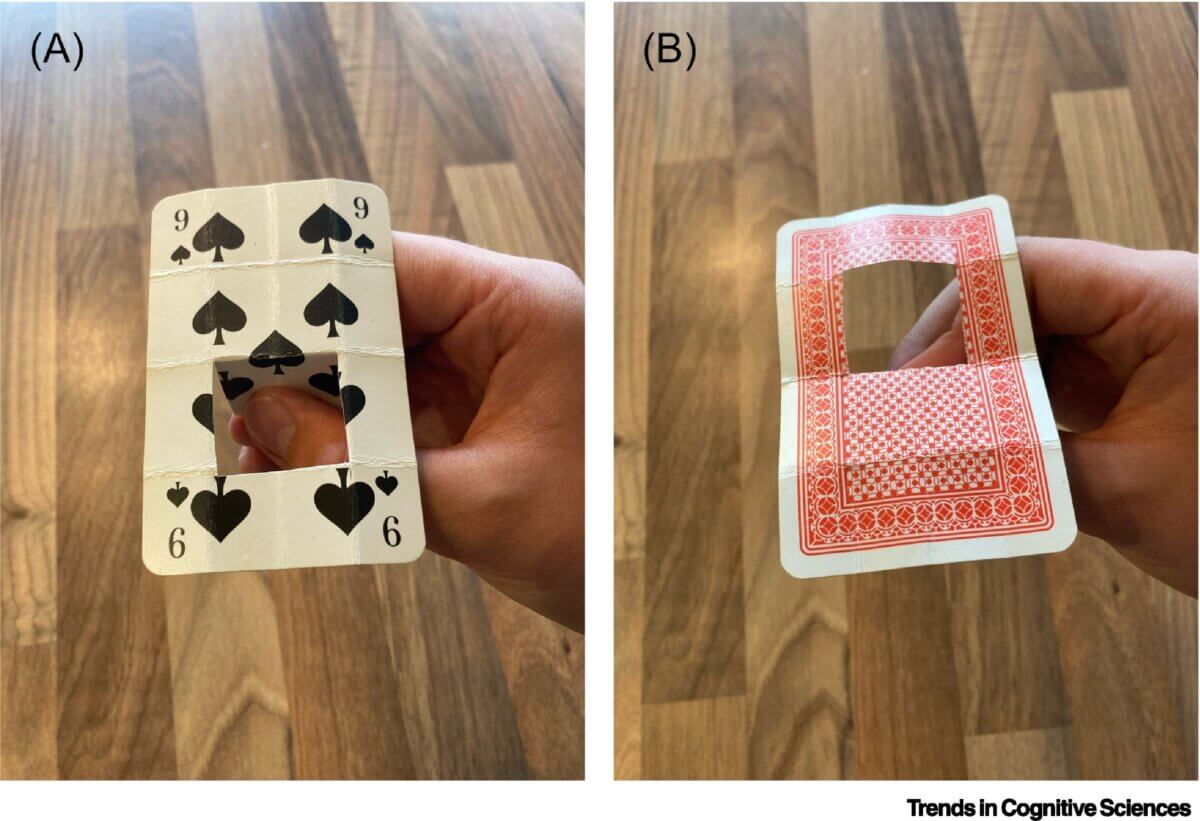
The researchers also point out a subtle but important difference in how we describe visual and auditory experiences.
“If you see a trumpet, you don’t say ‘I saw a perception of a trumpet.’ But if you hear a trumpet, you’re more likely to say, ‘I heard the sound of a trumpet.’ This is the kind of difference we don’t think about,” Kuhn explains in a media release.
This distinction in how we conceptualize visual and auditory experiences may contribute to the difficulty in creating auditory magic tricks that evoke the same sense of impossibility as their visual counterparts.
While it’s possible that magicians simply never considered creating auditory tricks, the researchers believe this is unlikely given the creativity and rich history of the craft. To further explore this possibility and potentially spark innovation in the field, the team launched a competition challenging magicians to create tricks using only sound, with results expected in November 2024.
The scarcity of auditory magic tricks raises important questions about inclusivity in the world of magic.
“If you’re born blind, you’ll likely never have experienced a magic trick. Why is that?” asks Kuhn. “Can we create tricks that could be enjoyed and experienced by people with blindness?”
This research not only invites further investigation into our senses but also encourages the development of more inclusive magical experiences.
Paper Summary
Methodology
The researchers conducted a comprehensive review of existing magic literature to identify any tricks that relied solely on non-verbal auditory perception. They also interviewed prominent magicians, asking about their knowledge of such tricks. Additionally, they challenged magicians to create new tricks based only on auditory perception. This multi-pronged approach allowed the team to thoroughly explore the current landscape of auditory magic tricks and understand why they might be so rare.
Key Results
The study found a striking absence of magic tricks that rely exclusively on non-verbal auditory perception. Despite the extensive literature review and interviews with experienced magicians, no significant examples of purely auditory magic tricks were identified. Even when challenged to create such tricks, magicians struggled to come up with suitable contenders. This consistent lack of auditory magic tricks across various sources and methods strongly suggests a fundamental difference in how visual and auditory information can be used to create magical experiences.
Study Limitations
The study’s main limitation is its reliance on existing literature and the knowledge of current magicians. While the researchers made efforts to be comprehensive, it’s possible that some obscure auditory magic tricks exist but were not discovered during their investigation. Additionally, the study focuses primarily on Western magic traditions and may not fully account for potential auditory magic tricks in other cultural contexts.
Discussion & Takeaways
The researchers propose that the lack of auditory magic tricks reflects fundamental differences in how we process and trust visual versus auditory information. They suggest that we may be more prone to accepting auditory failures as normal, whereas visual failures are more likely to be perceived as impossible. The study also highlights the importance of object permanence and direct representation in creating magical experiences, which may be more challenging to achieve with auditory stimuli. These insights not only shed light on the nature of magic tricks but also provide valuable perspectives on human perception and cognition more broadly.
Funding & Disclosures
The research was supported by a grant from the Agence Nationale de Recherche (ANR-23-CE28-0011) to Cyril Thomas and Gustav Kuhn. The authors declared no conflicts of interest related to this study.


