
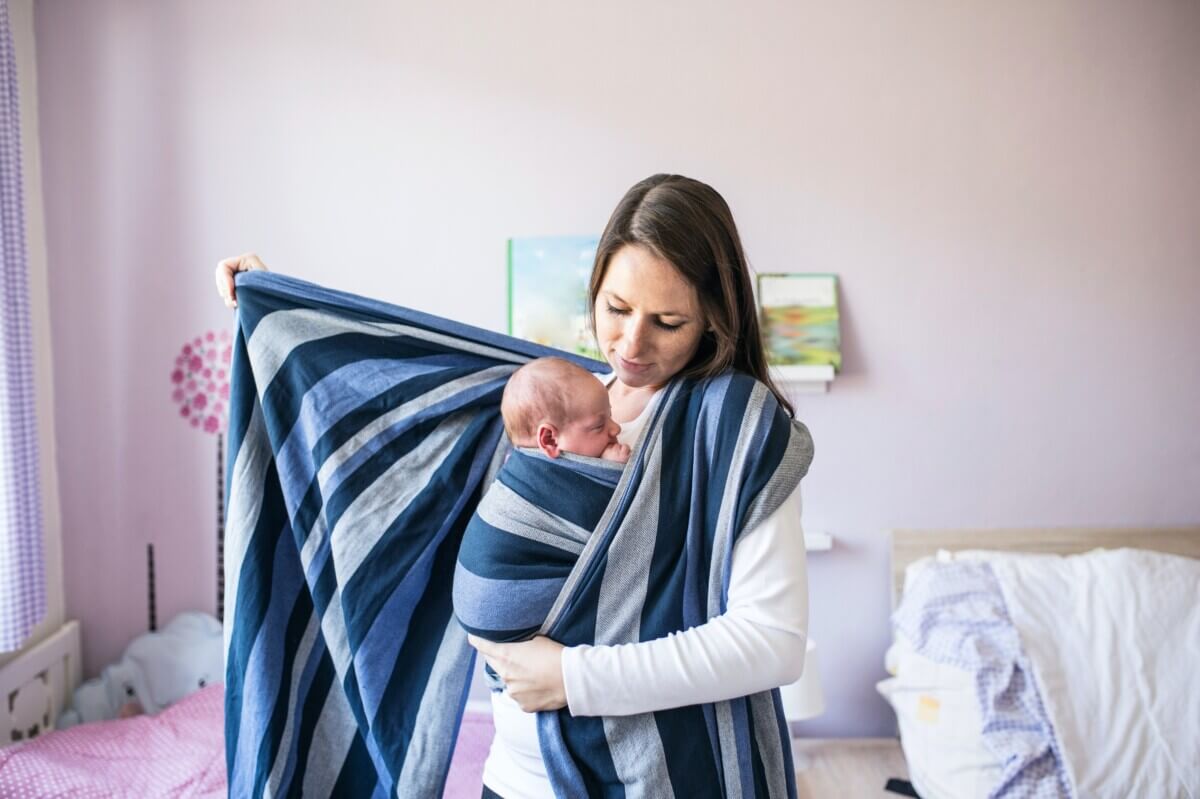
(Credit: Nicoleta Ionescu on Shutterstock)
In A Nutshell
- A study of 998 Swedish twins found that genetics explain a large share of why some babies cry more or settle more easily.
- Nighttime wake-ups, however, are mostly influenced by shared family environment and routines.
- The genetic impact on crying and settling becomes stronger as babies grow from 2 to 5 months old.
- Experts say understanding the genetic role may help parents feel less blame when soothing techniques don’t always work.
UPPSALA, Sweden — If you’ve ever wondered why your newborn seems hardwired to cry for hours while your friend’s baby settles easily, new research shows the answer might be in their DNA. A large twin study from Sweden reveals that genetics account for a surprisingly big portion of how much babies cry and how easily they calm down. On the other hand, night wakings are mostly shaped by family routines and the household environment.
The study, published in JCPP Advances, tracked 998 twins at 2 months and 5 months old, comparing identical twins (who share 100% of their DNA) with fraternal twins (who share about 50% of their DNA) to separate genetic influences from environmental ones.
Researchers from Uppsala University found that genetic factors explained between 29% and 70% of the differences in crying duration among babies. Even more striking, a baby’s ability to settle down at 5 months was largely determined by genetics, accounting for 51% to 67% of the variation between infants.
For exhausted parents who’ve tried every sleep training method and soothing technique, these results offer both relief and perspective. Rather than blaming themselves for their baby’s fussiness or sleep difficulties, parents can understand that some infants are simply born with different temperaments and sleep patterns.

Night Wakings vs. Crying: Different Genetic Stories
Researchers examined behaviors that matter most to new parents: how many times babies wake up during the night, how long it takes them to settle down during different times of day, and how long they cry during daytime, evening, and nighttime hours.
Results showed that the number of nighttime wake-ups was heavily influenced by shared environmental factors, meaning that twins in the same household tended to have similar wake-up patterns regardless of whether they were identical or fraternal. This points to household routines, parenting practices, or other family factors as the primary drivers of night wakings.
Crying duration told a different story. Genetics explained a substantial portion of individual differences in how long babies cried, particularly during evening and nighttime hours. At 2 months, genetic factors accounted for 44% to 46% of crying differences. By 5 months, this genetic influence had increased dramatically, explaining 64% to 70% of crying variations.
The ability to settle down also showed strong genetic influences, especially at 5 months when babies’ nervous systems have matured. Some babies are simply born with better self-soothing capabilities.
Environmental Factors Still Shape Fussy Baby Behavior
While genetics play a significant role, environmental factors remain important, especially for nighttime wake-ups and during early development. Shared environmental influences, which include everything from parenting style to household noise levels, had the strongest impact on nighttime wake-ups, accounting for 61% to 90% of the variation between babies.
These environmental influences appeared to persist over time. The study found that 56% of the shared environmental factors affecting nighttime wake-ups at 5 months were the same factors influencing wake-ups at 2 months. Consistent household patterns and routines have lasting effects.
The researchers note that understanding the genetic component of infant behaviors may help reduce parental guilt when standard soothing techniques don’t work immediately for some babies.
The Autism Connection
Among the study’s most intriguing discoveries was a connection between genetic risk for autism and infant crying patterns. Babies with higher polygenic scores for autism – meaning they carried more genetic variants associated with autism spectrum disorders – cried for longer periods during evening hours at 2 months of age.
Earlier research has shown that infants later diagnosed with autism often display different crying patterns from birth. However, the researchers emphasized this was just one finding among many tested, and more research is needed to understand this connection.
What This Means for Parents and Doctors
These discoveries could reshape how pediatricians and parenting experts approach infant sleep and crying problems. Rather than assuming all difficulties stem from inadequate parenting or environmental factors, healthcare providers might consider that some babies are simply genetically predisposed to certain behavioral patterns.
Of course, this doesn’t mean that parents should give up on sleep training or soothing techniques. Environmental factors still matter significantly, and the study showed these influences can change over time. Instead, parents of fussy or poor-sleeping babies shouldn’t blame themselves when standard techniques don’t work immediately.
As babies’ brains develop rapidly during the first months of life, the balance between genetic and environmental influences appears to shift. Genetic factors became more prominent at 5 months compared to 2 months for many behaviors, indicating that as infants’ nervous systems mature, their inborn tendencies become more apparent.
For now, the message for parents is clear: while creating a calm, consistent environment remains important for infant development, some aspects of your baby’s behavior reflect their unique genetic makeup rather than your parenting skills.
Paper Summary
Methodology
Researchers studied 998 same-sex Swedish twins using a classical twin study design to separate genetic from environmental influences. Parents completed questionnaires about their babies’ sleep, settling, and crying behaviors at 2 months and 5 months of age. The study measured how many times babies woke up at night, how long it took them to settle during different times of day, and crying duration during day, evening, and nighttime hours. Scientists compared identical twins (who share 100% of DNA) with fraternal twins (who share about 50% of DNA) to determine how much genetics versus environment contributed to behavioral differences.
Results
Genetic factors explained 29-70% of differences in crying duration and 51-67% of settling ability at 5 months. Shared environmental factors primarily influenced nighttime wake-ups (61-90% of variation) and settling ability at 2 months. Genetic influences generally increased from 2 to 5 months, while environmental effects were mostly specific to each age. The study found modest shared genetic influences across ages for some behaviors, with 56% of environmental factors affecting nighttime wake-ups persisting from 2 to 5 months. A polygenic score for autism was associated with longer evening crying at 2 months.
Limitations
The study relied on parent-reported questionnaires rather than objective measurements like actigraphy, which could introduce reporting bias. Some parents might interpret questions differently or have varying accuracy in estimating crying and settling times. The research focused only on Swedish twins, which may limit generalizability to other populations. Additionally, while twin studies can estimate heritability, they don’t identify specific genes responsible for these behaviors.
Funding and Disclosures
This research was funded by the Knut and Alice Wallenberg Foundation, Swedish Research Council, Riksbankens Jubileumsfond, Stiftelsen Sunnerdahls Handikappfond, The Swedish Foundation for Strategic Research, and The Swedish Brain Foundation. The authors declared no conflicts of interest, and the funders had no role in study design, data collection, analysis, interpretation, or manuscript preparation.
Publication Information
Viktorsson, C., Yahia, A., Taylor, M. J., Ronald, A., Tammimies, K., & Falck-Ytter, T. (2025). “Genetic and environmental influences on sleep quality, ability to settle, and crying duration in 2- and 5-month-old infants: A longitudinal twin study,” published in JCPP Advances, e70023. DOI: 10.1002/jcv2.70023. The paper was received February 5, 2025, and accepted March 20, 2025.


