
A woman with back pain from her mattress (Photo by Kaspars Grinvalds on Shutterstock)
TURKU, Finland — Are you slouched in your chair right now, scrolling through your phone, or working all day on a computer? You might want to stand up and move around before it’s too late. A new study suggests that reducing sedentary time (sitting and inactivity) could be an easy and free way of preventing back pain from worsening. Researchers in Finland say cutting down on time spent sitting is especially beneficial for those who are overweight and physically inactive.
A team from the University of Turku conducted a six-month trial to investigate whether cutting down on sitting time could improve back pain and affect certain muscle characteristics. The study, published in BMJ Open, involved 64 adults between 40 and 65 years-old who were overweight or obese and met the criteria for metabolic syndrome — a cluster of conditions that increase the risk of heart disease, stroke, and diabetes.
Half of the participants were asked to reduce their daily sitting time by one hour, while the other half continued their usual routines. The intervention group was encouraged to replace sitting with standing, light physical activity, or moderate-to-vigorous physical activity. They wore accelerometers throughout the study to track their movements and received personalized goals through a mobile app.
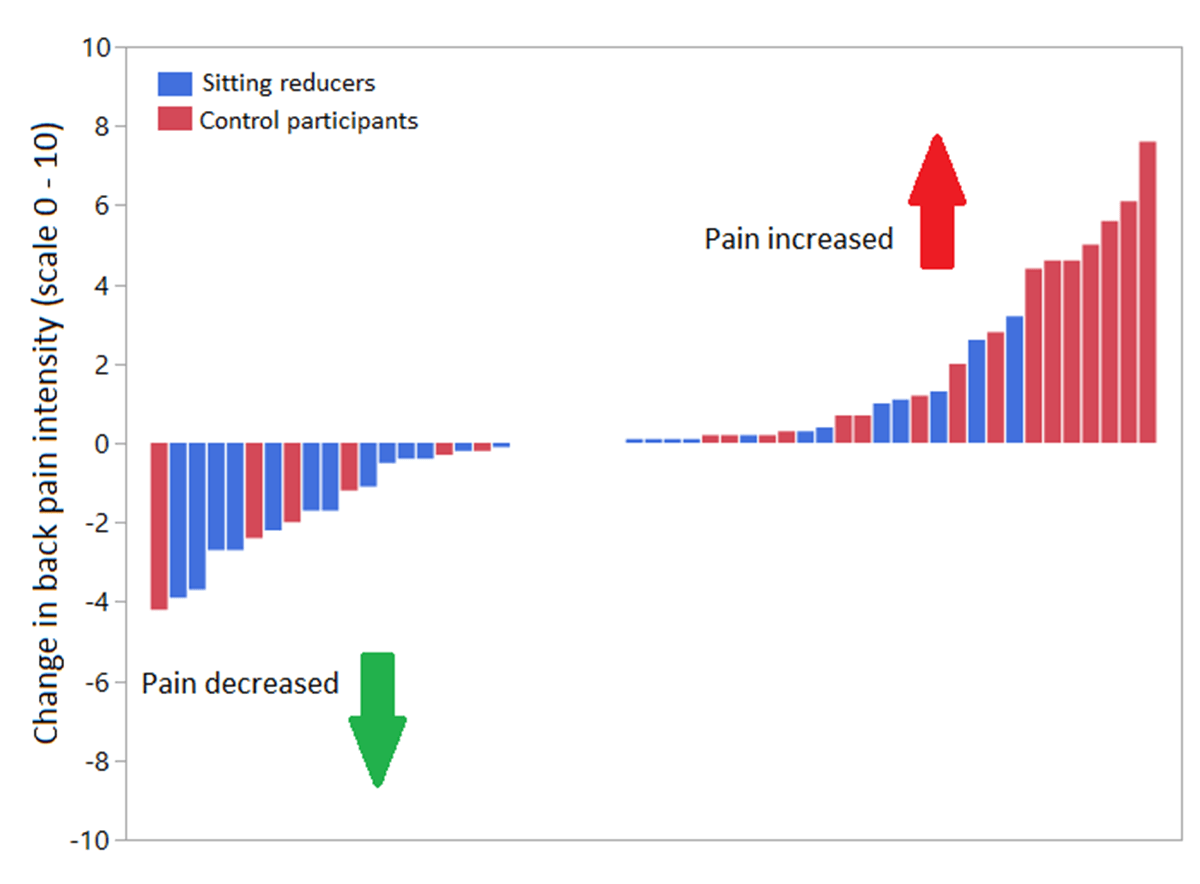
Interestingly, while back pain intensity remained stable in the group sitting less, it increased significantly in the control group over the six-month period. This suggests that reducing the time you spend being inactive (like sitting on a couch) might help prevent chronic back pain from getting worse.
“If you have a tendency for back pain or excessive sitting and are concerned for your back health, you can try to figure out ways for reducing sitting at work or during leisure time. However, it is important to note that physical activity, such as walking or more brisk exercise, is better than simply standing up,” says doctoral researcher and physiotherapist Jooa Norha from the University of Turku in a media release.
Despite these results, the study didn’t find any significant changes in pain-related disability or in the composition and function of the back muscles between the two groups. The researchers used advanced imaging techniques to measure muscle fat content and insulin sensitivity, but these factors didn’t seem to be affected by the intervention.
“We did not observe that the changes in back pain were related to changes in the fattiness or glucose metabolism of the back muscles,” Norha notes.
The study’s results are particularly relevant given the increasing concerns about prolonged sitting in modern society. With many people spending long hours at desk jobs or engaged in screen-based leisure activities, finding ways to reduce sedentary time could have widespread health benefits.
“Our participants were quite normal middle-aged adults, who sat a great deal, exercised little, and had gained some extra weight. These factors not only increase the risk for cardiovascular disease but also for back pain,” Norha adds.
So, next time you find yourself sitting for extended periods, remember: standing up and moving around might do more than just stretch your legs — it could help keep your back pain at bay.
Paper Summary
Methodology
The researchers divided participants into two groups: an intervention group and a control group. The intervention group was asked to reduce their sitting time by one hour per day, replacing it with more standing, light activity, or moderate-to-vigorous activity. Both groups wore accelerometers to track their movements throughout the 6-month study. Participants also underwent MRI and PET scans to measure muscle fat content and insulin sensitivity in their back muscles. Pain and disability were assessed using questionnaires at the beginning and end of the study.
Key Results
The key finding was that back pain intensity remained stable in the intervention group but increased in the control group. However, both groups experienced an increase in pain-related disability. There were no significant differences between the groups in terms of muscle fat content or insulin sensitivity in the back muscles. Interestingly, increased daily steps were associated with improved insulin sensitivity in the back muscles, regardless of group assignment.
Study Limitations
The sample size was relatively small, which may have limited the statistical power to detect some changes. The study wasn’t specifically designed to look at back pain, so participants weren’t selected based on their pain status. This could have led to more variability in the results. Additionally, pain and disability were only measured at the beginning and end of the study, potentially missing fluctuations during the intervention period.
Discussion & Takeaways
The researchers suggest that reducing sedentary time by increasing physical activity might help prevent the worsening of back pain, even if it doesn’t lead to improvements in muscle composition or function. They emphasize that the psychological and cognitive aspects of pain perception, as well as individual preferences for physical activity, may be more important targets for back pain management than specific muscle characteristics. The study also highlights the potential benefits of maintaining a healthy body composition and regular physical activity for overall back health.
Funding & Disclosures
The study was funded by various organizations, including the Research Council of Finland, the Finnish Cultural Foundation, and several other foundations. One of the authors reported receiving a speaker fee from a healthcare company, but the other authors declared no conflicts of interest.


