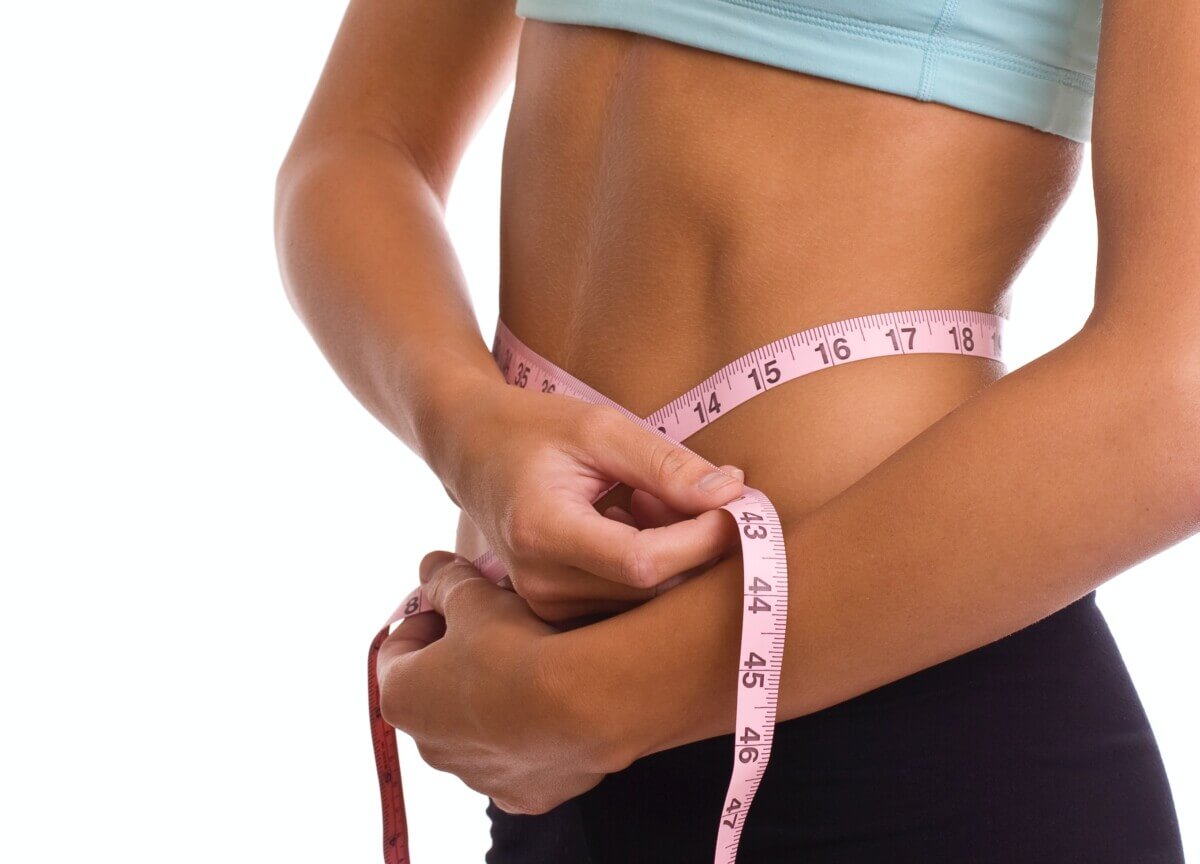
Photo by Bill Oxford on Unsplash
JIANGSU, China — In a surprising twist that challenges conventional wisdom about body weight and health, new research suggests that having a larger waist circumference might actually be protective for some people with diabetes, particularly women.
For years, medical professionals have warned about the dangers of central obesity – carrying excess weight around the midsection. However, this comprehensive analysis of over 6,600 American adults with diabetes shows that the relationship between waist circumference and the risk of death isn’t as straightforward as previously thought.
The research team, led by investigators from Northern Jiangsu People’s Hospital in China, analyzed data from the National Health and Nutrition Examination Survey (NHANES) collected between 2003 and 2018. They tracked participants until December 2019, examining how waist circumference related to both overall mortality risk and deaths, specifically from cardiovascular disease.
What they discovered was intriguing: for women with diabetes, the relationship between waist circumference and mortality formed a U-shaped curve, with the lowest risk of death occurring at a waist measurement of 107 centimeters (about 42 inches) – well above what’s typically considered healthy. For men, the relationship formed a J-shaped curve, with the lowest mortality risk at 89 centimeters (about 35 inches).
This means that for women with diabetes, having a waist circumference below 107 centimeters was associated with a higher risk of death – for every centimeter smaller, the risk increased by 3%. Above 107 centimeters, each additional centimeter increased mortality risk by 4%. For men, the pattern was similar but centered around the 89-centimeter mark, with risk increasing by 6% for each centimeter below and 3% for each centimeter above.
This phenomenon, known as the “obesity paradox,” has been observed before in various health conditions, where being overweight or even obese appears to offer some protection against mortality. However, this study is among the first to demonstrate this effect specifically in relation to waist circumference in people with diabetes.

The findings, published in Chronic Metabolic Diseases, were particularly striking for women, as their optimal waist circumference for survival (107 cm) was significantly larger than the current clinical definition of central obesity in women (88 cm). This suggests that current guidelines about optimal waist circumference might need to be reconsidered, at least for women with diabetes.
The researchers followed 3,151 women and 3,473 men with diabetes, tracking various health metrics, including blood pressure, cholesterol levels, and kidney function. During the follow-up period, which averaged about 6.5 years, 621 women and 871 men died. The team carefully controlled for factors that might influence mortality risk, such as age, education level, smoking status, and other health conditions.
What makes this study particularly compelling is its size and comprehensive nature. The researchers didn’t just look at overall mortality but also examined deaths specifically from cardiovascular disease. They found similar patterns in both cases, strengthening the validity of their findings.
The study’s results raise important questions about how we think about body composition and health in people with diabetes. While excessive abdominal fat is generally considered harmful due to its association with inflammation and metabolic dysfunction, there might be protective effects of having some extra weight in certain populations.
However, the researchers caution against interpreting these findings as a recommendation to gain weight. The relationship between body composition and health outcomes is complex, and what works for one person might not work for another. Furthermore, the study only looked at mortality risk, not quality of life or other health outcomes.
While this study doesn’t give anyone a free pass to supersize their waistline, it does suggest that when it comes to body size and health, one size definitely doesn’t fit all. The next challenge will be figuring out exactly why some people with diabetes seem to benefit from a little extra padding around the middle – a question that could lead to even more surprising discoveries about how our bodies work.
Paper Summary
Methodology
The study utilized data from the National Health and Nutrition Examination Survey (NHANES), a comprehensive health survey program in the United States. The researchers identified adults with diabetes through blood tests or self-reported diagnosis. They measured waist circumference using standardized methods and collected detailed information about participants’ health status, lifestyle factors, and medical history. The team then tracked mortality outcomes through the National Death Index until the end of 2019, using statistical models to analyze the relationship between waist circumference and mortality while accounting for various factors that could influence the results.
Key Results
The study found that waist circumference had different optimal points for minimal mortality risk in men and women with diabetes. For women, the lowest risk was at 107 cm, with mortality risk increasing both above and below this point. For men, the optimal point was 89 cm. The relationship was U-shaped for women and J-shaped for men, meaning the risk patterns were different between genders. These patterns held true for both all-cause mortality and cardiovascular mortality.
Study Limitations
As an observational study, it couldn’t prove causation. The researchers only measured waist circumference at the beginning of the study, not accounting for changes over time. The study population was specific to the United States, so results might not apply to other populations. There might also be unmeasured factors that could influence the relationship between waist circumference and mortality.
Discussion & Takeaways
The study challenges conventional wisdom about optimal waist circumference, particularly for women with diabetes. It suggests that current guidelines for healthy waist circumference might need to be reconsidered for specific populations. However, the researchers emphasize that these findings shouldn’t be interpreted as a recommendation to gain weight, as the relationship between body composition and health is complex and likely involves many factors not captured in this study.
Funding & Disclosures
The research was funded by grants from the National Key R&D Program and supported by the M.D. startup foundation of Northern Jiangsu People’s Hospital. The lead author, Dr. Bin Song, serves on the Editorial Board of Chronic Metabolic Diseases. A preprint version of this study was previously published, and the authors declared no other conflicts of interest.


