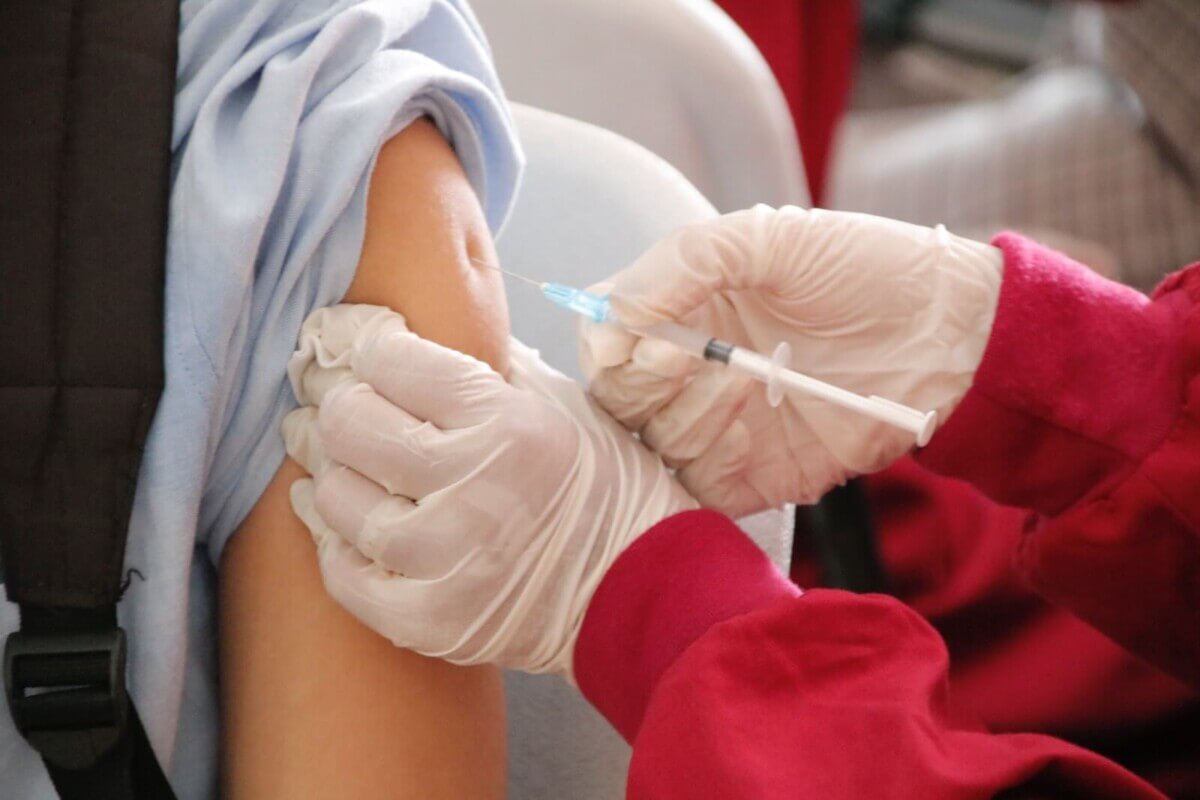
Does your right or left arm make a difference when you get a booster shot? (Photo by Ed Us from Unsplash)
NEW BRUNSWICK, N.J. — Tired of vaccines that require needles and painful injections? Rutgers University scientists have unveiled a cutting-edge method for creating precise coatings of biologically active materials on medical products. Simply put, this innovation could pave the way to a new era of transdermal medications — like spray-on vaccines.
Researchers introduced an enhanced approach to electrospray deposition, which is a specialized spray-coating technique used in industries. The Rutgers team found a way to hone the accuracy with which the microscopic particles, converted from a flowing liquid under high voltage, are deposited on their target. The spray is transformed into fine particles, and as they travel, they evaporate, leaving behind a solid residue from the original liquid.
“While many people think of electrospray deposition as an efficient method, applying it normally does not work for targets that are smaller than the spray, such as the microneedle arrays in transdermal patches,” says study author Jonathan Singer, an associate professor in the Department of Mechanical and Aerospace Engineering in the Rutgers School of Engineering, in a university release. “Present methods only achieve about 40 percent efficiency. However, through advanced engineering techniques we’ve developed, we can achieve efficiencies statistically indistinguishable from 100 percent.”
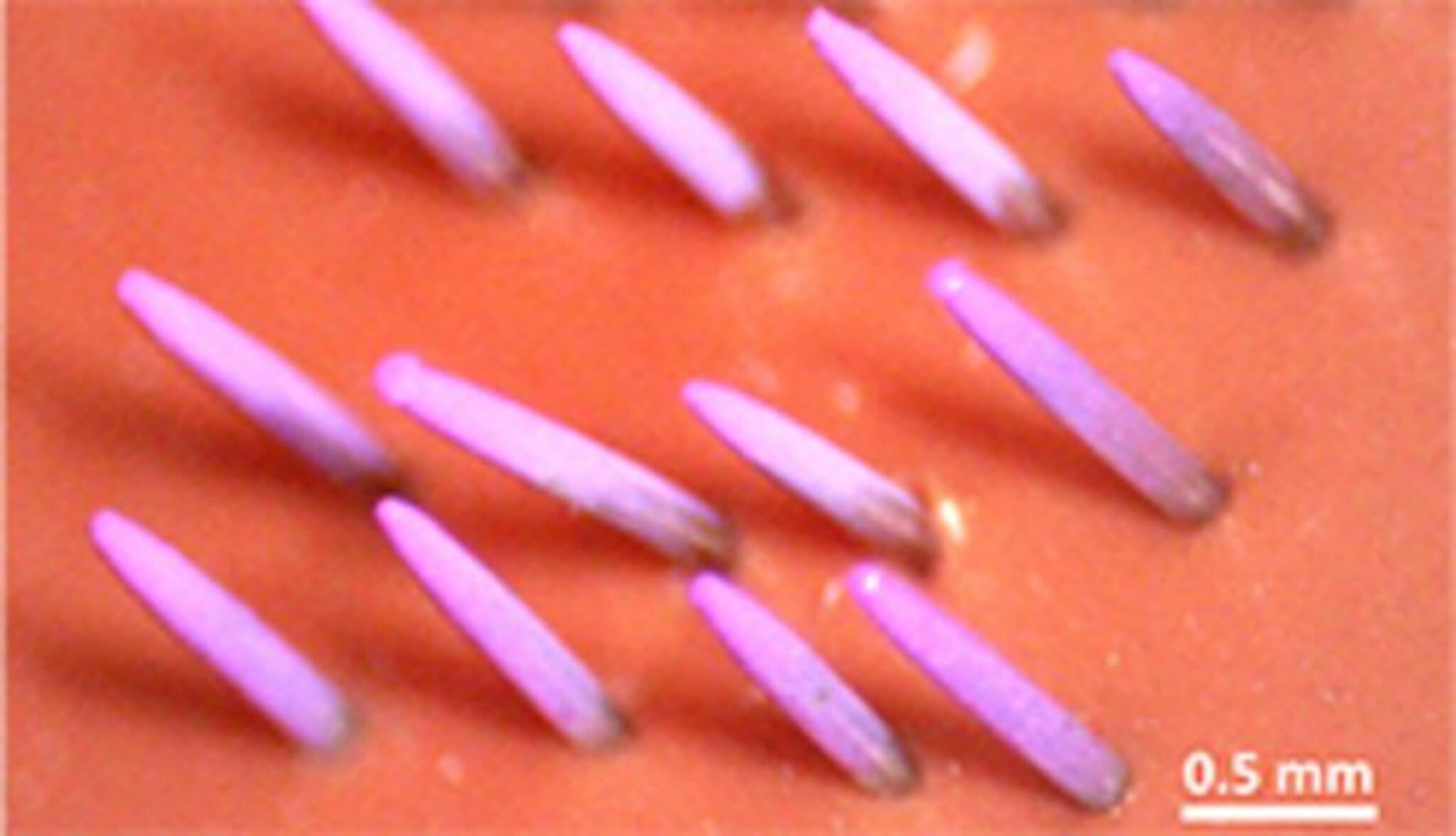
Such coatings have a growing importance in the medical field. They are applied to devices like heart stents, pacemakers, and defibrillators that are implanted in the body. These coatings are becoming crucial for innovative products like skin patches.
Producing advanced biological or “bioactive” materials, including drugs and vaccines, can be expensive. If any portion of these materials goes unused, it can dictate whether a patient gets a treatment or not. Achieving almost complete efficiency with this method means that hardly any material is squandered, making it ideal for coating medical devices or even vaccines.
“Being able to deposit with 100 percent efficiency means none of the material would be wasted, allowing devices or vaccines to be coated in this way,” explains study first author Sarah Park, a doctoral student in the Department of Materials Science and Engineering. “We anticipate that future work will expand the range of compatible materials and the material delivery rate of this high‐efficiency approach.”
Another notable feature of this breakthrough technique, compared to others like dip coating or inkjet printing, is its “far field” characteristic. This means the spray source doesn’t need to be precisely positioned, making the equipment for mass production more cost-effective and simpler to design.
The study is published in the journal Nature Communications.


