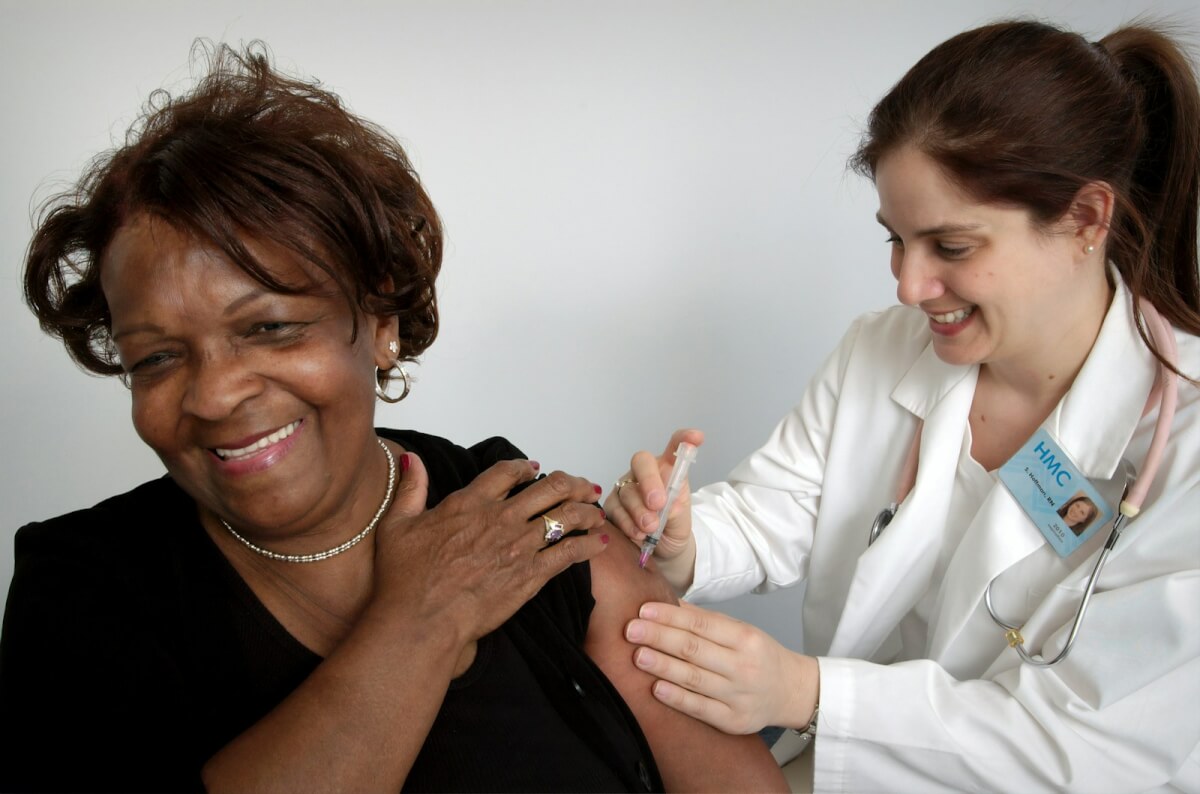
Photo by CDC from Unsplash
Sorry, fellas: Men didn’t show the same statistically significant brain benefits post-vaccination.
In A Nutshell
- Women who received the shingles vaccine while living with dementia experienced a 52 percentage point reduction in dementia-related deaths over nine years; men showed no statistically significant benefit
- Among women without cognitive problems at baseline, vaccination reduced new mild cognitive impairment diagnoses by 5.1 percentage points
- The study exploited a quirk in Wales’s vaccine rollout where people born just one week apart had dramatically different eligibility, creating conditions similar to a randomized trial
- Findings apply specifically to the older Zostavax vaccine in people around age 80; whether the newer Shingrix vaccine offers similar brain protection remains unknown
Women who received the shingles vaccine while living with dementia experienced a 52 percentage point reduction in deaths attributed to the disease over the following nine years. Interestingly, however, according to the same research men showed no such benefit, a disparity that may reflect differences in how female and male immune systems respond to vaccination.
The finding emerged from a natural experiment in Wales that exploited the country’s unusual vaccine rollout rules. When the United Kingdom’s National Health Service began offering the live-attenuated shingles vaccine in 2013, eligibility depended entirely on birthday. People who turned 80 just after September 2, 1933, could get the shot for one year. Those who turned 80 just before that date never became eligible. This quirk of policy created two groups separated by mere days in age but dramatically different in their vaccination rates.
Among roughly 9,000 women already living with dementia at the program’s start, those who received the vaccine experienced that 52 percentage point drop in deaths attributed to the condition. For the 5,400 men in the same situation, the effect was statistically indistinguishable from zero. Formal statistical testing confirmed the difference between women and men was unlikely to be coincidental.
Early Protection Before Memory Problems Worsen
The vaccine’s benefits extended beyond people who already had dementia. Among more than 154,000 women without any record of cognitive problems, receiving the shingles shot reduced new diagnoses of mild cognitive impairment by 5.1 percentage points over nine years. Mild cognitive impairment often precedes dementia, representing an early warning stage when memory and thinking problems are noticeable but not yet severe enough to interfere with daily life.
Again, men did not share in the protection. While the effects trended in the same direction, they failed to reach statistical significance among the roughly 128,000 male participants without cognitive impairment at baseline.
Study authors note that this gender difference aligns with patterns observed across vaccine research. Live-attenuated vaccines, which use weakened forms of a virus to train the immune system, often produce stronger health benefits beyond their intended target in women than in men.
Women generally mount more vigorous immune responses to vaccines and infections, a difference attributed to both hormonal factors and genetic differences related to the X chromosome. Whether this heightened immune reactivity explains the dementia protection will require further investigation.
How a Birthday Lottery Created Scientific Gold
The strength of this research, which is published in Cell, lies in its design. Standard studies comparing vaccinated and unvaccinated people face an inherent problem: healthier individuals with better access to healthcare tend to seek out vaccines at higher rates. Any apparent benefit might simply reflect the underlying health advantage of people who got the shot.
The Welsh program’s birthday rules eliminated this concern. People born a week apart would not differ meaningfully in their health habits, genetics, or socioeconomic circumstances. Yet the eligibility threshold created nearly a 46 percentage point gap in vaccination rates between those born just before versus just after September 2, 1933.
The researchers conducted extensive checks to confirm no other policy used the same birthday cutoff. They examined the leading causes of illness and death in older adults, preventive health behaviors, and uptake of other vaccines. None showed differences at the threshold. They tested whether the September 2 birthday showed similar effects in other birth years, and it did not.
A Childhood Virus That May Attack the Aging Brain
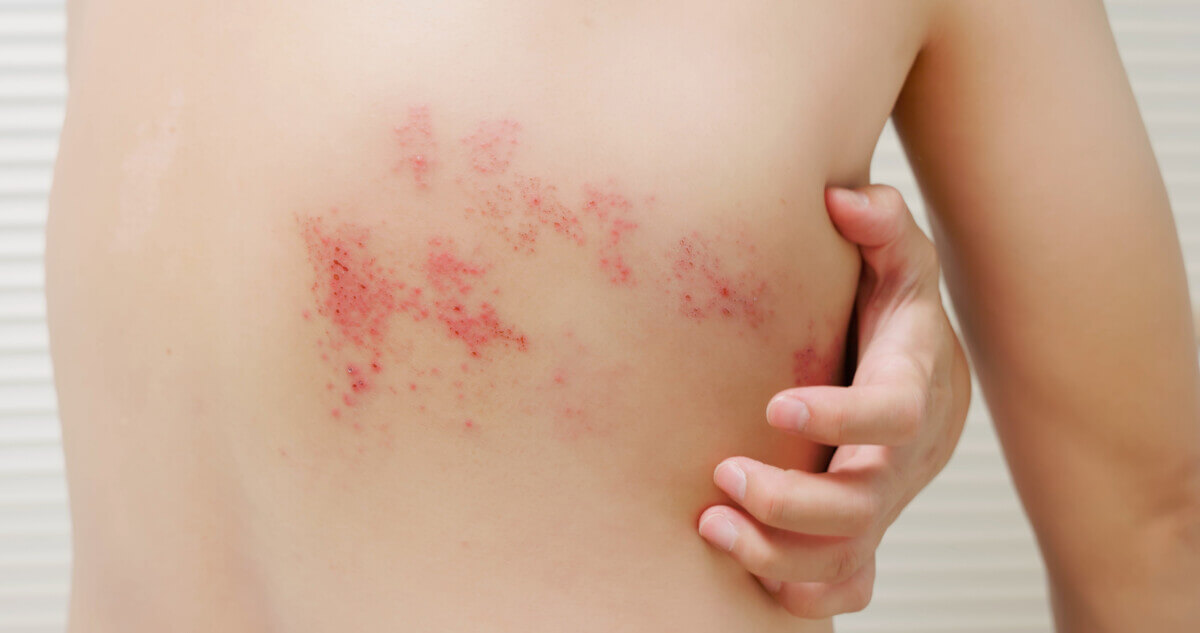
Nearly everyone over age 40 carries the varicella zoster virus, which causes chickenpox in childhood and then hides in nerve cells for decades. When it reactivates later in life, it produces shingles, a painful blistering rash. But the virus may cause damage beyond the skin.
Laboratory studies have linked reactivations of this virus to amyloid plaques and tau protein tangles, the hallmark brain changes of Alzheimer’s disease. The virus can also damage blood vessels in the brain in patterns resembling the vascular injury seen in many dementia patients. By suppressing these reactivations, the shingles vaccine might interrupt ongoing harm to the aging brain.
Another possibility is that vaccination produces immune benefits independent of the virus itself. Some scientists have proposed that vaccines in older adults counteract immunosenescence, the gradual weakening of immune function with age. The stronger effects in women could support this theory, given that immune function differs between the sexes throughout life.
This study extends earlier work by the same research team. In 2025, they reported in Nature that shingles vaccination prevented roughly one in five new dementia diagnoses over seven years in Wales. An analysis of Australian data using a similar birthday-based natural experiment replicated those findings.
Finding benefits at both ends of the disease course answers an important question. The earlier studies could not determine whether the vaccine prevented brain pathology, delayed progression from mild impairment to dementia, or simply delayed when the healthcare system recorded a diagnosis. Protection at both the earliest recorded stage and the final outcome indicates the vaccine acts throughout the disease process.
Among patients who already had dementia, vaccination reduced overall mortality, not just deaths attributed to dementia specifically. Deaths from other causes showed no change. This pattern indicates the vaccine genuinely slowed disease progression rather than merely shifting which condition appeared on death certificates.
What Doctors and Patients Should Know
The authors acknowledge several limitations. The findings apply specifically to people around age 80 and to Zostavax, a live-attenuated vaccine largely replaced by Shingrix, a newer formulation. Whether Shingrix offers similar brain protection remains unknown.
The study relied on medical records and death certificates, meaning some cognitive impairment and dementia cases likely went unrecorded. The COVID-19 pandemic began during the follow-up period and may have disrupted both diagnoses and mortality patterns, though these effects would have influenced both comparison groups equally.
Wide confidence intervals make the precise magnitude of protection uncertain. The study design provides stronger causal evidence than traditional observational research but sacrifices statistical precision for that rigor.
For men, the lack of statistically significant effects does not necessarily mean the vaccine provides no protection. The confidence intervals were wide enough that meaningful benefits cannot be ruled out, and the effects trended in the expected direction.
Current guidelines in most countries recommend shingles vaccination for adults over 50, making this a readily available intervention. The findings add another reason for women in particular to prioritize the shot, beyond preventing painful rashes. Whether vaccination could help people who already have dementia is especially intriguing, as female patients living with dementia at baseline showed substantially longer survival after vaccination.
Disclaimer: This study examined the live-attenuated Zostavax vaccine in Welsh residents around age 80. Results may not apply to younger populations, other ethnicities, or the newer recombinant Shingrix vaccine now used in most countries. Wide confidence intervals mean the precise magnitude of protection remains uncertain. Consult a healthcare provider about vaccination decisions.
Paper Notes
Limitations
Several factors constrain interpretation of these findings. The study population consisted primarily of Welsh residents around age 80, so results may not generalize to younger populations or different ethnicities. The live-attenuated Zostavax vaccine studied here has largely been replaced by the recombinant Shingrix vaccine, and the two formulations may have different effects. Researchers relied on electronic health records and death certificates, meaning some cases likely went unrecorded. The COVID-19 pandemic occurred during the follow-up period and may have affected healthcare-seeking behavior and mortality patterns. Wide confidence intervals reflect limited statistical power. The study could not assess brain pathology directly or conduct detailed cognitive evaluations.
Funding and Disclosures
The study was funded by grants to Pascal Geldsetzer from The Phil & Penny Knight Initiative for Brain Resilience at Stanford University’s Wu Tsai Neurosciences Institute, the National Institute on Aging, the National Institute of Allergy and Infectious Diseases, and the Chan Zuckerberg Biohub-San Francisco. The authors declared no competing interests. Funders had no role in study design, data collection, analysis, interpretation, or publication decisions.
Publication Details
Authors: Min Xie, Markus Eyting, Christian Bommer, Haroon Ahmed, and Pascal Geldsetzer. Affiliations include Stanford University, Heidelberg University, and Cardiff University. Published online December 2, 2025, in Cell as an open access article. Data from the Secure Anonymised Information Linkage (SAIL) databank in Wales. Statistical code available at https://osf.io/nwz8h/.


