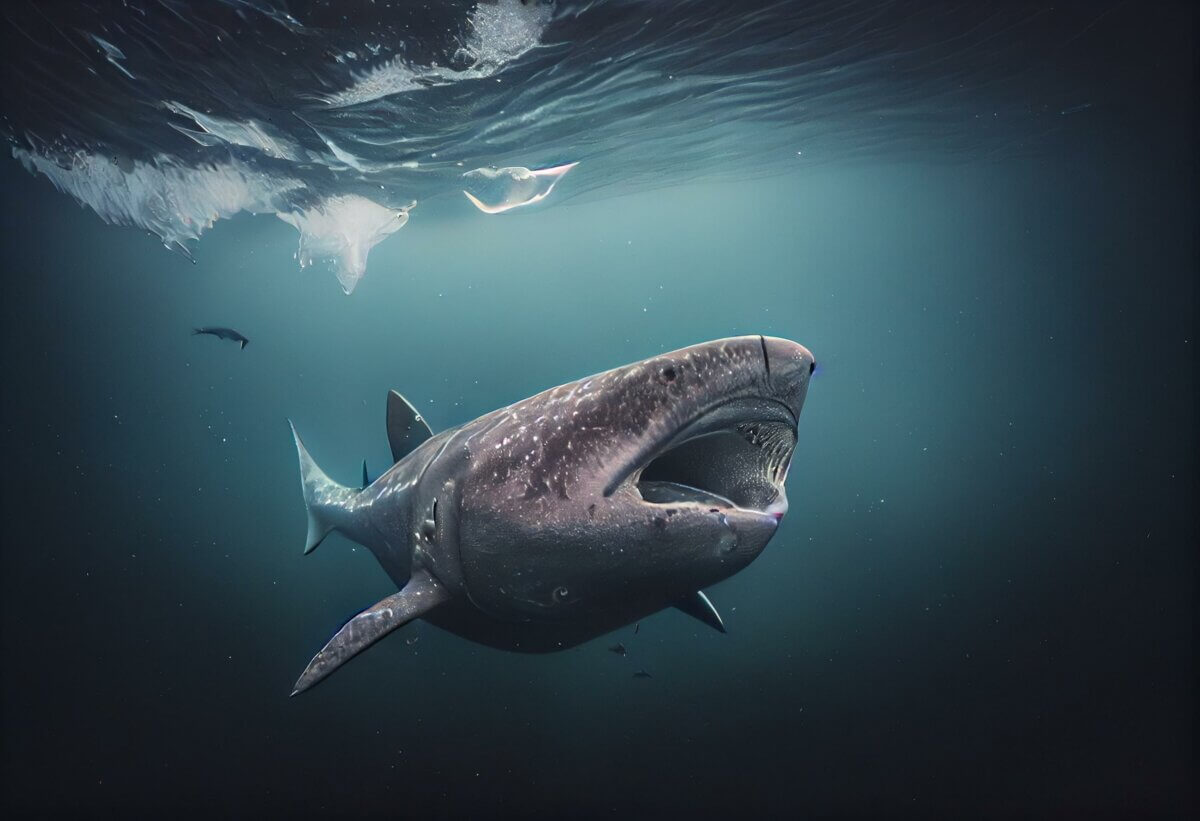
(© Chloe - stock.adobe.com)
PRAGUE, Czech Republic — Could a shark in the Arctic hold the key to longer lives for humans? A groundbreaking study has uncovered a fascinating clue to the extraordinary longevity of the Greenland shark, potentially paving the way for new anti-aging treatments.
This deep-sea dweller, known to live for at least 270 years and possibly beyond 500, has long puzzled researchers with its age-defying abilities. Now, a team led by Ewan Camplisson, a PhD student at the University of Manchester, has discovered that the secret might lie in the shark’s unique muscle metabolism.
The Greenland shark, with its potential to live for half a millennium, isn’t just breaking records – it’s rewriting our understanding of vertebrate aging. This discovery, presented at the Society for Experimental Biology Annual Conference in Prague, could have far-reaching implications, from protecting this vulnerable species against climate change to potentially improving human cardiovascular health.

Methodology: Unraveling the Metabolic Mystery
Previous theories attributed the Greenland shark’s longevity to its cold environment and minimal movement. However, Camplisson and his team suspected there might be more to the story. They set out to investigate whether these sharks show traditional signs of aging in their metabolism, as seen in most other species.
To crack this biological puzzle, the researchers employed a clever method:
- Muscle Tissue Analysis: The team collected preserved muscle tissue samples from Greenland sharks of various ages.
- Enzyme Assays: They conducted enzyme assays on these samples to measure metabolic activity.
- Spectrophotometer Measurements: Using a spectrophotometer, they measured the metabolic activity of enzymes across different shark ages and environmental temperatures.
This approach allowed the scientists to paint a picture of how the Greenland shark’s metabolism behaves over time and in different conditions.
Key Results: A Metabolism That Defies Age
The results found no significant difference in muscle metabolic activity across different ages. This suggests that the sharks’ metabolism does not appear to drop over time and may play a key role in their incredibly long lives.
“This is quite different to most animals which tend to show some variation in their metabolic enzyme activity as they age,” Camplisson says in a media release. “The results support our hypothesis that the Greenland shark does not show the same traditional signs of aging as other animals.”
This discovery stands in stark contrast to what we observe in most animals, where metabolic enzyme activity typically varies with age. The Greenland shark, it seems, has found a way to maintain its metabolic activity throughout its remarkable lifespan.
The study also revealed an unexpected twist regarding temperature. The Greenland shark’s metabolic enzymes were significantly more active at higher temperatures.
“This would suggest that the shark’s red muscle metabolism is not specially adapted for the polar environment, otherwise we would have expected to see less of a temperature related difference in activity,” Camplisson explains.
This finding challenges our assumptions about how these cold-water creatures are adapted to their chilly habitat.
Discussion & Takeaways
The implications of this research extend far beyond academic interest. In an era of rapid climate change, long-lived species like the Greenland shark face unique challenges.
“A female Greenland shark may not become sexually mature until it is 150 years old and with such a long generation time, the species will have far less of a chance to adapt to anthropogenic changes in their environment,” Camplisson points out.
The potential applications of this research don’t stop at conservation. Camplisson is also exploring how these findings might benefit human health.
“By studying the Greenland shark and its heart, we may be able to better understand our own cardiovascular health,” the study author concludes. “These are issues that become progressively more common and severe with increasing age.”


