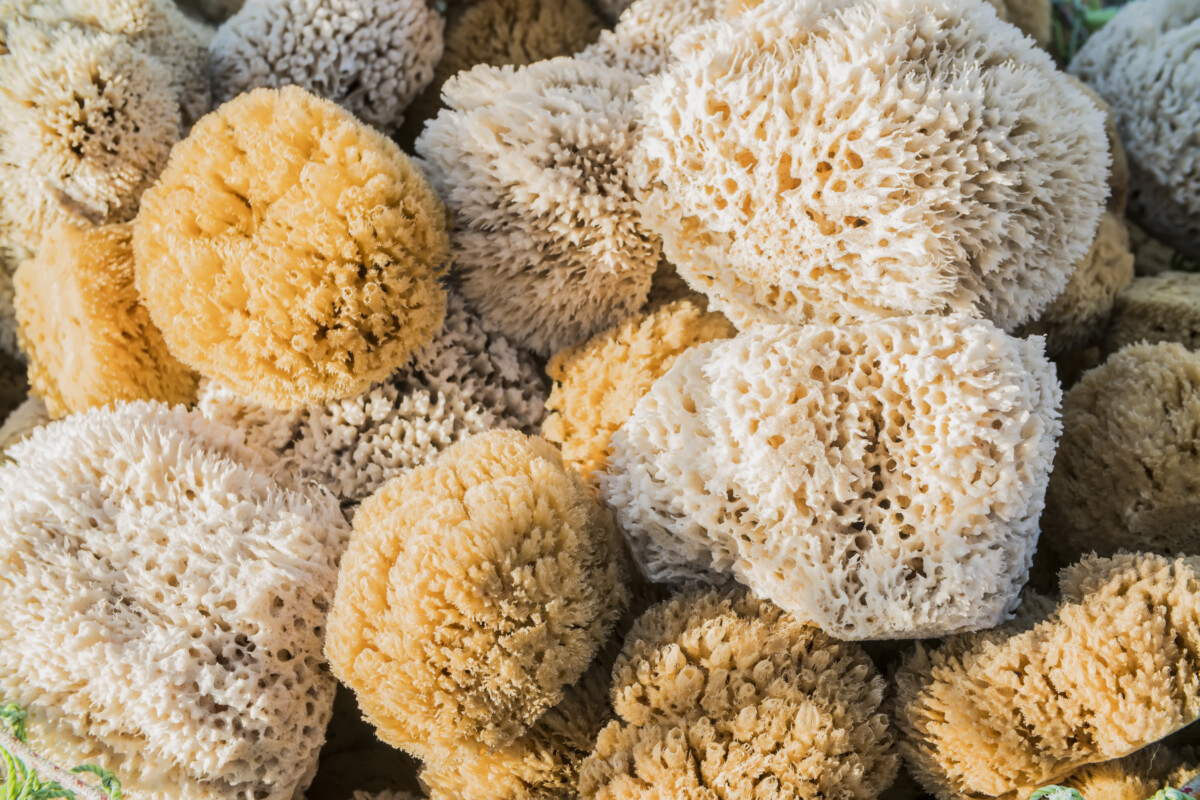
Colorful sea sponges line the ocean floor. (© denissimonov - stock.adobe.com)
VLADIVOSTOK, Russia — Sea sponges produce molecules that may be used to form tumor-killing compounds, according to recent research. Bioactive molecules from the sponge are capable of fighting cancer cells that are normally difficult to kill with chemotherapy.
Additionally, scientists at Far Eastern Federal University in Russia say the sea sponge molecules offer other functions that aid in the elimination of tumors in the body.
The molecule referred to as 3,10-dibromofascaplysin, was chemically synthesized after being extracted from the Fascaplysinopsis reticulata sea sponge. The compound has been tested on cancer cells of the prostate, during which it caused the cancer cells to perform “apoptosis” or cell-mediated death.
“The examined compound, while killing cancer cells, even ones resistant to standard chemotherapy, simultaneously activates an enzyme (kinase) protecting these tumor cells. However, it can’t be considered as a “good” or “bad” effect. This is just a mechanism of action, an understanding of which suggests us to apply 3,10-dibromofascaplysin together with inhibitors of these enzymes,” says Dr. Sergey Dyshlovoy, from the university’s School of Natural Sciences, in a statement.
The manmade compound not only activates cell death of the tumor cells but works alongside other anti-cancer drugs to help them function more efficiently. The researchers plan to test the compound on normal cells in order to ensure that non-cancer cells of the body will be affected.
“Fascaplysins are rather toxic to non-cancer cells. In our laboratory, we are trying to modify the structure of these compounds in order to reduce their cytotoxic effect on normal cells, while maintaining the necessary antitumor effect. The goal is to create a substance for targeted therapy, with a minimum of side effects for healthy cells of the body,” says Dr. Maxim Zhidkov, Head of Department of Organic Chemistry with the university’s School of Natural Sciences.
This study is published in Marine Drugs.


