
It may not be time to celebrate that physics discovery just yet. (Credit: PeopleImages on Shutterstock)
Pittsburgh Physicists Expose Flaw in How Quantum Breakthroughs Are Claimed
In A Nutshell
- The solution: share complete datasets publicly and test findings across wider parameter ranges before claiming breakthrough discoveries.
- Pittsburgh-led physicists reanalyzed their own quantum experiments and found that promising “smoking gun” evidence vanished when they examined data beyond narrow parameter windows.
- Four case studies showed patterns that initially looked like exotic topological states but turned out to be measurement artifacts from fine-tuned experimental conditions.
- The problem: researchers often select only the most dramatic data slices, introducing bias even without intentional manipulation.
When physicists discover something exciting in their lab, they want proof that stands out like a “smoking gun.” That means evidence is clear, undeniable, and impossible to ignore. A team of researchers just showed why that approach can backfire spectacularly.
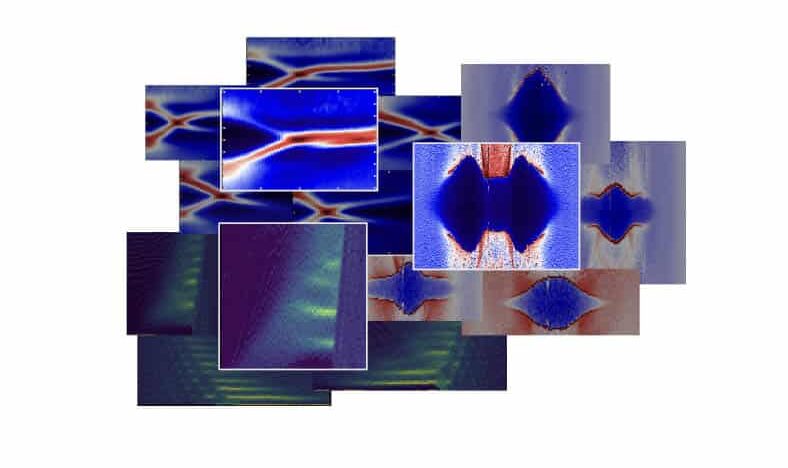
Scientists at the University of Pittsburgh analyzed data from four types of experiments where initial findings looked like breakthroughs in quantum physics. These were case studies from the team’s own research, first presented in their most promising slices, then shown in fuller context. Each experiment seemed to show evidence of exotic states of matter called topological phases, which could eventually lead to quantum computers that store information in ways impossible for today’s machines.
The catch? When the team looked at more data from the same experiments, the smoking gun evidence vanished. What appeared to be revolutionary physics turned out to be measurement artifacts, or patterns created by how the experiments were set up, not by new physics.
The researchers found that in micrometer- or nanometer-scale specimens, phenomenology can mimic the anticipated behavior without containing the exotic states, according to their paper published in Science.

Four Cases of Mistaken Physics
The study dissected four types of experiments, each initially showing promising signs of topological phenomena. In one case, researchers measured electrical current that increased when they applied a magnetic field to tiny nanowire junctions. This behavior suggested an exotic type of superconductivity called triplet pairing.
But there was a problem: the enhanced current only appeared in a narrow range of experimental conditions. When researchers explored a wider range of gate voltages, supercurrent behaved normally, decreasing with magnetic field as expected. The team traced the unusual behavior to resonances in the junction that suppressed current at zero field, making it appear to increase at higher fields.
Another experiment involved searching for particles called Majorana modes, which could serve as building blocks for topological quantum computers. Researchers detected conductance plateaus at zero voltage bias that matched theoretical predictions for Majoranas. These plateaus even appeared at the predicted quantum value.
Yet these data were obtained at zero external magnetic field. The paper notes that such conditions would be a major advantage for topological quantum computing based on Majorana modes. However, the devices used micromagnets positioned near the tunnel junctions that created on-chip magnetic fields, providing the necessary conditions without an external field. The conductance values also depended on subtracting an unknown series resistance. Similar plateaus appeared at different values in other measurement runs. A more likely explanation? Unintended quantum dots near the tunnel barrier, rather than exotic topological states.
A third experiment looked for missing steps in what’s called the Shapiro spectrum. When researchers applied microwave radiation to their junctions, certain voltage steps disappeared, specifically the odd-numbered ones. According to theory, this pattern signals something called the fractional Josephson effect, which occurs when Majorana particles fuse together.
Unfortunately, the junctions weren’t in the conditions needed for Majorana physics. At other frequencies and gate settings, even-numbered steps went missing too. The researchers determined that other nonlinearities in the device could disrupt step patterns in ways that mimicked topological effects.
When Fractional Charges Aren’t Really Fractional
The fourth example involved quantum dots showing conductance patterns that jumped by fractions of a period, with some by approximately one-third. Fractional charges could indicate anyons, particles that could enable certain types of quantum computation. However, these measurements were done at zero magnetic field, not in the fractional quantum Hall regime where such exotic charges appear.
The jumps more likely came from ordinary electrons moving in nearby charge traps that coupled capacitively to the main quantum dot. When one electron enters a side dot, it induces about one-third of a charge on the primary dot, creating patterns that look exotic but aren’t.
Why Narrow Data Selection Creates Problems
The Pittsburgh team argues that the reliability of physics claims depends on sharing complete datasets, not just the most dramatic findings. According to the researchers, with digital publishing and cloud storage, sharing data is technologically straightforward and can work across a wide range of research methods.
The researchers point out several problems with the smoking gun approach. Predicted signatures often come from simplified models that don’t include all real-world complexities. Researchers sometimes fine-tune experimental parameters to coax systems into narrow regimes where desired patterns appear. Even without deliberate tuning, selecting dramatic data from larger sets introduces bias.
Study authors note that the desire for greater verifiability in physics has been underscored by retractions, expressions of concern, and corrections in topological physics and broader condensed matter research in recent years.
So what should researchers do instead? The team recommends expanding parameter ranges beyond initial windows where interesting signals appear. They suggest disclosing study duration, sample counts, and total data volumes. Papers should include thorough discussions of alternative explanations considered during peer review.
The Data Sharing Solution
Most importantly, researchers should share full datasets without selection. “The larger the volume of information available, the greater the plausibility of proposed explanations.” Cloud storage makes this straightforward.
The approach doesn’t mean abandoning searches for dramatic signals. Datasets can illustrate interesting claims effectively. But papers need to clarify over what parameter ranges signals persist and where they vanish. Authors should disclose how fine-tuned their figures are and what typical regimes look like.
Mesoscopic physics (studying systems at scales between atoms and bulk materials) produces enough variety that patterns can mimic topological phenomena even in trivial materials. The four examples the Pittsburgh-led team analyzed initially matched expectations for discoveries but revealed more mundane origins under closer examination.
The work serves as a reminder for fields chasing breakthrough discoveries. When the stakes are high and the phenomena subtle, even trained physicists can mistake artifacts for physics. The solution isn’t more skepticism—it’s more data, shared openly.
Paper Summary
Limitations
The authors acknowledge their examples focus specifically on mesoscopic devices where quantum confinement, interference, defects, disorder, and complex geometry can produce spurious signals. The patterns identified may not apply to all types of topological physics experiments, particularly those in bulk materials or using different measurement techniques. The study doesn’t provide complete theoretical models explaining all observed artifacts.
Funding and Disclosures
The work was supported by multiple sources including the U.S. Department of Energy (Basic Energy Sciences grant DE-SC-0022073), NSF programs (PIRE:HYBRID OISE-1743717, Quantum Foundry DMR-1906325), U.S. Office of Naval Research and Army Research Office, and French funding agencies (France ANR grant ANR-17-PIRE-0001, France CNRS IRP HYNATOQ). Materials were provided by collaborators at various institutions. The authors declare no competing interests.
Publication Details
S.M. Frolov (corresponding author, [email protected]), P. Zhang, B. Zhang, Y. Jiang, S. Byard, S.R. Mudi (Department of Physics and Astronomy, University of Pittsburgh), J. Chen (Department of Electrical and Computer Engineering, University of Pittsburgh), A.-H. Chen, M. Hocevar (Universite Grenoble Alpes, CNRS, Grenoble INP, Institut Néel, Grenoble, France), M. Gupta, C. Riggert, V.S. Pribiag (School of Physics and Astronomy, University of Minnesota Twin Cities). Published in Science, January 8, 2026. DOI: 10.1126/science.adk9181. Submitted 18 September 2023; resubmitted 19 December 2023; accepted 20 November 2025.


