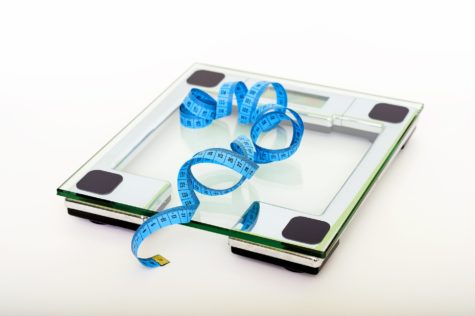
PHILADELPHIA — The mere act of stepping on a scale daily may help reduce your weight, even if you’re not actively trying to shed pounds, a new study finds.
Researchers at Drexel University and the University of Pennsylvania examined 294 female college students of varying builds and body fat percentages over a two-year period, hoping to find the benefits of consistently checking one’s weight.

Previous research had found that daily weight checking can help keep off the pounds for those on a weight loss program, but the researchers wanted to look into how the habit benefitted those who had no regimen.
College students are known for gaining a significant amount of weight, particularly during their freshman year, leading the researchers to choose them as a demographic to study.
Overall, participants who reported weighing themselves at least once a day over a defined period during the study saw weight loss, along with a reduction in their BMI.
“The losses in BMI and body fat percentage were modest, but still significant, especially keeping in mind that these women were not part of a weight loss program,” says lead researcher Diane Rosenbaum, PhD, in a Drexel news release. “We did not expect that, in the absence of a weight loss intervention, folks would be losing weight.”
Surprisingly, participants who checked their weight more frequently had a heavier BMI and greater percentage of body fat at baseline, which runs contrary to previous findings.
While these findings may be conversation starters, the researchers warn that the relationship between stepping on the scale and weight loss may be one of correlation, instead of causation.
“It is possible that the relation between self-weighing and weight might be driven by scale avoidance among those who experienced weight gain,” they write,” the researchers write.
Certainly, more research will have to go into understanding this relationship.
For now, however, it’s safe to assume that checking your weight as obsessively as you look at a clock has some sway in letting you have a slimmer figure.
Rosenbaum et al. published their research in the Journal of Behavioral Medicine.


