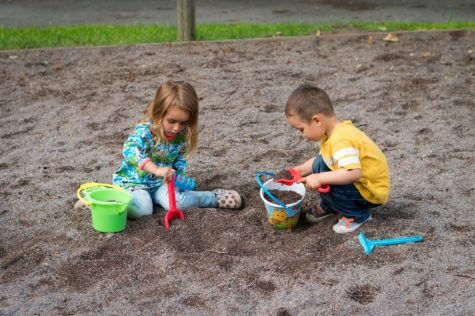
MADRID — If you’re worried about your child picking up germs from other kids at the playground, sending them to dig around in the seemingly harmless sandbox isn’t much better of an option. A new study finds that sand at your favorite local park may actually play a role in transmitting bacteria to children and pets.
Researchers at the Complutense University of Madrid took sand samples from 20 pairs of sandboxes used by children or dogs at parks across the city. The team found that 52.5% of the sand samples tested positive for Clostridium difficile, bacterium more commonly known as C. diff.

C. diff can be contracted by touching contaminated surfaces and often causes diarrhea, but symptoms can be potentially fatal as it can cause serious damage and inflammation of the colon. A recent study found C.diff can often be picked up from hospital floors.
When it came to sand, the researchers also noted that there were also various strains of C. diff in the sand, some displaying increased toxin production and some that were resistant to antibiotics and other drugs. The authors say the alarming discovery “constitutes a major health risk” to both kids and pets.
“Our results are just a call to action. A ‘One Health‘ approach is required in future environmental surveys for this emerging pathogen,” says Prof. José Blanco, one of the study’s authors, in a press release.
One Health is a widely recognized initiative “to encourage the collaborative efforts of multiple disciplines-working locally, nationally, and globally-to achieve the best health for people, animals, and our environment,” according to the Centers for Disease Control and Prevention.
The study was published this week in the journal Zoonoses and Public Health.


