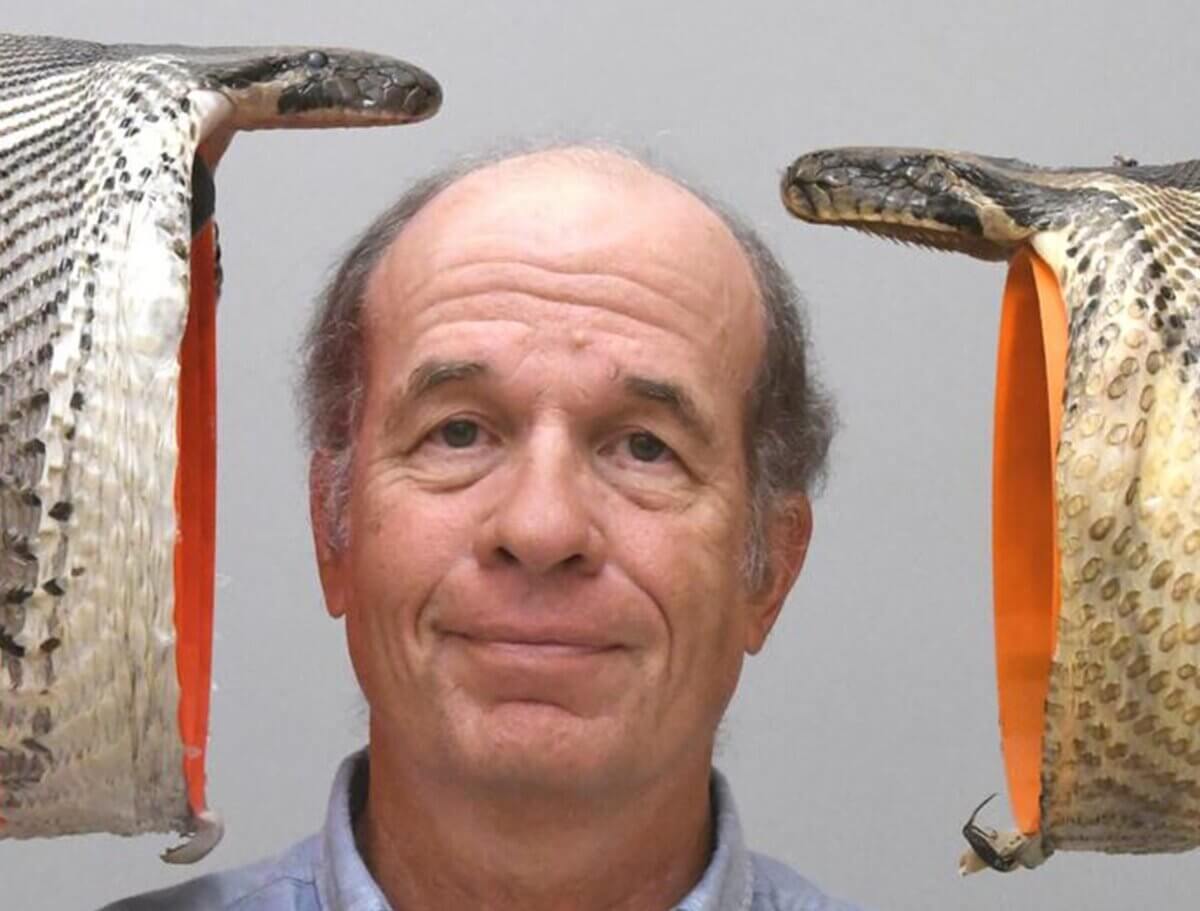
Bruce Jayne poses with two mounted Burmese python specimens captured in Florida to show the impressive gape of their mouths. The specimen on the left has a 26-centimeter gape compared to the 22-centimeter gape of the snake on the right. But that gives the larger snake's mouth a 40% bigger area to swallow prey. (Credit: Bruce Jayne)
CINCINNATI — In a discovery that might even frighten the writers of the horror movie “Anaconda,” researchers have documented just how wide Burmese pythons can stretch their mouths. The answer? Wide enough to swallow a deer with a chest the size of a car tire – and that’s just the beginning of this remarkable scientific story.
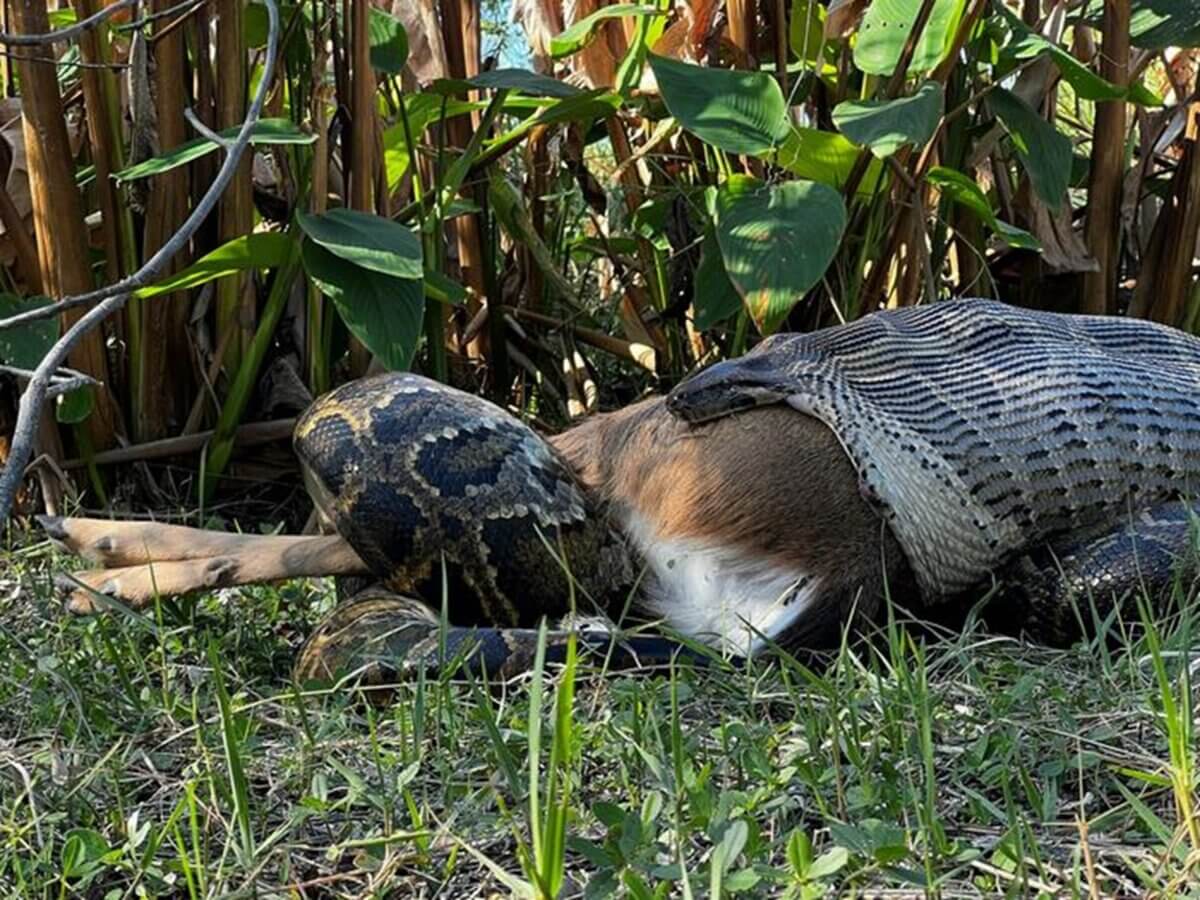
Specifically, researchers have documented the largest-ever measured gape size in Burmese pythons, with three massive specimens each able to open their mouths an impressive 26 centimeters (about 10.2 inches) wide. Even more remarkably, as seen below, one of these snakes was caught in the act of swallowing a 77-pound white-tailed deer – a meal that nearly reached the absolute limit of what the python’s expandable jaws could handle.
“Watching an invasive apex predator swallow a full-sized deer in front of you is something that you will never forget,” says Ian Bartoszek from the Conservancy of Southwest Florida in a university release. ”The impact the Burmese python is having on native wildlife cannot be denied. This is a wildlife issue of our time for the Greater Everglades ecosystem.”
The study, published in the journal Reptiles & Amphibians, provides unprecedented insights into just how large a meal these invasive predators can consume in Florida’s wilderness. This information is crucial for understanding their impact on local wildlife populations.
The research team, led by Bruce Jayne from the University of Cincinnati, studied three exceptionally large female Burmese pythons captured in southern Florida. The longest of these serpentine giants measured an impressive 579 centimeters (19 feet) in length – making it the longest Burmese python ever captured in Florida.
However, it was another python in the study that provided the most dramatic evidence of these snakes’ feeding capabilities. This individual, measuring 450 centimeters (14.8 feet) long, was discovered while swallowing an adult white-tailed deer. When researchers prompted the snake to regurgitate its meal, they found that the deer’s mid-body circumference was 78.5 centimeters (30.9 inches) – taking up a whopping 93% of the snake’s maximum possible gape area.
“One of the challenges of studying Burmese pythons is the tremendous range in size within the species,” explains Prof. Jayne. “Big pythons longer than 16 feet are very rare. Of the more than 9,000 pythons that contractors have captured in Florida, less than 1% were of that extreme size.”
“It’s almost a certainty that we have yet to capture the biggest Burmese python in Florida,” Prof. Jayne continues. “So, it seems very plausible that a record-breaking python with a gape of 30 centimeters could eat a 120-pound deer.”
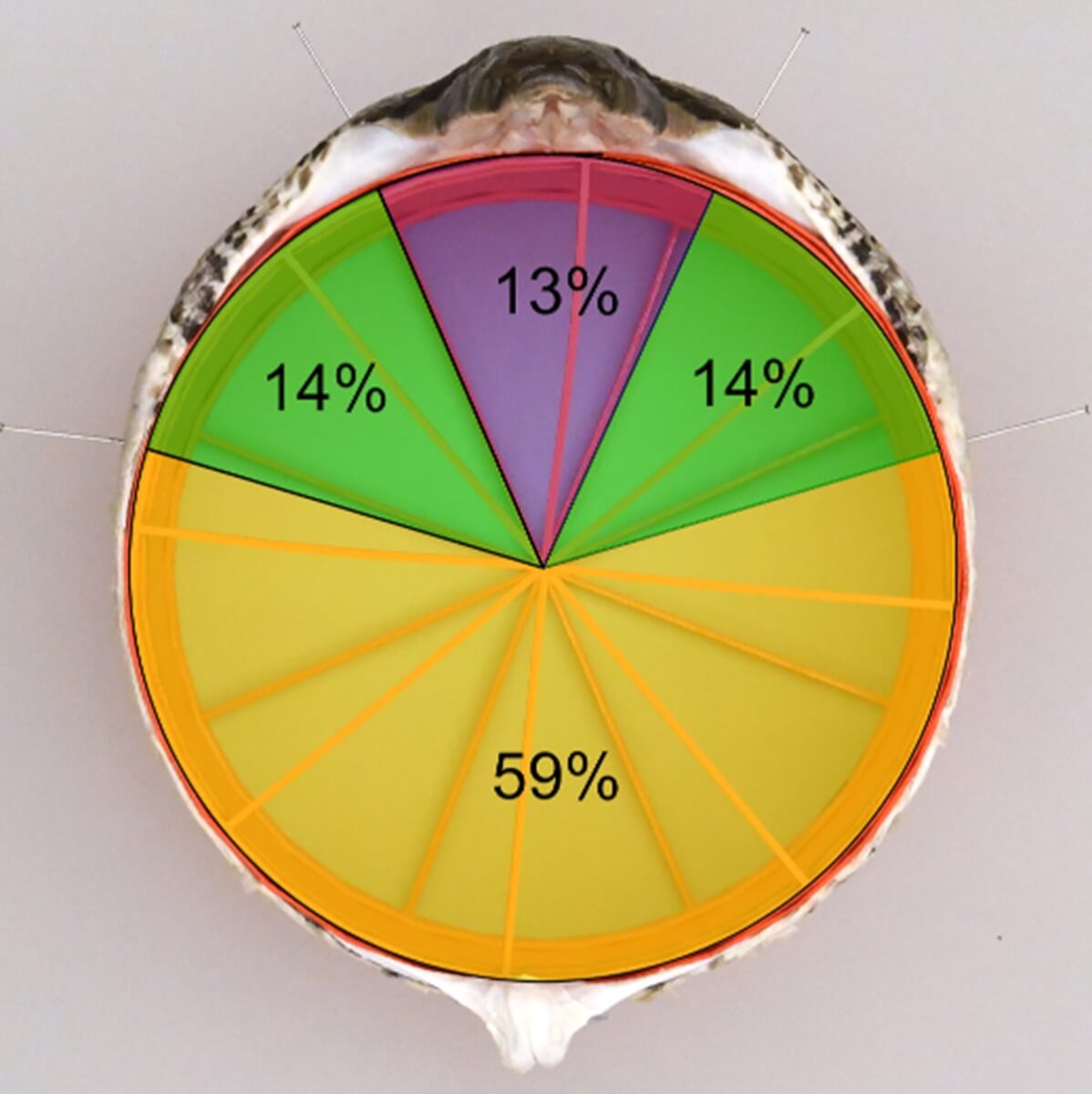
To understand just how remarkable this is, imagine trying to swallow a watermelon whole. These pythons can unlock their jaws and stretch the soft tissue between them to create an opening larger than a dinner plate. The study found that 56 to 59% of this gape area comes from the stretching of soft tissues between the lower jaws, rather than from the bones themselves.
The findings suggest that Burmese pythons approaching the species’ maximum size could potentially achieve a gape diameter of more than 10 inches, approaching nearly one foot (11.8 inches). This would theoretically allow them to swallow deer weighing up to 128 pounds or alligators weighing up to 211 pounds.
This research has important implications for understanding the ecological impact of these invasive snakes in Florida. Since their introduction through the exotic pet trade, Burmese pythons have become a major problem in the state, particularly in the Everglades, where they prey on native wildlife. Understanding their maximum feeding capabilities helps wildlife managers better assess their threat to various animal populations.
“That’s the tip of the iceberg of this phenomenal impact on prey populations in Florida,” Prof. Jayne concludes. “Researchers are trying to get a handle on where the spread might stop.”
Paper Summary
Methodology
The researchers measured the maximum gape of the pythons using 3D-printed probes of increasing size, carefully inserting them into the snakes’ mouths until they reached the largest size possible without damaging the tissues. They took detailed measurements of skull length, jaw length, and the contribution of soft tissues to the overall gape size. For the python caught eating the deer, they measured the prey’s circumference and documented the swallowing process.
Key Results
The study found that all three large pythons had identical maximum gape diameters of 26 centimeters, significantly exceeding the previous record of 22 centimeters. The soft tissues between the jaws contributed to more than half of the total gape area, highlighting their importance in allowing these snakes to consume such large prey.
Study Limitations
The study was limited by the rarity of very large pythons and the challenges of studying them in the wild. The researchers also noted that the timing between a snake’s death and when its gape was measured could affect the results, as could recent feeding history and tissue preservation methods.
Discussion & Takeaways
The research demonstrates that Burmese pythons not only can eat prey of impressive absolute size but also sometimes consume prey that approaches their anatomical limits in the wild. This contradicts the assumption that snakes typically eat prey much smaller than their maximum capabilities. The findings also suggest that recent feeding might affect a snake’s gape size by altering the mechanical properties of their soft tissues, though more research is needed to confirm this.
Funding & Disclosures
The study was conducted in compliance with the Institutional Animal Care and Use Committee of the University of Cincinnati (protocol number 21-05-26-02). The paper does not explicitly state funding sources. The researchers acknowledge assistance from Conservancy Interns B. Halpern, T. Bergstrom, M. Metcalf, and A. Fuchs, and thank J. Waleri and S. Gauta for providing the longest python specimen.


