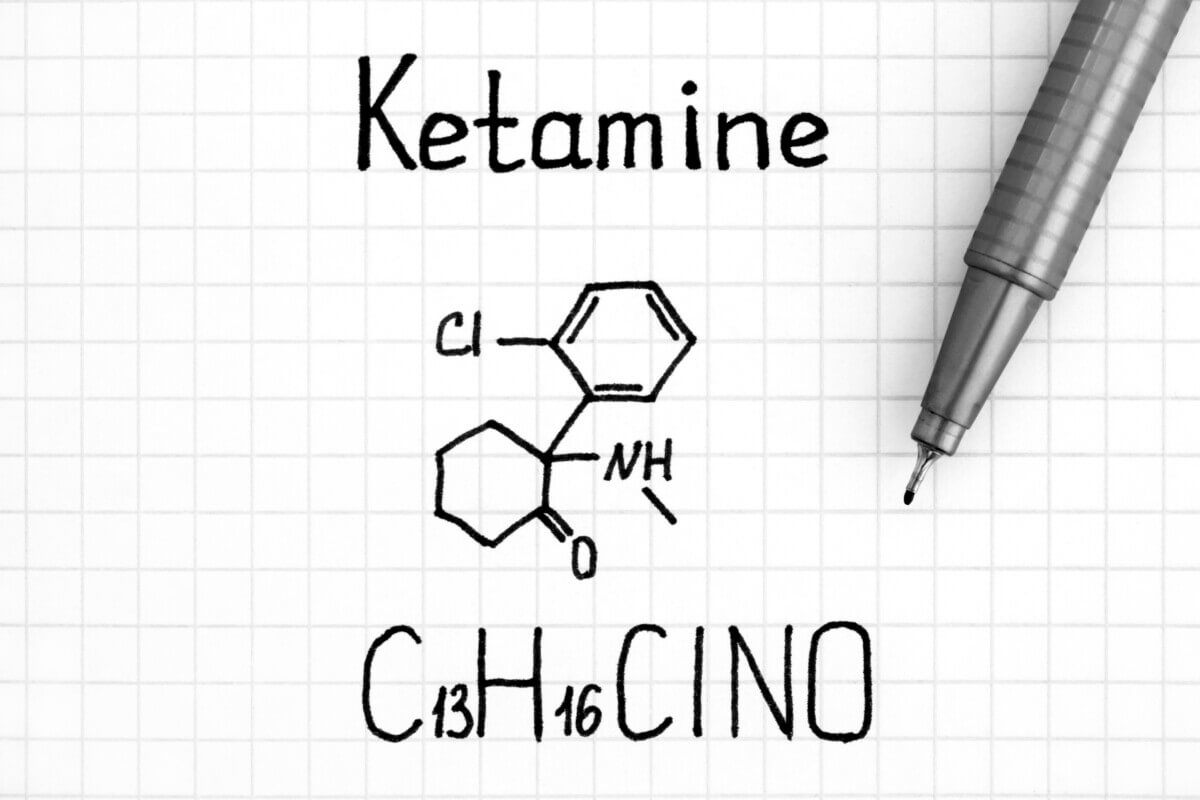
(© rosinka79 - stock.adobe.com)
Some Psilocybin and Ketamine Doses Slowed Mice and Improved Accuracy
In A Nutshell
- Certain doses of psilocybin and ketamine made mice slower to decide but more accurate in a light-flash task.
- Under the drugs, mice relied less on habits, such as favoring one side, and more on the evidence in front of them.
- Timing of activity in a decision-related brain region changed, but whether that caused the accuracy gain is unknown.
- Only mice were tested, so the results do not show how these drugs affect decisions or treatment in people.
Drugs that warp perception hardly sound like a recipe for good judgment. In a new mouse study, though, certain doses of psilocybin and ketamine did the opposite of clouding decisions: the animals took longer to choose and picked the right answer more often.
Boston University researchers published the results in the journal Science Advances. Cocaine (12 mice) and diazepam (14 mice), a stimulant and a sedative used as comparison drugs, produced no such pattern, so the improvement was not simply a side effect of being revved up or relaxed.
Behind the slower pace was a change in strategy. Under the drugs, mice leaned on the flashing lights in front of them rather than on habit. Psilocybin and ketamine are drawing attention as rapid-acting treatments for psychiatric conditions, yet how they change everyday thinking remains poorly understood, and this experiment targets that gap.
Psychedelics and Decision-Making: Mice Chose More Slowly and More Accurately
In baseline testing, researchers trained 84 mice on a light-flash game. Each mouse poked its nose into a center port to start a trial, then watched lights blink on its left and right. One side flashed 80% of the time, the other 20%, and the mouse could pick a side whenever it felt sure. Correct picks earned a small sugar-water reward. Waiting meant more flashes and a better read, like sitting through one more weather forecast before deciding on an umbrella.
Next, mice received psilocybin (42 mice, three doses), ketamine (30 mice, four doses), or plain saline, spacing each mouse’s doses a week apart so one drug could wear off before the next. About half were female, with no consistent sex differences.
Psilocybin raised both accuracy and decision time as doses climbed. Ketamine did the same at middle doses, while the lowest dose had no significant effect and the highest slowed the animals without making them more accurate.

Psychedelics Made Mice Rely Less on Habit and More on Sensory Evidence
A computer model sorted every trial into one of three decision styles: an evidence-driven style, where choices tracked the flashes, and two biased styles, where mice favored the left or right port or repeated a recent winning move. Even on plain saline, mice spent plenty of trials running on autopilot. Under psilocybin and ketamine, mice spent less time in the biased styles and more in the evidence-driven one.
A second model estimated how much evidence mice needed before committing. Both drugs raised that bar, so the animals waited for stronger proof before choosing. One reasonable reading is that habit became a less appealing shortcut, so the mice stopped betting on it. Dulled senses were not the explanation, since their sensitivity to the flashes did not drop. Time between trials also stayed about the same at the doses the team focused on, which argues against general sluggishness.
Timing differed by drug. Psilocybin’s effect held steady through the one-hour session, while ketamine’s peaked within the first 20 minutes and then faded.
Psychedelics Altered Decision-Making Circuits Instead of the Whole Brain
To find the brain areas involved, researchers measured c-Fos, a protein that builds up in recently active cells, across 150 regions after the task. Groups were small, with 8 to 15 mice each, and included animals that stayed in their home cages for comparison. Mice doing the task showed clearly different brain-wide patterns than home-cage mice, and the drugs adjusted activity within those task-related networks rather than turning everything up. Psilocybin and ketamine, which act on different brain chemistry, produced similar patterns, especially during the task.
One region stood out: the orbitofrontal cortex, a patch at the front of the brain just above the eyes that helps weigh expectations against incoming information. It was active during the task and further altered by both drugs.
Then, a tiny head-mounted microscope let the team watch 2,777 cells in that region of six mice mid-task. Some cells ramped up before a choice, while others peaked right at the moment of choice. Under psilocybin and ketamine, the choice-moment peaks arrived later and weaker, matching the slower decisions. The cells kept their roles in tracking the task, but their coordination with one another shifted slightly. In effect, the cells kept doing their jobs, just on a different schedule. Whether this region caused the better accuracy remains unknown, and the authors say it may help coordinate decisions rather than drive behavior.
Human brain studies cited by the authors fit the idea that psychedelics loosen the grip of expectations, showing weaker top-down control over the senses. This experiment, though, tested only mice, and the authors state the findings “should not be interpreted as directly explaining therapeutic outcomes.” Until human data on decisions arrive, the result earns curiosity, not conclusions about treatment. What it does show is that, in mice at the right dose, a mind-altering drug can sharpen judgment instead of dulling it.
Disclaimer: This article is for informational purposes only and is not medical advice. The research described was conducted in mice, and its findings may not apply to people. Nothing here is a recommendation to use psilocybin, ketamine, or any other drug. Readers with questions about their health or medications should consult a qualified healthcare professional.
Paper Notes
Limitations
All findings come from mice performing one laboratory task with flashing lights, so the results may not carry over to people or to messier real-world choices. Only short-term effects within a testing session were measured, and the authors caution that therapeutic outcomes likely depend on longer-term changes and disease-specific mechanisms. The benefit was dose-specific: for ketamine, 10 mg/kg showed no significant effect and 70 mg/kg slowed mice without improving accuracy. Ketamine also works through a different brain system than psilocybin, and the authors note it may fit their framework less directly. Calcium imaging came from six mice, brain-mapping groups held 8 to 15 animals, and the brain findings show associations, since the researchers say the causal roles of individual regions remain unresolved. Only two psychedelic compounds were tested, so a broader panel of drugs is needed to separate general principles from compound-specific effects.
Funding and Disclosures
The work was supported by the NIH Transformative Award, the Ludwig Family Foundation, an Air Force Office of Scientific Research award (FA9550-21-1-0310), the Pew Scholars Program in the Biomedical Sciences, the Chan-Zuckerberg Initiative, and the Neurophotonics Center at Boston University. A Center for Systems Neuroscience distinguished fellowship award supported C. Delgado-Sallent. The authors declare no competing interests. The psilocybin used in the experiments came from the USONA Institute.
Publication Details
Paper title: Psychedelics Shift Decision Strategies and Reconfigure Orbitofrontal Dynamics. Authors: C. Delgado-Sallent, S. A. Ahmed, A. Khawaja-Lopez, B. S. Lee, U. Mishra, R. A. Senne, S. Ramirez, and B. B. Scott, all affiliated with Boston University. S. Ramirez and B. B. Scott are the corresponding authors and contributed equally. Journal: Science Advances, Volume 12, Issue 47, article eaeb3041. Submitted August 7, 2025; accepted October 13, 2026; published November 20, 2026. DOI: 10.1126/sciadv.aeb3041. The paper is open access under a Creative Commons Attribution License 4.0 (CC BY). Data and code: https://doi.org/10.5281/zenodo.21876566.


