
(© Ruslan Mitin - stock.adobe.com)
In A Nutshell
- Blending purified Chlorella vulgaris algae protein into homemade tomato ketchup lifted protein content from 1.6 percent to 6.3 percent, close to four times the original, while adding essential amino acids and minerals.
- A 15-person taste panel liked ketchup with 1 to 5 percent algae almost as much as plain ketchup, but a 13 percent batch scored much lower on color, taste, and texture.
- Antinutritional factors and bacterial counts stayed within safe limits, though the small panel and solvent-heavy extraction leave scale-up and broad appeal unproven.
A humble bottle of tomato ketchup carries almost no protein, barely a rounded 1.6 percent by weight. Researchers in Russia and New Zealand wanted to change that math, so they turned to a protein-rich single-celled green alga called Chlorella vulgaris. After blending purified algae protein into batches of homemade ketchup, they watched the protein content climb as high as 6.3 percent at the heaviest dose, close to four times the original amount, while smaller additions raised protein without spoiling the flavor.
That jump matters because ketchup sits in tens of millions of refrigerators and gets squeezed onto fries, burgers, and eggs by people who would never think of it as a health food. Adding more protein and minerals to a condiment that already earns a spot on the table is an appealing shortcut, and microalgae such as Chlorella have drawn interest as alternative protein sources.
Findings from the study, published in the journal ACS Food Science & Technology, lay out both the promise and the ceiling of the idea. Small additions of algae protein enriched the ketchup and even boosted its antioxidant punch. Push the amount too high, though, and testers noticed the difference, rating a heavily fortified batch noticeably lower on taste, color, and texture.
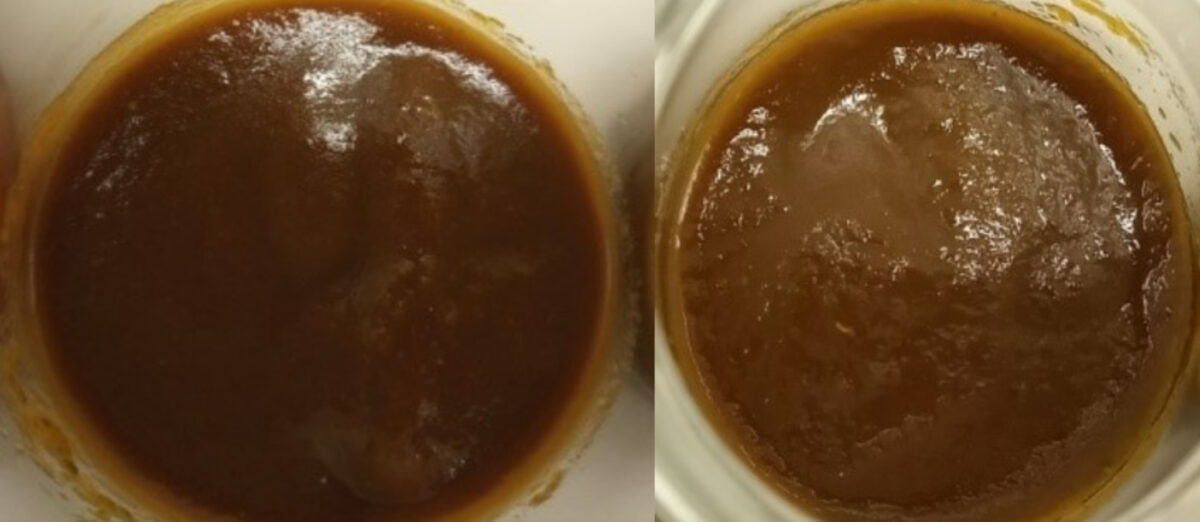
Making algae-fortified ketchup from scratch
Getting protein out of algae is not as simple as stirring in a green powder. Kambele Jonas, Parise Adadi, and their colleagues started with 137 grams of Chlorella vulgaris biomass and stripped away the fat using hexane, then removed pigments and plant compounds with acetone. What remained went through a process called isoelectric precipitation, where the mixture is made strongly alkaline to dissolve the protein and then acidified to a pH of about 4 so the protein clumps together and drops out of solution. Rinsed and neutralized, the recovered material became the Chlorella vulgaris protein isolates, or CPIs, the star ingredient of the whole project.
Drying that wet protein turned out to be a decision with consequences. Researchers split the isolates into two groups, drying one batch in a hot-air oven at 55 degrees Celsius and the other in a vacuum oven at a gentler 50 degrees under reduced pressure. Common sense might suggest the cooler, low-oxygen vacuum method would protect the protein better. Results pointed the other way. Oven-dried isolates dissolved more readily in water and scavenged more free radicals, hitting 65.6 percent in a standard antioxidant test compared with 47.5 percent for the vacuum-dried version.
Armed with the better-performing powder, the team cooked up tomato ketchup from scratch, using tomatoes, sugar, vinegar, salt, and spices, then folded in algae protein at four levels: 1 percent, 3 percent, 5 percent, and 13 percent by weight. A plain batch with no algae served as the control. Every formulation then went through a battery of laboratory tests measuring nutrition, safety, and taste.
Protein and minerals inside the algae-fortified ketchup
Protein was the headline gain, rising from 1.6 percent in the plain ketchup to 6.3 percent in the 13 percent formulation. Just as important, the added protein came loaded with essential amino acids, the building blocks the human body cannot manufacture on its own and must get from food. Laboratory analysis found generous amounts of lysine, leucine, valine, isoleucine, phenylalanine, and threonine in the algae isolates, with lysine and valine among the most abundant at roughly 1,700 and 1,600 milligrams per 100 grams. Lysine is worth singling out because grain-heavy diets often run short on it.
Minerals rose alongside the protein. Fortified samples carried more potassium, sodium, magnesium, calcium, and iron than the plain version, turning a mostly sugar-and-acid product into something with a bit more nutritional backbone. Antioxidant activity climbed too, tracking with the amount of algae added in the laboratory tests, a sign that the isolates carry compounds able to neutralize reactive molecules in the assay.
Safety checks came back reassuring. Antinutritional factors, the naturally occurring compounds such as oxalate and phytate that can block mineral absorption, stayed within accepted limits. Microbial counts, a measure of bacterial contamination, also remained within safe ranges across the fortified batches.
Where the algae-fortified ketchup hit its limit
Taste is where ambition met reality. A panel of 15 volunteers scored each ketchup on color, aroma, taste, texture, and overall liking using a 9-point scale, where 9 means liking a food extremely. Plain ketchup earned a 7.6 for overall acceptability. Batches with 1 and 3 percent algae held up well at 7.5 and 7.2, nearly neck and neck with the control. A 5 percent version slipped to 6.9, still in respectable territory. Loading the ketchup with 13 percent algae protein sent scores tumbling to 5.9, with panelists marking down its darker, brownish-red color and denser texture.
That pattern draws a fairly clear line. Algae green plus tomato red produces a muddier shade as the dose grows, and the protein thickens the ketchup past the smooth consistency people expect from the squeeze bottle. Somewhere between 3 and 5 percent, the researchers found the sweet spot where nutrition rises without the product looking or tasting off. In their words, moderate algae inclusion “offers a favorable balance between nutritional enhancement and desirable sensory attributes.”
A few caveats deserve a mention. Fifteen tasters make for a small panel, enough for an early read but not a national verdict on flavor. Extraction relied on organic solvents and harsh pH swings, which work fine in a lab but raise cost and environmental questions at factory scale. And the taste testing was done by university students in one Russian city, so broader appeal across ages and cultures remains untested.
Even with those limits, the study reframes a familiar condiment as a possible vehicle for better nutrition. Ketchup already goes almost everywhere; giving it a protein and mineral upgrade asks nothing new of the person eating it. As the authors put it, the results demonstrate “the potential of CPIs as sustainable ingredients for developing protein-enriched functional condiments,” provided the recipe keeps the algae in check and the ketchup still tastes like ketchup.
Paper Notes
Limitations
The sensory testing rested on a panel of just 15 student volunteers at a single university in Yekaterinburg, Russia, a sample large enough for a preliminary read but too small and too narrow to represent how the wider public would react to algae in ketchup. The protein extraction depended on organic solvents such as hexane and acetone along with strongly alkaline and acidic pH steps, and the authors themselves note that these conditions “may present challenges for large-scale implementation due to economic and environmental considerations.” Fortification at the highest level, 13 percent, visibly darkened the ketchup and thickened its texture, lowering acceptability and marking a practical ceiling for how much algae the product can carry. The study measured the composition and properties of the ketchup itself and did not test any health outcomes in people, so claims about benefits to the body remain beyond its scope.
Funding and Disclosures
Funding sources and author conflict-of-interest disclosures were not included in the supplementary materials provided for this write-up. An Official Waiver of Ethical Review for the sensory evaluation was issued by the Institute of Chemical Engineering, Ural Federal University, Yekaterinburg (Reference No. 150; 19 June 2026), which confirmed that formal Institutional Review Board approval was not required because the study involved anonymous, non-invasive sensory evaluation of food by adult volunteers who gave written informed consent. The full published article should be consulted for any additional funding acknowledgments or competing-interest statements.
Publication Details
Authors: Kambele Jonas, Okechukwu Queency, Parise Adadi, Feyisayo O. Adepoju, and Elena G. Kovaleva. Affiliations: Laboratory of Biotransformation Technologies and Food Chemistry, Institute of Chemical Technology, Ural Federal University, Yekaterinburg, Russian Federation (Jonas, Okechukwu, Adepoju, Kovaleva); Department of Food Science, University of Otago, Dunedin, New Zealand (Adadi). Corresponding author: Dr. Parise Adadi. Title: “Physicochemical, Nutritional, Microbial, Sensory, and Antinutritional Evaluation of Tomato Ketchup Fortified with Chlorella vulgaris Protein Isolates.” Journal: ACS Food Science & Technology, 2026, volume 6, issue 7, pages 2184–2199. Published online July 2, 2026. DOI: 10.1021/acsfoodscitech.6c00450.


