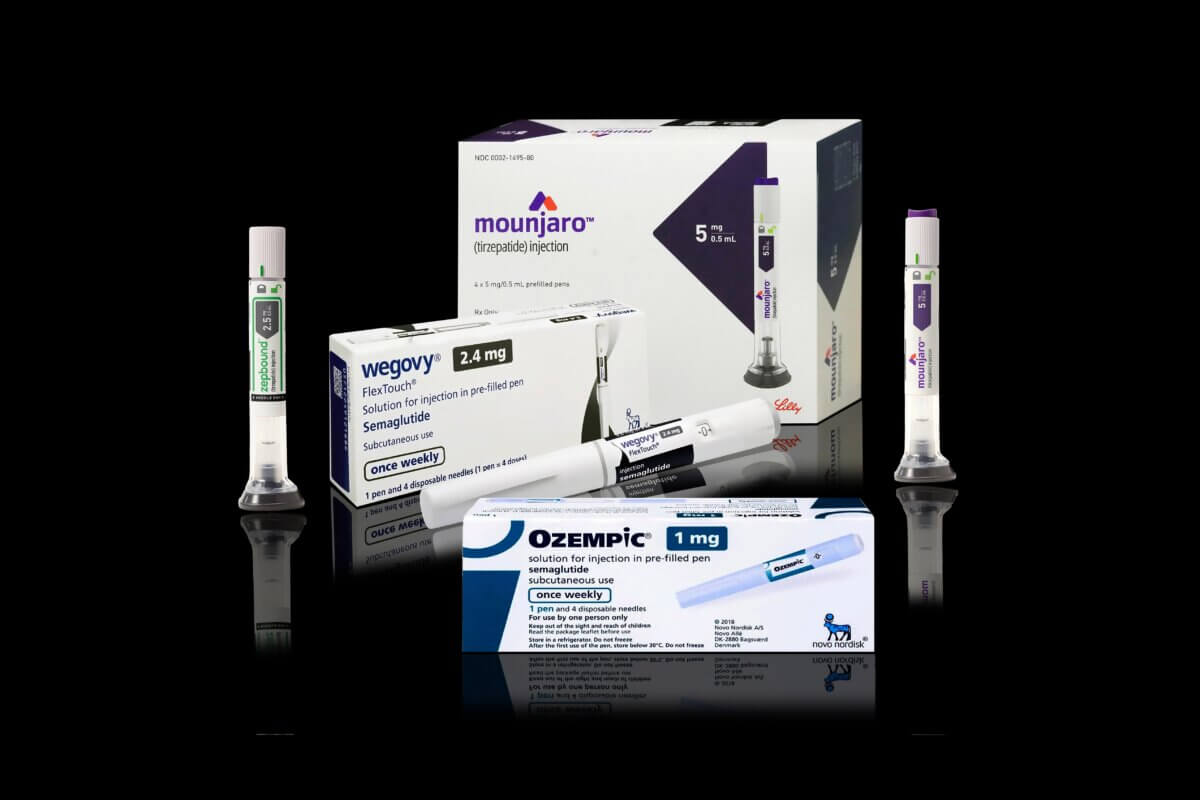
(Credit: oleschwander/Shutterstock)
The demand for GLP-1 drugs (like Wegovy and several others) continues to grow. Despite this escalating demand, the prices for some of these popular drugs are actually dropping, according to a new report from the U.S. Department of Health and Human Services (HHS). However, there’s one major question: will consumers actually feel the benefits of these recent price drops?
GLP-1s are popular medications, most of which are prescribed for patients with Type 2 diabetes. Wegovy is also approved to decrease the risk of serious heart problems such as heart attacks. Saxenda, Wegovy, and Zepbound have all been approved for weight loss. Guidance from the Centers for Medicare and Medicaid Services allows Part D plans to cover anti-obesity medications if they are approved for additional health benefits and used for those conditions.
Last year, the American healthcare industry spent $38.6 billion on semaglutide (Ozempic, Wegovy, Rybelsus), and $13.2 billion on tirzepatide (Mounjaro, Zepbound). Compared to 2022, these were increases of 100.1% and 373.1%, respectively.
Estimates in JAMA Cardiology found that 53% of adults in the U.S. are candidates for semaglutide, specifically for the treatment of Type 2 diabetes, obesity, and obesity-related heart conditions.
Although Ozempic has been in use since 2018, it wasn’t until 2022 that the drug’s popularity skyrocketed. Not even sticker shock slowed the stampede of patients looking to grab the drug. As of July 2024, the list prices for a four-week supply of the drugs approved for weight loss ranged from $1,050 to $1,350.
Most health plans cover the diabetes medication, but prescribing it for weight loss purposes and other off-label reasons has complicated insurance coverage. GLP-1s quickly became the top expense for many insurance plans. So many people were eligible for the drugs that it strained health plan budgets.
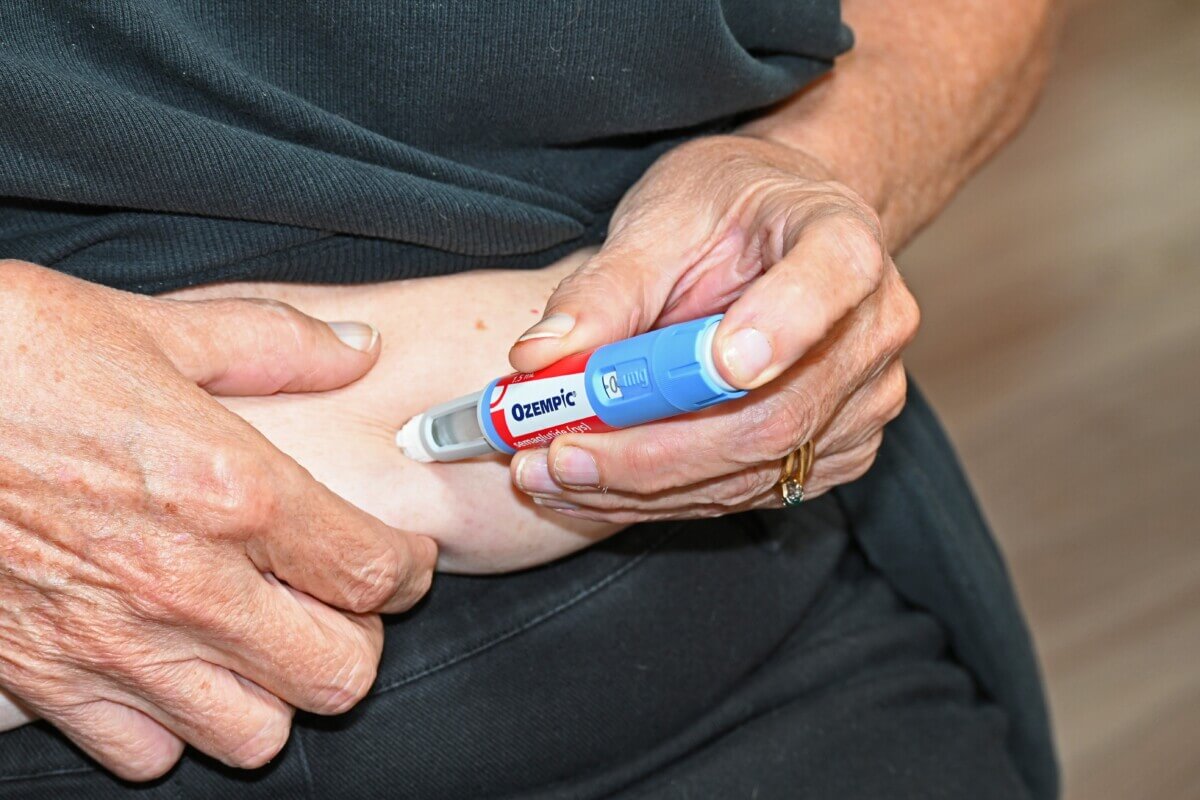
With the surge in popularity, many commercial and state health plans decreased or stopped coverage for weight loss. Many healthcare systems also dropped coverage of the drugs completely.
There may be good news, though, for people covered by Medicare and commercial insurance providers. Novo Nordisk’s Ozempic and Rybelsus have dropped significantly in price. On Nov. 26, the Biden Administration shared a proposal for Medicaid and Medicare to cover weight loss drugs. About a dozen state Medicaid programs already cover the drugs for that purpose.
The list price is $1,349 and $968 for both Ozempic and Rybelsus, respectively. However, the net price is $649 for Wegovy and $290 for Ozempic and Rybelsus. While list prices are stable or increasing for many of these drugs, net prices are falling.
“In the net prices we see evidence of the impact of competition as new drugs in this class enter the market,” HHS officials wrote in a statement.
“In addition, the future path of prices of drugs in this class will be affected by the number of approved conditions for each drug, whether any of the drugs are selected for price negotiation by Medicare, and the number of new drugs that become available.”
So, how does all this affect you?
- Start by questioning your health plan, whether commercial, employer-sponsored, Medicaid, Medicare or some other sponsored plan, about savings for policyholders.
- Discuss what you’re paying out-of-pocket with your pharmacist. They often have coupons that can decrease your cost substantially.
- Write or call the drug manufacturer. They often have programs in which consumers can obtain their drug at a reduced price, whether for one month only or ongoing.
- Contact your legislators about prices and regulations.
What you shouldn’t do is deviate from your doctor’s instructions for which drug, when, or what dosage you’re taking. Skipping or lowering doses to stretch out how long your medication lasts is a recipe for failure and harm.


