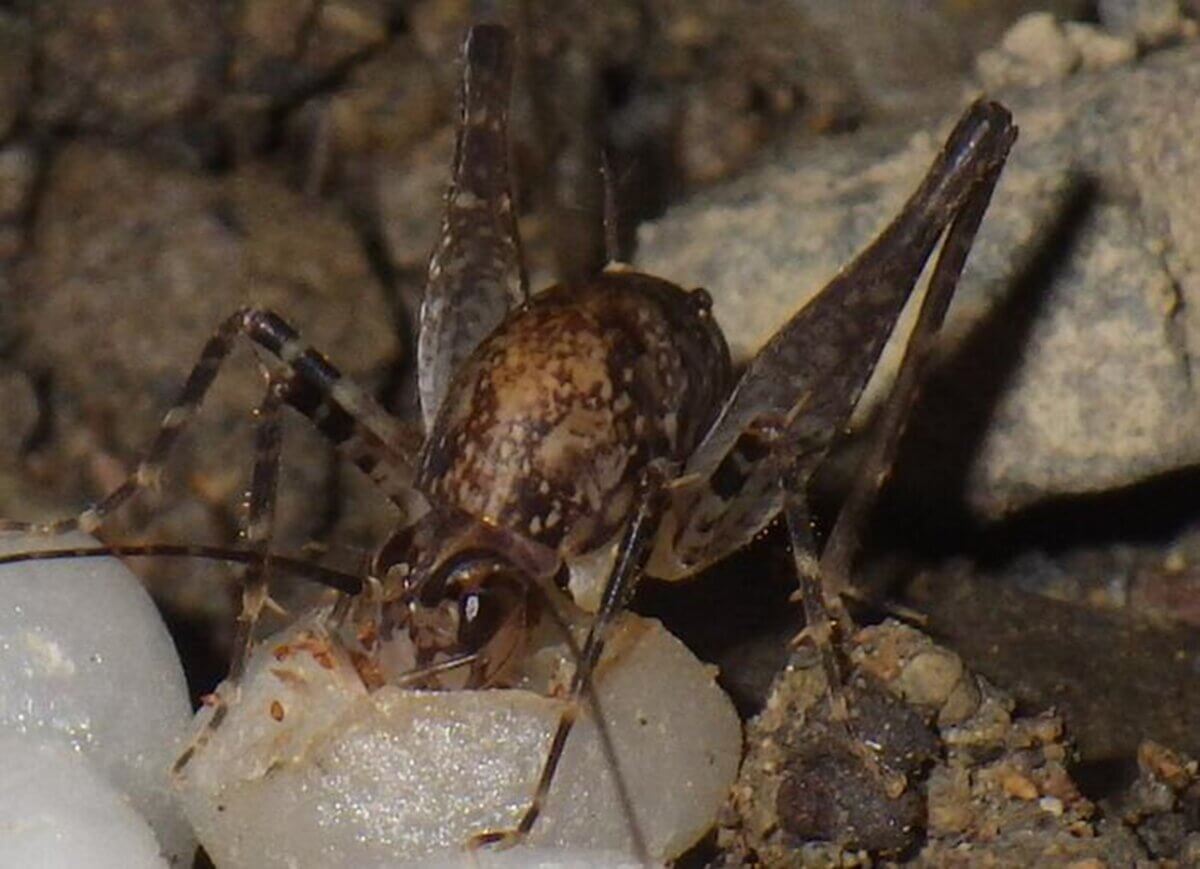
Camel crickets were the main consumers of the fruit of the shrub Rhynchotechum discolor. (Credit: TASHIRO Yohei)
KOBE, Japan — Nature’s ingenuity knows no bounds. On a remote Japanese island, researchers have uncovered a seed dispersal system so unique, it’s challenging everything we thought we knew about plant-insect interactions. In fact, their study suggests fruit exists for a reason we may never have realized.
Picture this: As darkness falls on Amami-Oshima Island, camel crickets emerge from their daytime hideaways. These nocturnal insects, often considered pests in our basements, are on a mission. Their target? The fallen fruits of Rhynchotechum discolor, a common shrub with an uncommon secret.
This isn’t your typical tale of birds or mammals spreading seeds. Instead, it’s a miniature marvel that’s forcing scientists to rethink what they know about plant reproduction and ecosystem dynamics.
Dr. Kenji Suetsugu, a botanist at Kobe University, and his team have uncovered an unexpected alliance between R. discolor and these tiny crickets. Their novel research, published in the journal Plants, People, Planet, reveals a world where insects are more than just pollinators – they’re seed dispersers extraordinaire.
“This result provides the first evidence of insects acting as seed dispersers for a light-harvesting, green plant in regions inhabited by land-dwelling mammals,” says Suetsugu in a statement.
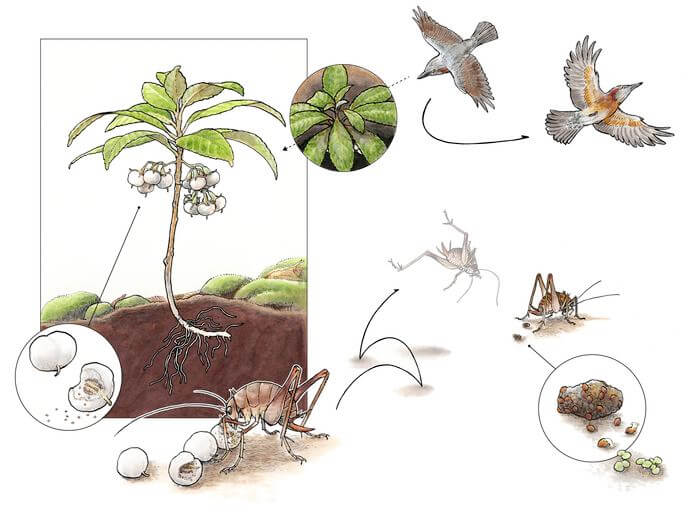
It’s a discovery that’s shaking up the botanical world and challenging long-held assumptions about how plants spread their seeds. The story of R. discolor is particularly intriguing because it breaks the mold in multiple ways. This shrub produces dust-like seeds – a trait typically associated with plants that can’t produce their own food. But R. discolor is no parasitic wallflower; it’s a fully functioning, sun-loving plant that just happens to have microscopic seeds.
These seeds are nestled in small, whitish berries that fall to the ground when ripe. It’s here that the camel crickets come into play, feasting on the fallen fruit and inadvertently swallowing the tiny seeds. As the crickets go about their nightly business, they become unwitting gardeners, depositing the seeds in their droppings far and wide.
What makes this partnership so surprising is its efficiency. Despite their minute size, up to 80% of the seeds survive their journey through the cricket’s digestive system. It’s a feat that challenges our notions of what’s possible in the natural world.
This discovery isn’t just academically interesting – it has far-reaching implications for our understanding of plant evolution and ecology.
“Our findings challenge the notion that insect-mediated seed dispersal is a special case and suggest that it may be more widespread and ecologically important than previously understood,” Suetsugu explains.
The R. discolor-cricket partnership also offers new insights into why some plants produce dust-like seeds. Rather than being solely an adaptation for plants that can’t produce their own food, it might be a clever strategy to take advantage of insect dispersers.
“Given that smaller seeds are more likely to survive digestive processes, a small seed size could have evolved as an adaptation to convert seed predators into seed dispersers,” Suetsugu notes.
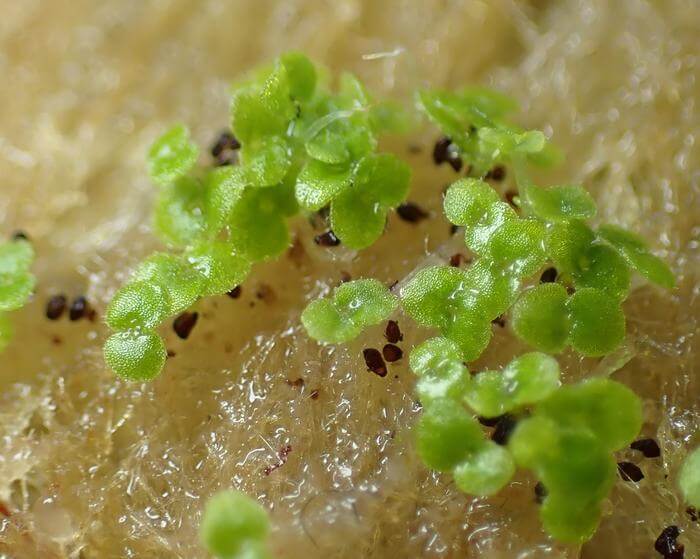
This research opens up a whole new world of possibilities. The team suggests that similar relationships might exist among other plants with dust seeds, which are found in at least 13 different plant families. It’s a reminder that in nature, size isn’t everything – even the tiniest players can have outsized impacts on their ecosystems.
As we face growing environmental challenges, understanding these intricate relationships becomes ever more crucial. Each species, no matter how small or seemingly insignificant, may be playing a vital role that we’ve yet to discover. The story of R. discolor and its cricket companions serves as a powerful reminder of the complexity and interconnectedness of our natural world.
Paper Summary
Methodology
The researchers employed a clever mix of high-tech observation and old-school field work. They set up time-lapse cameras to capture nighttime visitors to R. discolor plants. To attract and capture insects, they used an irresistible mixture of Kirin beer and Calpis (a popular Japanese soft drink), both produced in the researchers’ home region. Captured insects were then studied in the lab, where their droppings were examined for seeds. The team also conducted feeding experiments to determine how many ingested seeds could still germinate.
Key Results
The study revealed that camel crickets were the primary consumers of fallen R. discolor fruits. Laboratory analysis showed that these crickets passed a high percentage of seeds through their digestive systems intact. While the germination rate of cricket-dispersed seeds was lower than that of fresh seeds, many still successfully grew into healthy seedlings.
Study Limitations
The study was conducted in a single location, so the prevalence of this phenomenon in other areas remains unknown. Additionally, while crickets were the primary seed dispersers observed, the researchers noted that birds also consumed some fruits, suggesting multiple dispersal methods may be at play.
Discussion & Takeaways
This research challenges our understanding of seed dispersal systems and the evolution of dust seeds. It suggests that producing tiny seeds might be an adaptation to take advantage of insect dispersers, rather than solely a trait of plants that can’t produce their own food. The findings highlight the potential importance of insects in seed dispersal, even in ecosystems with mammalian dispersers present.
“We have laid the groundwork for future studies to investigate similar interactions in other regions and with other plant species. This research enhances our knowledge of how plants adapt to their environments and the roles that different organisms play in their life cycles,” Suetsugu notes.
Funding & Disclosures
This research was funded by the Precursory Research for Embryonic Science and Technology program from the Japan Science and Technology Agency. The authors declared no conflicts of interest.


