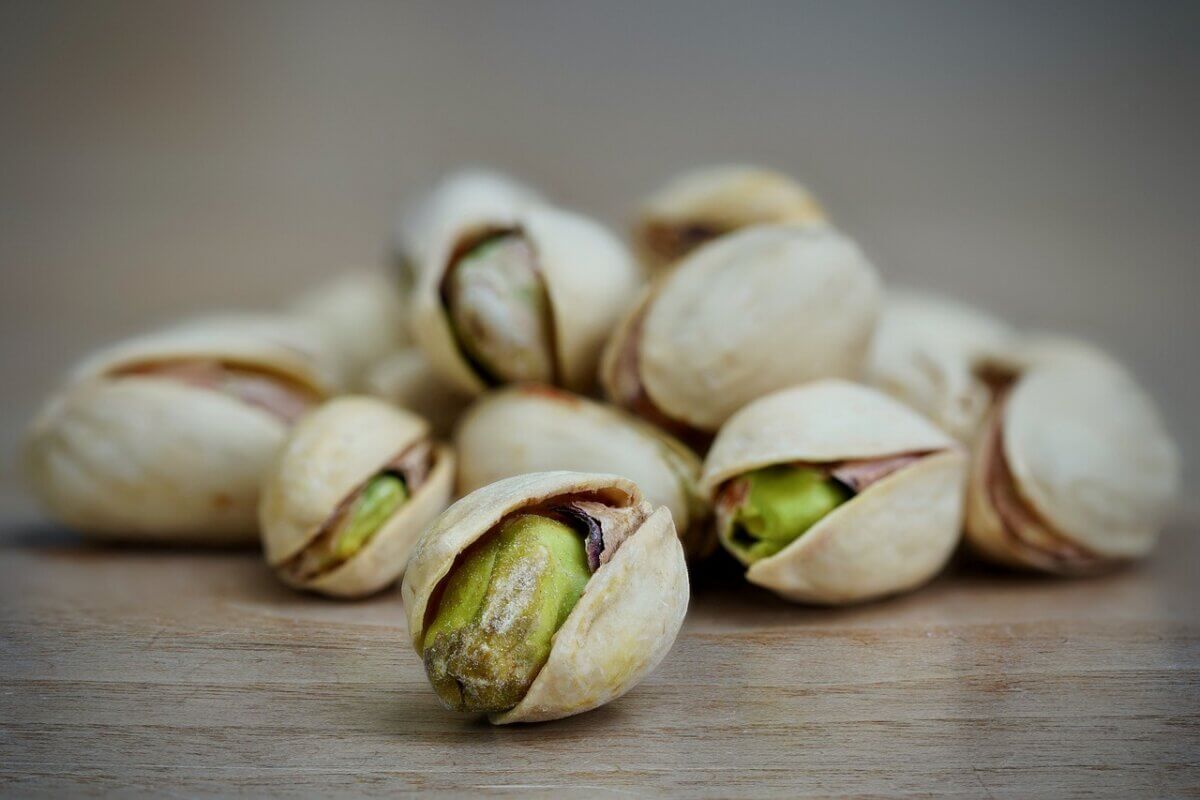
(Photo by skyhopper from Pixabay)
Pistachios Have the Most Vitamin B6 of Any Tree Nut. Does It Help Sleep?
In A Nutshell
- Pistachios supply close to 40 percent of daily vitamin B6 per ounce, the most of any tree nut.
- Magnesium, fiber, tryptophan, and polyphenols add to the sleep-linked nutrient mix.
- Reported pistachio melatonin levels differ by more than 250 times between sources.
- Trials feeding pistachios to people are still needed.
A single handful of pistachios delivers nearly 40 percent of the vitamin B6 a person needs in a day, more than any other tree nut, and the body uses that vitamin to make brain chemicals that regulate sleep. A new scientific review makes the case that this small green nut could be a promising snack for better rest, though trials that feed pistachios to people and track their sleep are still needed.
Plenty of adults could use the help. About one in three in the United States report not getting enough sleep, and roughly two-thirds report some kind of sleep difficulty. Good sleep is tied to lower risk of heart disease, high blood pressure, obesity, and stroke, so researchers keep hunting for everyday food fixes.
That hunt led a team from Augusta University, Spain’s Institute of Food Science, Technology and Nutrition, and Columbia University to look at pistachios. Their review, published in the journal Nutrition Research Reviews, gathered existing research on what is in the nut: vitamin B6, magnesium, fiber, a plant version of the sleep hormone melatonin, and plant compounds called polyphenols. Compared with almonds, walnuts, pecans, and hazelnuts, the review argues, pistachios stand out for combining these ingredients in a single serving.
Pistachios and Sleep Review Relied on Studies of Single Nutrients
This was not an experiment. Instead, the authors did what is called a narrative review. They combed through published studies, mostly from after 2010, and pieced together what is known about each nutrient and sleep.
Most of that evidence came from nutrient charts comparing pistachios with other nuts, and from studies in people or lab animals that tested one nutrient at a time, such as vitamin B6 or magnesium, usually with no pistachios involved. A few human trials used other foods with similar ingredients, including tart cherry juice and tomatoes.
Pistachios Top Other Tree Nuts in Vitamin B6 and Tryptophan
A one-ounce serving, roughly a small handful, supplies close to 40 percent of the daily recommended vitamin B6. The body uses B6 to build GABA, a chemical that calms the nervous system, and serotonin, which later turns into melatonin, the hormone that signals bedtime. In several studies, people with lower levels of B6 in their blood reported more sleep problems, but supplement trials have been mixed. In one, B6 alone did no better than a placebo, a dummy pill.
Pistachios also have the most tryptophan of any tree nut, an amino acid the body cannot make on its own and needs to produce melatonin. One serving provides about 11 percent of the daily recommended fiber, too. When gut bacteria break down fiber, they release compounds that may influence sleep through signals between the gut and the brain, and in lab tests, pistachios produced more of those compounds than other common nuts.
Magnesium adds about 10 percent of the daily amount per serving. Several large surveys found that adults who ate more magnesium reported better sleep, and a supplement trial in older adults found more deep sleep. Pistachios are also a rich source of polyphenols. A review of ten trials of polyphenol-rich products found people with sleep problems fell asleep faster, though eight of the ten used concentrated extracts or supplements rather than whole foods.

Pistachio Melatonin Estimates Differ by More Than 250 Times Between Studies
Melatonin is where the numbers disagree most. Plants make their own version, called phytomelatonin, and one study of American pistachios measured about 18.7 micrograms per serving. Another source reported an average of just 0.074 micrograms, a gap of more than 250 times. The authors note that levels vary by variety and processing and call for more testing.
That gap matters because of two small trials of other melatonin-rich foods. In one, 36 post-menopausal women who ate beefsteak tomatoes before bed for eight weeks showed higher overnight melatonin output and reported better sleep than women who skipped tomatoes. In the other, 20 healthy adults aged 18 to 40 who drank tart cherry juice for a week slept longer than when given a placebo.
Those foods supplied roughly 1.25 to 85 micrograms. If the higher pistachio figure holds, one serving falls inside that range. If the lower one is right, one serving falls well below it.
Pistachios and Sleep Still Need a Human Trial Before Any Verdict
Researchers behind the review want trials in which people are randomly assigned to eat pistachios or a comparison food, with their sleep measured, ideally in diverse groups. They also point out that fewer than 40 percent of U.S. adults eat nuts daily, which can make a link between nuts and sleep hard to spot in surveys.
Nearly 40 percent of a day’s vitamin B6 in one handful is a genuine nutritional perk, but it is not proof of better sleep. Pistachios have earned a proper clinical trial. Until results arrive, a handful is a nutritious snack, not a sleep aid.
Disclaimer: This article is not medical advice. Anyone with sleep concerns should consult a healthcare professional.
Paper Notes
Limitations
This was a narrative review rather than a controlled experiment, so the authors synthesized published research and did not test pistachios in a new study. Much of the supporting evidence comes from single nutrients tested alone, animal research, or trials of other foods such as tomatoes and tart cherry juice. Reported phytomelatonin levels in pistachios differ widely between sources and vary by variety and processing. The authors also note that the body’s absorption of vitamin B6 and tryptophan from pistachios has not been directly evaluated. Many of the cited human studies were small, and at least one supplement study had no control group, so a placebo effect could not be ruled out. Only English-language research indexed in PubMed was included.
Funding and Disclosures
Funding came in part from American Pistachio Growers and from National Institutes of Health grants (R35HL155670 and R01HL142648) awarded to Marie-Pierre St-Onge. St-Onge, the corresponding author, wrote the book Eat Better, Sleep Better and serves on the advisory board of American Pistachio Growers.
Publication Details
Title: “Exploring the role of pistachio nutrients and bioactive components in sleep health: a narrative review.” Authors: Ashley Mixon (Augusta University Medical College of Georgia), Jara Pérez-Jiménez (Institute of Food Science, Technology and Nutrition, CSIC, Spain), and Marie-Pierre St-Onge (Columbia University). Journal: Nutrition Research Reviews, 2026, volume 39, article e29. Received March 5, 2026; accepted August 11, 2026. DOI: 10.1017/S0954422426100511.


