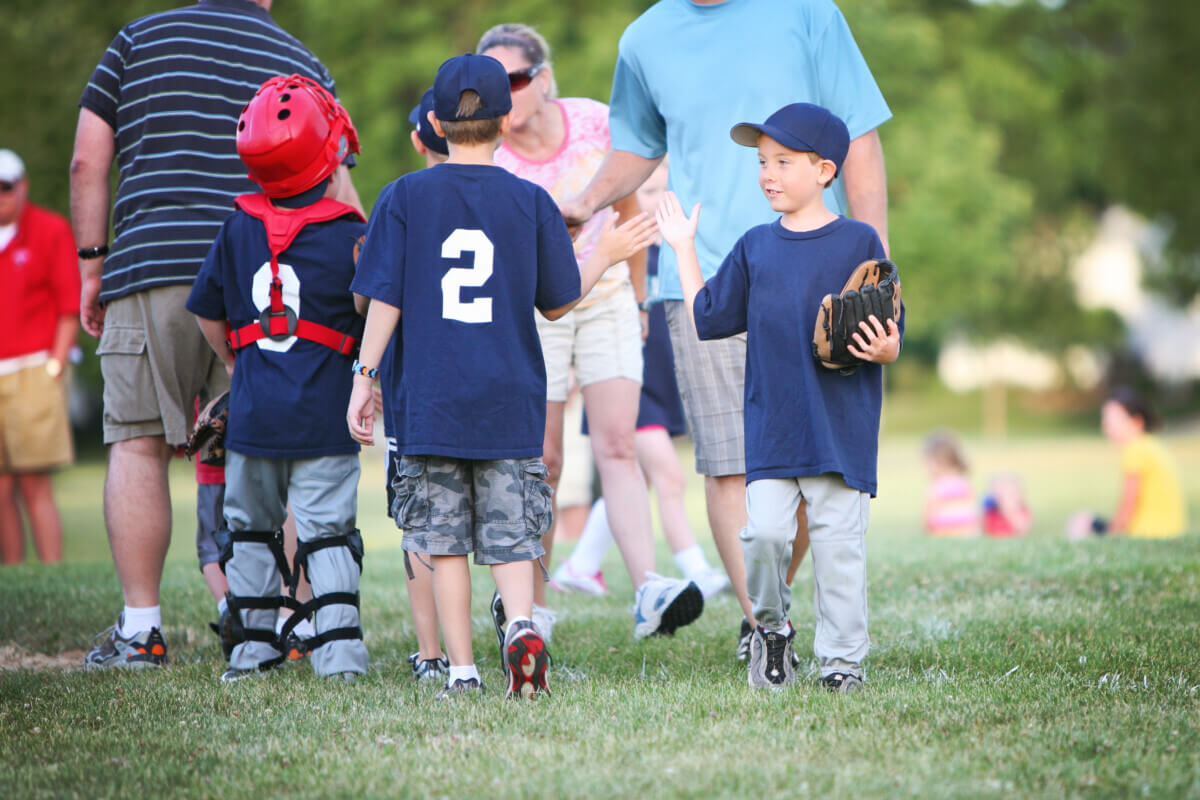
(Photo by Suzanne Tucker on Shutterstock)
In A Nutshell
- Americans born in the 1950s through 1970s reported spending significantly more childhood sports time in pickup and backyard play than those born in the 1990s.
- The rise of a $40 billion youth sports industry and a cultural shift toward “intensive parenting” have steadily pushed informal play aside since the 1980s.
- Kids from higher-income households with college-educated parents were far more likely to participate in formal, organized sports growing up.
- The socioeconomic divide in youth sports participation is widest among the youngest generation in the study, those born in the 1990s.
Remember choosing teams by counting off? Settling arguments without a referee? Playing until someone’s mom called them in for dinner? That version of childhood sports, loose, loud, and completely unsupervised, is less common than it used to be. A study published in Leisure Sciences puts numbers to what many American adults already sense: adults who grew up in recent decades report spending less of their childhood sports time in informal, child-run play than those who came before them.
Researchers from Ohio State University and Vassar College surveyed nearly 4,000 American adults and found a consistent pattern across five generations. People who grew up in the 1950s, 1960s, and 1970s reported spending significantly more of their childhood sports time in pickup games and backyard play than those born in the 1990s. The authors argue that two forces likely shaped the shift. The rise of a $40 billion youth sports industry and a broad cultural change in expectations around parenting.
The researchers aren’t arguing that organized sports are bad. But they note that informal play has real developmental value, and as it gets crowded out, lower-income families are losing something that can’t easily be bought back.
How Researchers Tracked a Generation of Youth Sports Changes
Data came from the National Sports and Society Survey, a national survey of U.S. adults conducted in 2018 and 2019. Participants were asked to look back on their childhood sports experiences between ages 6 and 18, estimating how much of that time was spent playing informally, think backyard games and pickup play with friends, versus formally, think coaches, uniforms, and scheduled practices.
Participants were grouped by birth decade, from the 1950s through the 1990s, giving researchers a five-generation window into how childhood sports shifted over time. Family income and parental education levels were also tracked, along with factors like race, gender, family structure, and how sports-passionate each respondent’s community was growing up.
On average, people said they played sports informally about half the time. When asked specifically about the sport they played most, they said they played it informally “most of the time.” Unstructured play wasn’t absent, even among younger respondents. It was just measurably shrinking. Most people still experienced a mix of both.
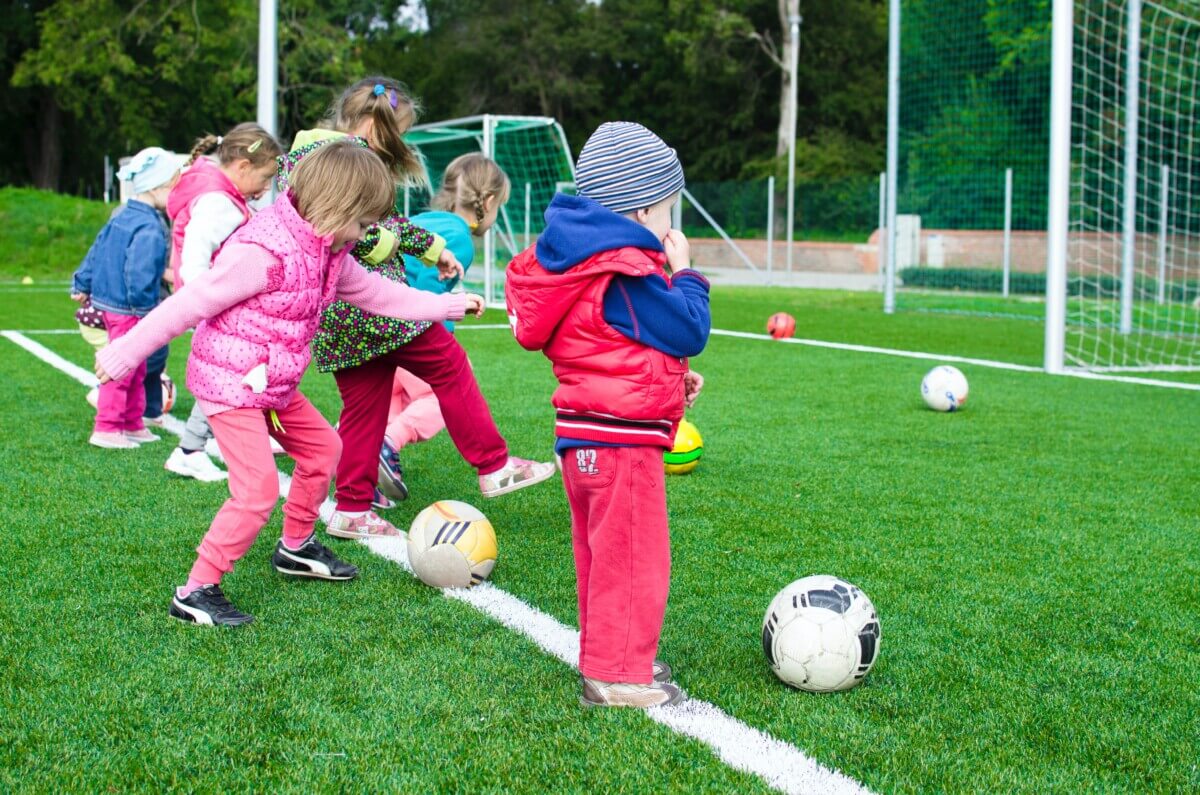
From Pickup Games to Club Teams: What Changed
Researchers trace a significant turning point to the 1980s, though the shift played out across multiple generations. Beginning in that decade, funding for many low-cost athletic programs declined, and private youth sports organizations expanded to fill the gap. What had been a neighborhood activity became an industry, one increasingly centered on skill development, competitive advancement, and the long-shot promise of a college scholarship.
Parenting culture shifted at the same time. The idea that a good parent actively manages their child’s development, schedules their free time, and invests in structured activities with clear payoffs became mainstream. Unstructured outdoor play started to look less like healthy childhood and more like wasted opportunity. Researchers describe this as “purposive leisure,” the notion that kids’ free time should always be building toward something.
The authors warn that if formal sports participation continues to be seen as the preferred, appropriate, and most valuable form of athletic activity, some of the genuine benefits of informal play risk being lost. Those benefits are real. When kids make up their own games, argue about the rules, and figure out how to keep things fair without any adult stepping in, they build creativity, self-motivation, and social problem-solving. Prior research cited by the authors also links child-directed play to fewer injuries and a longer-lasting love of sport.
Youth Sports Participation and the Widening Wealth Gap
As organized sports grew more expensive, access to them became increasingly tied to family income. Kids from wealthier households, and those with college-educated parents, were significantly more likely to have played sports formally. Kids from lower-income families played informally more, in many cases because formal sports were out of financial reach.
The class gap was especially visible in the sport people played most, though some of those differences were partly explained by factors like family sports culture, access to programs, and years of participation. Among younger cohorts, socioeconomic differences in formal participation patterns were particularly pronounced, with the sharpest gaps appearing among those born in the 1990s.
Wealthier families weren’t just spending more on sports. They were also bringing social connections, scheduling flexibility, and working knowledge of how to navigate club league registration and travel team tryouts. That combination can be difficult for lower-income families to replicate regardless of how sports-passionate they are.
The authors argue there is good reason to promote accessible informal and formal sports opportunities for all children, so that the developmental rewards of playing sports aren’t reserved for those who can afford the most structured versions of them.
Generations of American kids learned to love sports on a cul-de-sac or in an empty lot, with no adults calling the shots. That tradition isn’t gone, but commercialization, shifting parenting norms, and rising costs appear to have played a role in its decline, and the kids with the least access to organized sports are bearing the heaviest share of that loss.
Paper Notes
Study Limitations
The National Sports and Society Survey is not a random or fully representative sample of U.S. adults. Respondents were drawn from a volunteer opt-in panel that skewed White, female, and college educated. While the researchers used multiple regression analyses to account for these demographic imbalances, the findings may not fully generalize to all Americans. The survey also relied on retrospective self-reporting, meaning participants were recalling sports experiences from childhood, sometimes from decades earlier, which introduces the possibility of memory gaps or what the researchers call “nostalgic views of idealized pasts.” The study also focused on each respondent’s single most-played sport, which limits its ability to capture the full range of a child’s athletic life. Future research using longitudinal studies and qualitative methods would strengthen these findings.
Funding and Disclosures
The National Sports and Society Survey was funded and supported by the College of Arts and Sciences, the Sports and Society Initiative, and the Center for Human Resource Research at Ohio State University. No potential conflict of interest was reported by the authors.
Publication Details
Authors: Chris Knoester (Department of Sociology, Ohio State University) and Chris Bjork (Department of Education, Vassar College) | Journal: Leisure Sciences: An Interdisciplinary Journal (Taylor and Francis / Routledge), ISSN: 0149-0400 (print), 1521-0588 (online) | Title: “The Relative Frequencies of Playing Sports Informally Versus Formally, While Growing Up: An Analysis of Generational and Socioeconomic Status Differences in the U.S.” | Published: January 28, 2026 (online first) | DOI: https://doi.org/10.1080/01490400.2026.2620528


