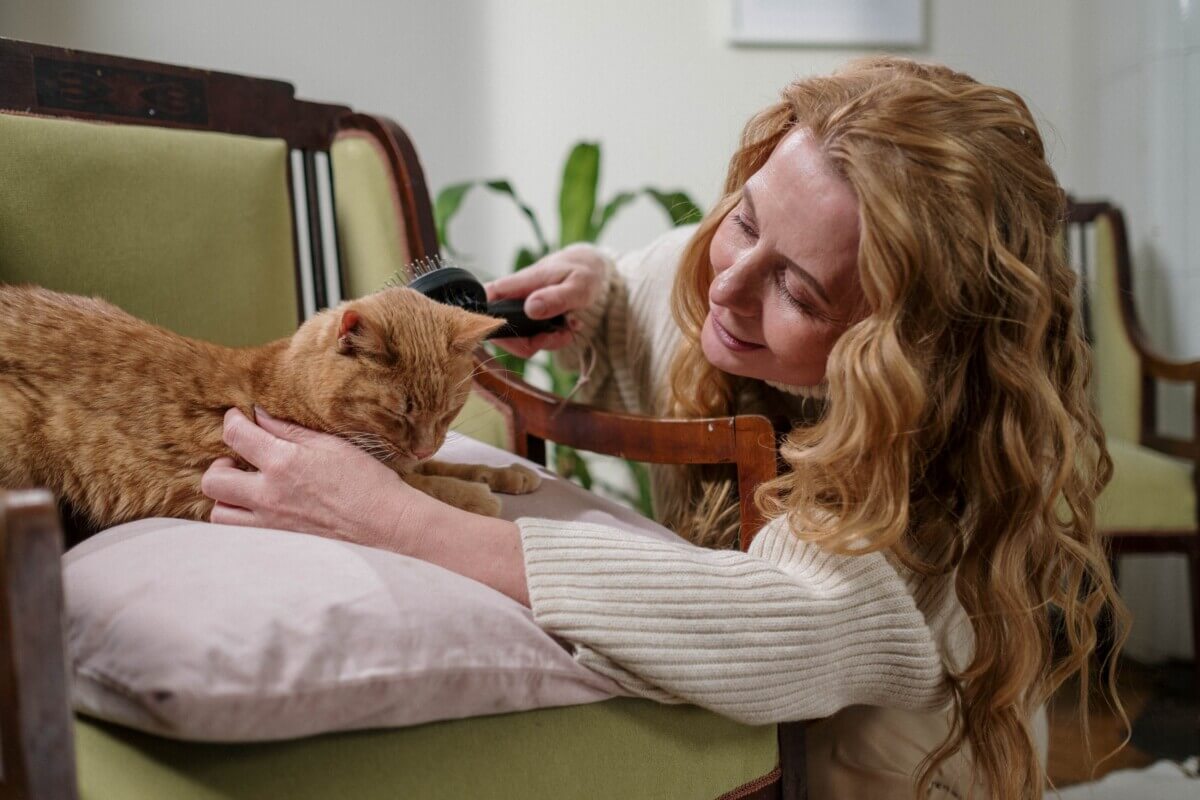
(Photo by cottonbro studio from Pexels)
Do Cats Help With Stress? Study Finds Cat Interaction May Not Always Soothe Owners
In A Nutshell
- Interacting with a pet, dog or cat, was linked to better mood in the moment across nearly 8,000 real-time check-ins
- Dogs and cats provided equal emotional benefits day-to-day, despite common assumptions that dogs have an edge
- Neither species buffered owners from the emotional impact of stressful events during active interaction
- Cat owners showed a small but notable pattern: engaging more with a cat during upsetting moments was tied to stronger negative feelings, not weaker ones
For decades, pet owners have sworn by the calming power of their animals. Rough day at work? Curl up with the cat. Feeling anxious? Let the dog climb into your lap. The idea that pets soothe stress has become something close to common wisdom, the kind of thing nobody really questions. But a new study is pushing back on at least part of that picture, and the findings about cats might surprise anyone who has ever sought comfort from their feline companion.
Researchers studying the emotional lives of pet owners in real time found that while interacting with any companion animal was tied to better moods from moment to moment, pets did not buffer people from the negative emotions tied to stressful situations. For cat owners in this sample, the data pointed in an unexpected direction: more engagement with a cat during a stressful moment was associated with stronger negative feelings, not weaker ones.
Researchers caution that this effect was relatively small and should be interpreted carefully. The study, published in Frontiers in Psychology, is one of the more careful looks at what scientists call the “pet effect,” the popular belief that owning or interacting with a pet improves mental health, and one of the few to directly compare how dogs and cats differ in that picture.
What sets this study apart is how it gathered data. Rather than asking people to look back on how their pet made them feel, researchers tracked participants’ emotions as they were happening, multiple times per day, over five consecutive days.
Dogs and Cats Lifted Mood Equally, but Neither Blocked Stress
A team of researchers recruited 188 dog and cat owners living in the Netherlands or Belgium. Participants had to be at least 18 years old and own a functioning smartphone. Once enrolled, they downloaded an app that sent up to ten notifications a day at random intervals between 7:30 in the morning and 10:30 at night. Each notification prompted a short questionnaire about current mood, stress level, ongoing activity, whether they were alone, and whether their pet was present and being interacted with.
The five-day window was designed to include at least one non-workday and to avoid holidays, so that pet interactions would reflect typical daily life rather than exceptional circumstances. Over the course of the study, participants generated nearly 8,000 individual reports. Researchers controlled for factors like age, gender, and social context, and excluded moments when both a dog and a cat were present, since those made it impossible to isolate the effect of either species.
Spending time with a companion animal was genuinely associated with feeling better in the moment. When people reported higher levels of interaction with their pet, whether a dog or a cat, they also reported more positive emotions and fewer negative ones. This held up even after accounting for whether they were alone or around other people, suggesting the emotional lift from pets was not simply a stand-in for human company.
Despite popular assumptions that dogs, with their outgoing and socially responsive nature, might have an edge, the data showed no meaningful difference between species when it came to everyday emotional benefits. Where things got more complicated was in stressful situations. Neither dogs nor cats appeared to soften the emotional blow of a difficult or upsetting event during the moments when owners were actively engaging with them.

The Surprising Cat Finding
When researchers looked specifically at how people responded emotionally to upsetting events, they found that more engagement with a cat during those moments was associated with stronger negative emotions, not weaker ones. No such pattern appeared for dog owners. The cat-specific effect was relatively small, and the researchers urge caution before drawing broad conclusions, noting it will need replication in larger studies before anything definitive can be said.
Cats tend to offer low-key, low-demand company: they are present, but rarely insistent about engaging. That kind of quiet companionship might be comforting under ordinary circumstances but could feel mismatched to what someone needs when genuinely distressed. Research on human social support has shown that support can sometimes backfire when it does not fit the situation, a concept sometimes called “support deterioration,” and the researchers suggest the same dynamic may apply here. Dogs, by contrast, tend to invite more active engagement, and that difference in interaction style may partly explain why no comparable pattern emerged for dog owners.
Believing that pets relieve stress has become near-gospel in popular culture, shaping everything from office therapy dog visits to hospital animal programs. This study does not argue that pets are bad for mental health. But the specific idea that pets act as a stress shield does not hold up under careful, real-time scrutiny, at least not through active interaction. Whether a cat curled up quietly across the room tells a different story is something future research will need to answer.
Disclaimer: The findings of this study are based on a specific sample of pet owners in the Netherlands and Belgium and may not apply universally. The cat-specific result is preliminary and has not yet been replicated. This article is intended for informational purposes and should not be taken as medical or psychological advice.
Paper Notes
Limitations
The study recruited participants through personal networks, social media, veterinary practices, and pet-related organizations, which means the sample was not random and may not represent all pet owners. Conducted exclusively in the Netherlands and Belgium, the findings may not extend to other countries or cultures. Compliance with the app-based check-ins varied considerably, though researchers included all available data rather than setting a minimum threshold. Social context was measured only as being alone versus being with other humans, without capturing the quality or closeness of those relationships. Because the analyses focused only on moments when the pet was present and being interacted with, the study does not address what happens when a pet is simply nearby but not engaged. The cat-specific effect was relatively small, and the researchers caution it should be confirmed by future studies.
Funding and Disclosures
The study was funded by Nestlé Purina PetCare. The authors state that the funder had no involvement in, or influence on, any aspect of the study or its publication. The authors also declared no commercial or financial relationships that could be construed as a potential conflict of interest.
Publication Details
Authors: Sanne Peeters, Nele Jacobs, Karin Hediger, Jannes Eshuis, and Mayke Janssens | Affiliations: Department of Lifespan Psychology and Department of Clinical Psychology, Faculty of Psychology, Open University, Heerlen, Netherlands; Department of Psychiatry and Psychology, School for Mental Health and Neuroscience, Maastricht University Medical Centre, Maastricht, Netherlands; Division of Clinical Psychology and Animal Assisted Interventions, Faculty of Psychology, University of Basel, Basel, Switzerland; Department of Theory Methods and Statistics, Faculty of Psychology, Open University, Heerlen, Netherlands | Journal: Frontiers in Psychology, Section: Health Psychology, Volume 17, 2026 | Paper Title: “Human-animal interaction: understanding the role of dog and cat interactions in emotional wellbeing” | Published: June 16, 2026 | DOI: https://doi.org/10.3389/fpsyg.2026.1768288


