
(© AntonioDiaz - stock.adobe.com)
Prof: Students Are Anxious – And It’s No Surprise, Since We Are Teaching Them To Be That Way
In A Nutshell
- At least one-third of college students report moderate or severe anxiety, with a similar share reporting depression, and research shows that heavy academic pressure at age 15 predicts depressive symptoms that can persist into adult life.
- The way schools prioritize grades, constant productivity, and fear of failure disrupts the natural “curiosity loop” in the brain, blunts dopamine responses, reshapes stress‑related brain regions, and can contribute to anxiety, depression, and even inflammatory and autoimmune health problems.
- The author argues that, in practice, the U.S. education system runs on stress and reliably produces anxious, burned‑out students, but shows that teaching approaches centered on structure, belonging, real‑world relevance, and student choice can support rigorous learning without making dread and chronic anxiety the norm.
Temporary anxiety can often surface before the first day of school. Sometimes, that can help kids get in the right mindset for a big day. But when anxiety becomes a constant feature of children’s and teenagers’ days, that stress doesn’t switch off when they leave the classroom or finish an exam. It can become the body’s normal, staying with learners long after graduation.
I teach biology and neuroscience to undergraduates, and I believe that the way we educate our children – prioritizing performance and grades over curiosity and well-being – is producing a society full of anxiety-ridden adults.
A recent survey of over 84,000 college students found that one-third of them self-reported moderate or severe anxiety, and roughly the same share self-reported depression.
I’ve seen this unfold in ways I am only just starting to understand. A few years ago, one of my neuroscience students, whom I will call Hannah to protect her privacy, described how she experienced high school only as a way to get a scholarship to attend college. She became, in her words, a “complete robot.”
“I developed extreme anxiety; it like completely took over my life,” she said. “There was no excitement to learn.”

Learning Can Be Fun, But Isn’t Always
Learning, as experienced by young children, is normally very rewarding. When organic, it is delightful, immersive, timeless and fun.
Curiosity itself triggers a dopamine response in children’s brains. Researchers describe it as a “curiosity loop,” in which the brain predicts something, runs into something new or unexpected, releases dopamine, and the child is hooked, chasing the answer because it feels good to find it.
As kids grow, they take on more homework and more exams, and have more evaluation tied to specific benchmarks, like grades, which can inadvertently cut off the curiosity loop.
Some educators argue that grades help keep students accountable, push them to work harder even on material they wouldn’t otherwise prioritize, and give teachers a shared standard, however imperfect, for tracking whether learning is happening.
Others argue, meanwhile, that grades are not actually an accurate representation of what students are learning. They can also cause students to experience academic pressure.
Research shows that a high degree of academic pressure stems from fear of failure, chronic stress about workload and exams, worry about parental expectations and competition with peers for grades.
Though many things impact well-being, academic pressure is related to kids’ mental health in a well-documented way. A 2026 study, for example, found that academic pressure to achieve at age 15 can predict depressive symptoms that persist into adulthood.
Grades aren’t the only source of pressure that students experience. Social comparison plays a role, too, along with the pressure to only answer questions when they’re already sure, to never seem confused and to stay constantly productive.
Based on my experience and research, kids pick up on the message that they should keep their curiosity at a 5 out of 10 scale, instead of a 10 out of 10, especially if it strays outside the curriculum.
Learning To Avoid Fear And Pain
A theory dating back more than 100 years suggested that there is an optimal amount of stress for good performance, based on a study that had nothing to do with humans.
Researchers ran mice through a maze, using electric shocks to punish wrong choices. On harder tasks, moderate shocks produced the fastest learning, while stronger shocks made it worse. Over the years, this got reinterpreted into claims about punishment, reward, motivation and stress in humans.
But the original study was about how animals learn to avoid fear and pain, not about optimal learning at all. Once a mouse learns to avoid a shock, escape itself triggers dopamine release; in other words, the escape – not the discovery – is the reward.
How Stress Shapes The Brain
In 1855, engineers coined the word “stress,” from the word “distress,” to describe a beam pulled, pushed or twisted from multiple directions until the strain shows as a deformation.
Apply distress to a young brain, and the deformation isn’t just in the education process, but in the neurodevelopment of people’s minds.
Over time, chronic stress reshapes the hippocampus, a part of the brain where memories get encoded, making learning itself harder. Chronic stress blunts people’s dopamine response, so nothing feels quite as rewarding, which can look like depression.
Chronic stress also reshapes the prefrontal cortex, impairing our ability to manage stress overall. Each stressor lowers the bar for the next one, until anxiety becomes less a reaction than a preset that follows a student long after they’ve left the classroom.
Chronic stress has implications for general health too, and can cause inflammatory and autoimmune symptoms. I see conditions like chronic pain and panic disorders in my students every semester.
Unlearning Old Habits
In college, Hannah shared that she is still healing from some of that anxiety and has worked to “unlearn the study habits” she developed in high school.
“I was that person always in the library, like you’re going to study, study, study. Wake up at 5:30, do this. Check every box perfectly and not halfway,” Hannah said.
Through journaling and reading, Hannah began noticing the subconscious patterns she’d been repeating since childhood. That process, along with years of talk therapy, let her separate real learning from what she calls “programming,” so she no longer needs that rigidity to feel like she was learning.
I interviewed Hannah this past spring as part of a book I am writing about how people actually experience learning, and what a living systems approach to education could offer them instead. Living systems theory says the goal of a system is what it actually produces, not what it intends – an idea I’m applying directly to education.
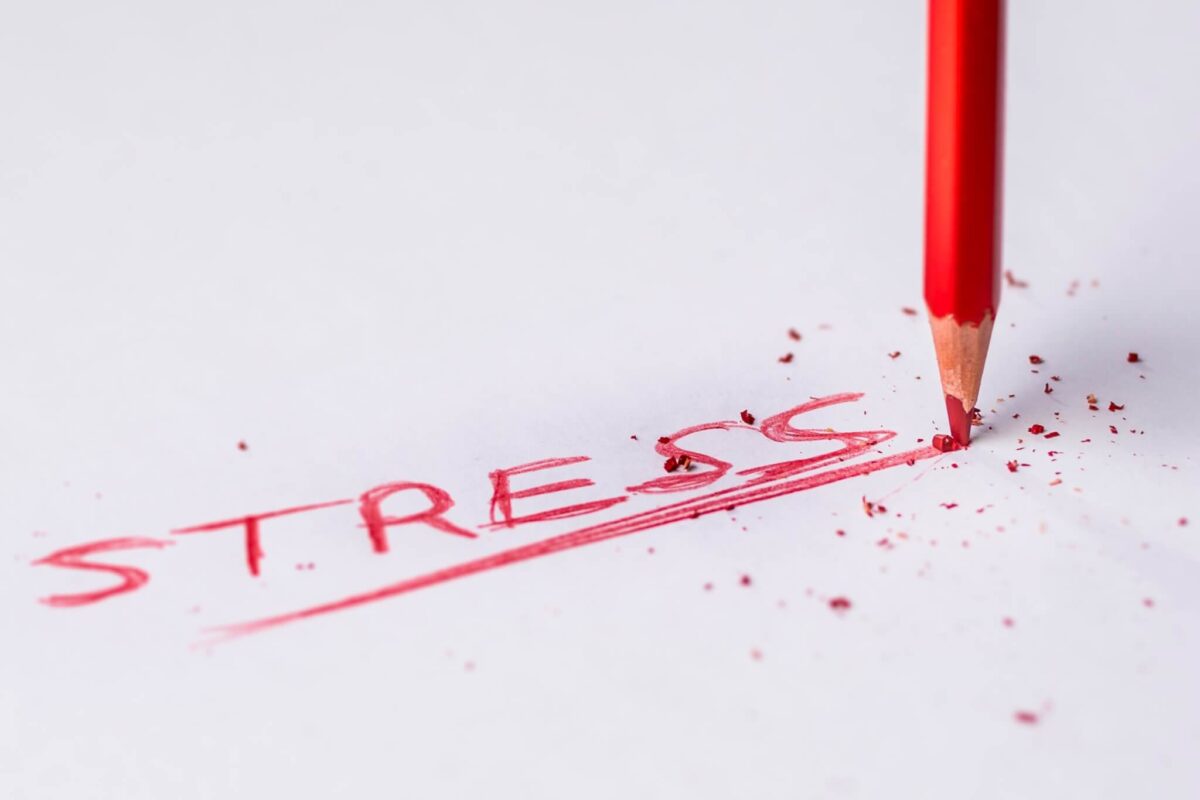
This plays out in our current educational environment in the United States. In my view, even if educators, parents and policymakers say their intent is to build lifelong learners, they are reliably producing anxious, burnt-out students. Anxiety, then, is functionally what our education system’s goal is.
It’s not what the system says it does, it’s what it does.
A Different Approach
Since I’ve learned that at least a third of students in my college classrooms are struggling with mental health, I’ve changed the way I teach. I have altered my courses to seek out pockets of wonder, simultaneously supporting learning and well-being.
In my 300-person course with pre-med students, I no longer only teach through lecturing. Instead, I emphasize our humanity and curiosity, while also teaching very difficult content. I provide a solid structure, emphasize that everyone belongs and ask them to teach each other. I use real-world situations and games, give students choice within their assignments and offer opportunities for reflection.
And yes, I use a traditional grading system.
Learning can require persistence and struggle, and no one benefits from a classroom without challenge. But struggle and dread aren’t the same thing.
Does stress belong in learning? Maybe, maybe not.
The first step is recognizing that the U.S. built an education system that runs on stress – not because we meant to, but because most people did not notice.
Erin Clabough, Professor of Psychology, University of Virginia
This article is republished from The Conversation under a Creative Commons license. Read the original article.


