
Obesity And The Brain (© freshidea - stock.adobe.com)
CLEVELAND — Could the drug that’s changing the weight loss industry also protect older adults against the most common form of dementia? Semaglutide is a widely used diabetes medication that also leads to significant weight loss. Now, scientists from Case Western Reserve School of Medicine say that taking semaglutide may significantly lower the risk of developing Alzheimer’s disease.
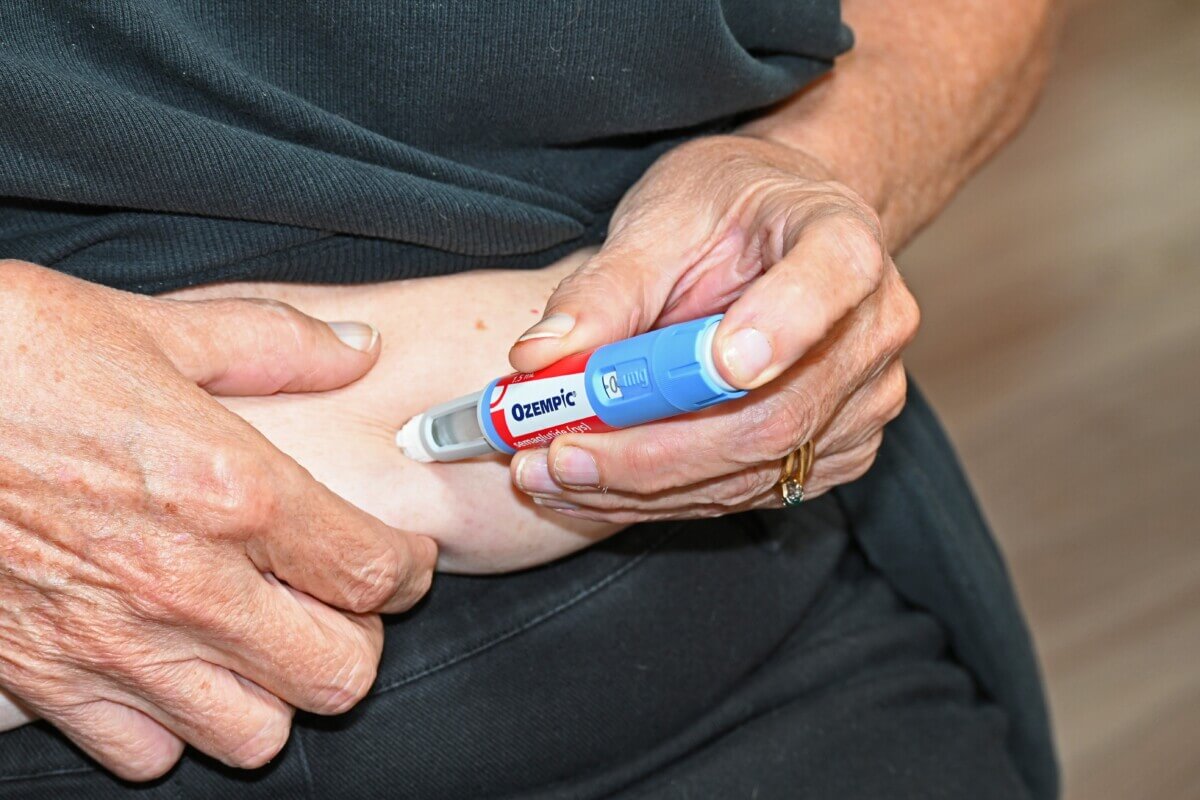
The research, published in the journal Alzheimer’s & Dementia, found that people taking semaglutide were up to 67% less likely to receive a first-time Alzheimer’s diagnosis compared to those using other diabetes medications. Semaglutide, sold under the brand names Ozempic for diabetes and Wegovy for weight loss, belongs to a class of drugs that mimics a natural hormone helping to regulate blood sugar. While primarily prescribed for Type 2 diabetes, researchers have been increasingly interested in its potential effects on brain health.
The new study analyzed the medical records of 1,094,761 patients with Type 2 diabetes, including 17,104 who were prescribed semaglutide. Following these patients for three years, the researchers found that those taking semaglutide showed dramatically lower rates of new Alzheimer’s diagnoses compared to patients taking other diabetes medications.
“This new study provides real-world evidence for its impact on Alzheimer’s disease, even though preclinical research has suggested that semaglutide may protect against neurodegeneration and neuroinflammation,” says Professor Rong Xu, who directs the medical school’s Center for AI in Drug Discovery, in a media release.
The protective effect appeared strongest when comparing semaglutide to insulin, with semaglutide users showing a 67% lower risk of receiving an Alzheimer’s diagnosis. Even when compared to similar drugs in its class, semaglutide still showed a 41% lower risk.
These benefits were consistent across different groups. The drug appeared equally effective regardless of whether patients were obese or not, though women seemed to show slightly stronger protection than men. The protective effects began appearing within the first 30 days of treatment and continued throughout the three-year study period.
For older adults in the study (those 60 and above), the overall three-year risk of receiving an Alzheimer’s diagnosis was about twice as high as in the general study population – 0.33% versus 0.16%. However, even in this higher-risk group, semaglutide appeared to provide similar levels of protection against Alzheimer’s.
The findings are particularly significant given the growing Alzheimer’s crisis in America. An estimated 6.9 million Americans over 65 currently live with the disease, a number expected to double by 2060. With no cure available, preventing or delaying onset has become a crucial strategy in fighting the disease.
While the study doesn’t prove that semaglutide directly prevents Alzheimer’s, it adds to growing evidence that the drug may protect brain health through multiple pathways. Beyond its effects on blood sugar, semaglutide has been shown to improve cardiovascular health and help with weight loss – both important factors in Alzheimer’s risk. The drug may also help reduce inflammation in the brain and improve how brain cells process energy.
The results have sparked excitement in the medical community and are already leading to new clinical trials testing semaglutide specifically for Alzheimer’s prevention. However, researchers caution that larger, longer-term studies are necessary to confirm these findings and understand exactly how the drug might protect the brain.
Paper Summary
Methodology
The researchers used a nationwide database of electronic health records to identify patients with type 2 diabetes who started taking either semaglutide or other diabetes medications between December 2017 and May 2021. They carefully matched patients taking semaglutide with similar patients taking other medications, accounting for over 50 different factors including age, gender, other health conditions, and socioeconomic status. This matching process helped ensure any differences in Alzheimer’s diagnoses could be attributed to the medication rather than other factors.
Key Results
The study found that semaglutide users had 40-70% lower risk of receiving an Alzheimer’s diagnosis compared to users of other diabetes medications. The protection was strongest versus insulin (67% lower risk) and still significant versus similar drugs (41% lower risk). The benefits appeared quickly and lasted throughout the three-year study period.
Study Limitations
The study relied on medical records rather than directly following patients, meaning some diagnoses might have been missed or incorrect. The three-year follow-up period was relatively short for studying Alzheimer’s development. The study couldn’t prove semaglutide directly prevents Alzheimer’s, only that it’s associated with lower risk.
Discussion & Takeaways
The findings suggest semaglutide might help prevent or delay Alzheimer’s through multiple mechanisms, including better blood sugar control, reduced inflammation, and improved cardiovascular health. The drug’s effectiveness across different patient groups suggests its protective effects may work through various pathways beyond just diabetes control.
Funding & Disclosures
The study was funded by the National Institute on Aging and the National Center for Advancing Translational Sciences. The authors declared no competing interests. The research was conducted at Case Western Reserve University using the TriNetX Analytics platform, which provides access to de-identified medical records from 64 large healthcare organizations.


