(Photo by Michael O'Keene on Shutterstock)
CHARLOTTESVILLE, Va. — What if the secret to a more understanding world lies not in our bodies, but outside them? This provocative question is at the heart of new research from the University of Virginia, exploring how out-of-body experiences might be reshaping our capacity for empathy.
The study, led by Marina Weiler and colleagues from the UVA Health System’s Division of Perceptual Studies, delves into the transformative potential of OBEs. These experiences occur in roughly 15% of the population and can happen spontaneously, during life-threatening situations like near-death experiences, or be induced through various means such as sensory deprivation, hypnosis, or psychedelic substances.
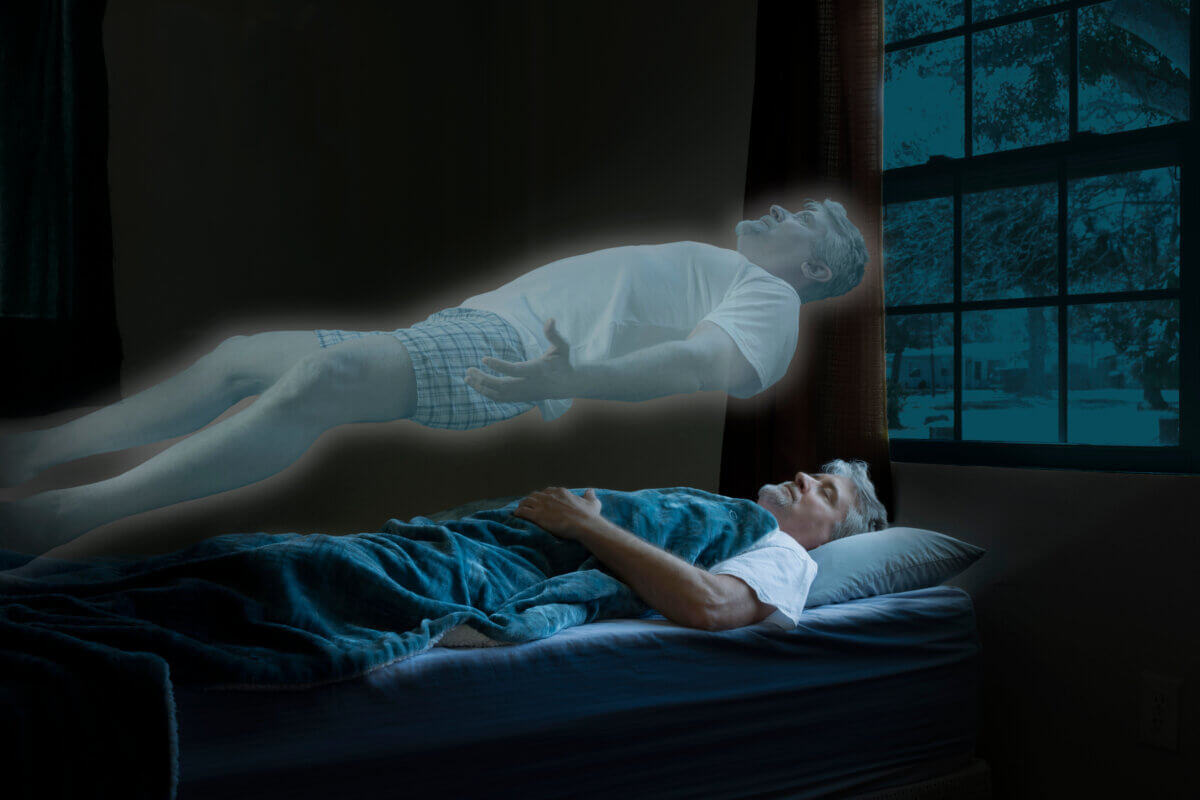
So, what exactly happens during an OBE? Imagine suddenly feeling as if you’ve left your physical body behind, observing yourself and your surroundings from an external vantage point. It’s a profoundly disorienting yet often deeply meaningful experience that can leave a lasting impact on those who undergo it.
The researchers propose that the key to OBEs’ empathy-boosting effects lies in a phenomenon called “ego dissolution.” When we experience an OBE, our sense of self becomes temporarily untethered from our physical body. This disruption of our normal bodily awareness can lead to a breakdown of the boundaries we typically perceive between ourselves and others.
“The detachment from the physical body often leads to a sense of interconnectedness with all life and a deepened emotional connection with others,” the researchers write in their paper, published in the journal Neuroscience and Behavioral Reviews. “These sensations of interconnectedness can persist beyond the experience itself, reshaping the individual’s perception and fostering increased empathy, thereby influencing personal relationships and societal harmony.”
This shift can foster a profound sense of connection and unity with others that persists long after the experience itself has ended. Many people who’ve had OBEs report becoming more patient, compassionate, and understanding towards others. Some even describe their relationships as more peaceful and harmonious following an OBE.

These anecdotal reports are backed up by some impressive numbers. Previous research has found that more than half of people who’ve had an OBE describe their relationships with others as more peaceful and harmonious afterward. Many also report becoming more tolerant and understanding.
Interestingly, OBEs can seem more real than reality itself to those who experience them. This sense of transcendental connectedness often translates into “prosocial” behaviors afterward. Experiencers frequently become more compassionate, patient, and understanding. Many also become more spiritual and more convinced of the possibility of life after death.
The researchers draw parallels between OBEs and other consciousness-altering experiences, such as those induced by psychedelic substances. Both types of experiences seem to share the common thread of ego dissolution, which appears to be a crucial factor in promoting empathy and prosocial behavior.
While the exact brain mechanisms behind these changes remain unclear, the lasting effects of OBEs are evident. By understanding how these life-changing experiences can enhance empathy, researchers may be able to develop ways to help foster it for society’s benefit during what many see as a conflicted age.
“Empathy is a fundamental aspect of human interaction that allows individuals to connect deeply with others, fostering trust and understanding,” says Weiler, a neuroscientist with UVA’s Division of Perceptual Studies, in a media release. “The exploration, refinement and application of methods to enhance empathy in individuals – whether through OBE-related ego dissolution or other approaches – is an exciting avenue with potentially profound implications for individuals and society at large.”
As we continue to unravel the mysteries of consciousness and human connection, studies like this open up exciting new avenues for exploration. Could understanding OBEs lead to new approaches for cultivating empathy and compassion? While we’re still far from having all the answers, this research offers a tantalizing glimpse into the profound ways our perceptions of self and others can shape our relationships and our world.
“Interest in cultivating empathy and other prosocial emotions and behaviors is widespread worldwide,” the researchers conclude. “Understanding how virtues related to consideration for others can be nurtured is a goal with personal, societal and potentially global implications.”
Paper Summary
Methodology
This study was primarily a review and analysis of existing literature on out-of-body experiences, ego dissolution, and empathy. The researchers did not conduct new experiments but instead synthesized findings from various sources, including neuroimaging studies, psychological research, and first-hand accounts of OBEs. They examined the phenomenology of OBEs, their reported effects on empathy and prosocial behavior, and the potential neurobiological mechanisms underlying these effects. The study also drew comparisons between OBEs and other altered states of consciousness, such as those induced by psychedelic substances.
Key Results
The main findings of this study were largely theoretical and based on the synthesis of existing research. The authors proposed that OBEs may enhance empathy through the process of ego dissolution, which creates a sense of unity and interconnectedness with others. They highlighted previous research showing that individuals who have experienced OBEs often report increased prosocial behavior, more harmonious relationships, and greater empathy. The study also suggested a potential role for the temporoparietal junction in mediating the effects of OBEs on empathy based on its involvement in both bodily self-awareness and empathic processes.
Study Limitations
The authors acknowledge several limitations to their study. Firstly, much of the evidence for the empathy-enhancing effects of OBEs is anecdotal and based on self-reports, which can be subject to bias. The lack of controlled experimental studies specifically examining the link between OBEs and empathy is a significant limitation.
Additionally, the neurobiological mechanisms proposed are largely speculative and require further investigation. The authors also note that the experiences induced in laboratory settings (through techniques like virtual reality or brain stimulation) may not fully replicate the phenomenology of spontaneous OBEs, potentially limiting the generalizability of some findings.
Discussion & Takeaways
The researchers emphasize the potential of OBEs as transformative experiences that could foster empathy and prosocial behavior. They suggest that understanding the mechanisms behind OBEs could lead to new approaches for cultivating empathy and compassion. However, they also stress the need for more rigorous research to establish causal relationships and elucidate the precise neurobiological processes involved.
The study highlights the importance of integration and making sense of OBEs to realize their potential benefits. The authors propose that future research should focus on individuals who can self-induce OBEs, as this could provide valuable insights into the phenomenology and neural correlates of these experiences.
Funding & Disclosures
The study does not explicitly mention any specific funding sources or disclosures. However, it’s noted that the research was conducted by researchers affiliated with the Division of Perceptual Studies in the Department of Psychiatry and Neurobehavioral Sciences at the University of Virginia Health System. As this was a review article rather than an experimental study, it likely did not require extensive external funding.


