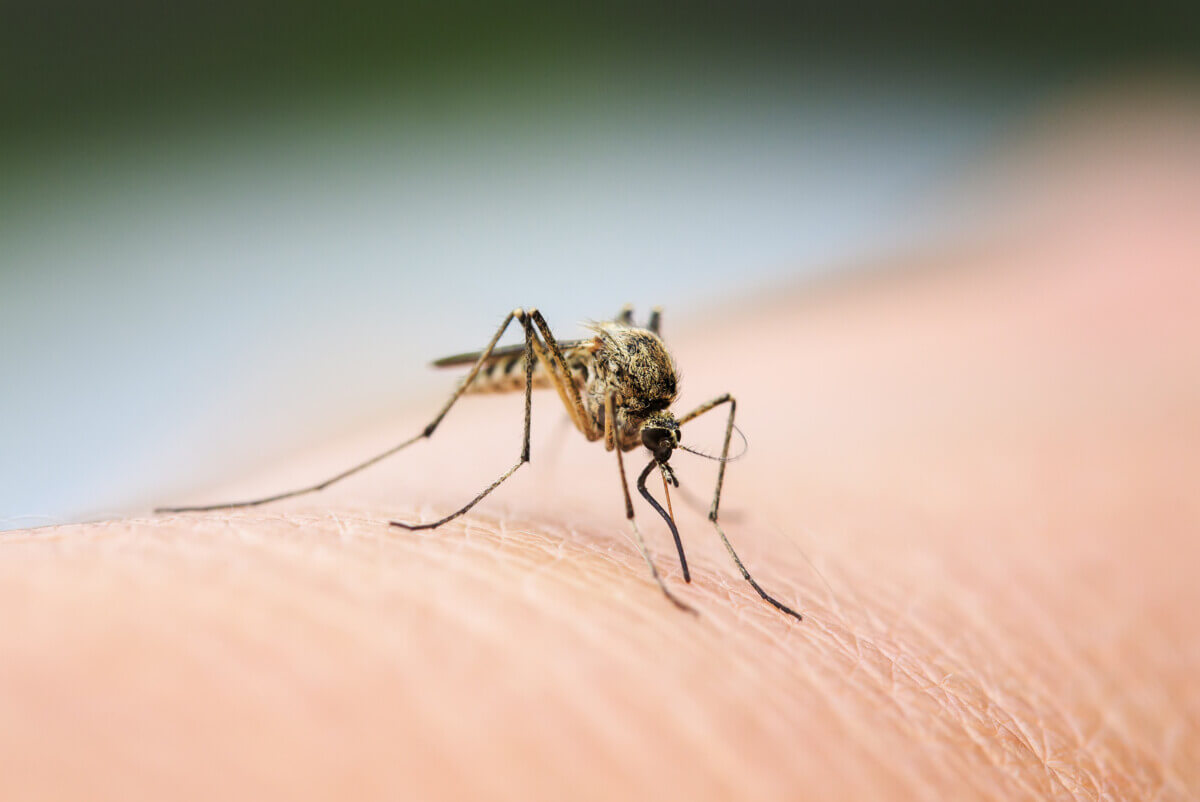
Mosquito (© nataba - stock.adobe.com)
MANHATTAN, Kan. — We’re roughly four months into the coronavirus pandemic, yet there’s still so much we don’t understand about SARS-CoV-2 (the virus that causes COVID-19). It could take years before we know all of the long-term health effects. Making matters worse, uncertainty about all the different ways one can contract the coronavirus remain. On a positive note, researchers from Kansas State University say there’s one less risk factor to worry about. According to their latest findings, mosquitoes aren’t capable of spreading SARS-CoV-2 to humans.
This is the first such project to investigate mosquitoes’ capacity to become infected with, and spread the coronavirus to other beings.
“While the World Health Organization has definitively stated that mosquitoes cannot transmit the virus, our study is the first to provide conclusive data supporting the theory,” says Stephen Higgs, associate vice president for research and director of KSU’s Biosecurity Research Institute, in a release.
Virus doesn’t thrive in mosquitoes
The research was performed at Professor Higgs’ research institute, a biosafety level-3 facility. Over the course of their work, the researchers found that SARS-CoV-2 is incapable of replicating itself within three common species of mosquito (Aedes aegypti, Aedes albopictus, & Culex quinquefasciatus).
So, since the coronavirus can’t sustain itself within mosquitoes’ bodies, it certainly can’t spread to humans via the pesky insects either.
“I am proud of the work we are doing at K-State to learn as much as we can about this and other dangerous pathogens,” Professor Higgs explains. “This work was possible because of the unique capabilities of the BRI and the dedicated BRI and institutional staff.”
CLICK HERE TO SUBSCRIBE TO OUR NEWSLETTER & GET THE LATEST STUDIES FROM studyfinds.com BY EMAIL!
The subject of animal pathogens making their way to humans has never been more prevalent due to COVID-19. Many scientists are already warning that it’s only a matter of time before another virus or disease makes the jump from animals to humans.
With these concerns in mind, the Biosecurity Research Institute at KSU is ahead of the game. Professor Higgs and his team have been researching pathogens capable of jumping from animals to humans, such as Rift Valley fever, for quite some time.
The study is published in Nature Scientific Reports.
[fb_follow /]


