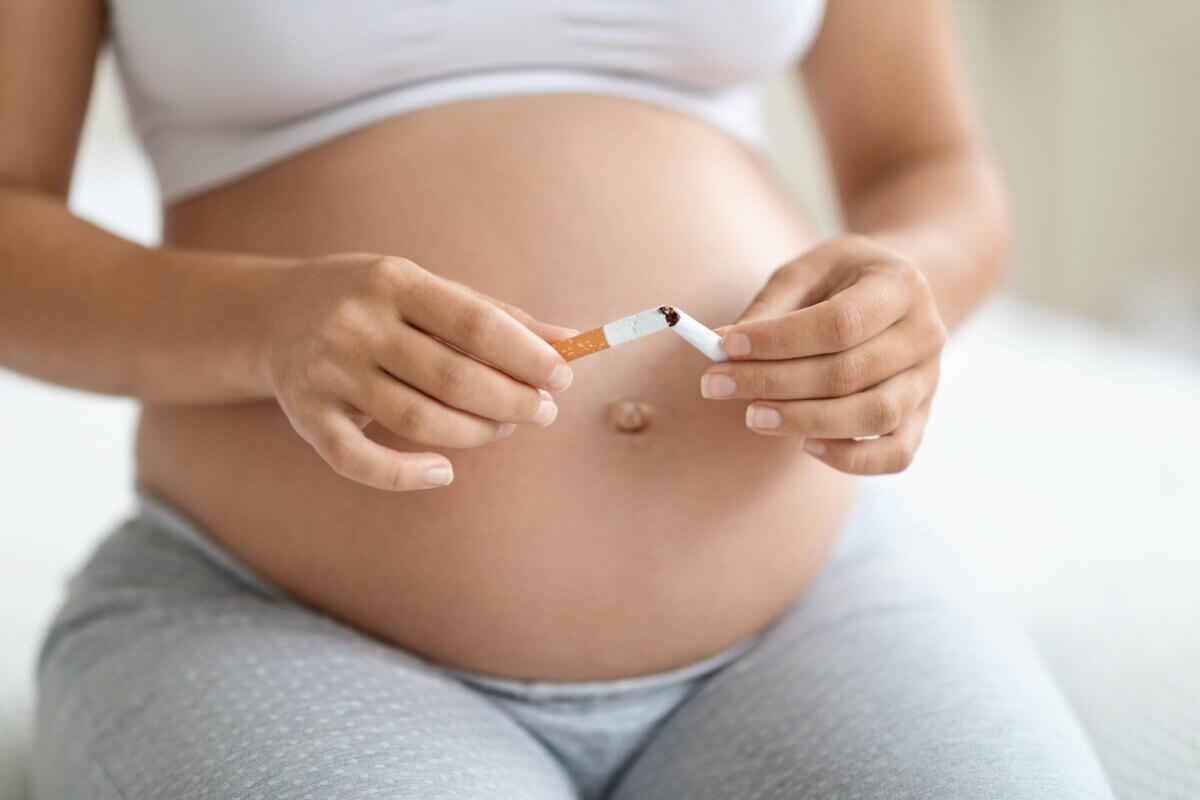
(Credit: Prostock-studio/Shutterstock)
JINAN, China — On the side of every cigarette package, you’ll find a warning against smoking while pregnant. Most women know to cut out smoking when they learn they’re with child, but recent research suggests it is better to break the habit while you’re still trying to conceive.
A new study published in the Journal of Epidemiology & Community Health finds that light smoking — meaning one to two cigarettes daily — before pregnancy can still create serious health issues for a newborn baby. Additionally, the study reaffirms that smoking at any point in the pregnancy is dangerous for the growing fetus. In the United States, one in every 10 pregnant women is a current smoker.
A mountain of research has documented the health effects of smoking during pregnancy, revealing it can lead to a greater risk for premature birth, low birth weight, and developmental issues in the womb. The effects after birth are less understood and have led to many women thinking it’s safe to smoke before and after pregnancy.
Using data collected from birth certificates, scientists in China found the timing of cigarettes during pregnancy matters. While smoking should be avoided during all stages of pregnancy, the new study debunks the urban myth that light smoking is not as harmful if you do it before you get pregnant in the first three months of pregnancy.
“There is no safe period and no safe level of cigarette smoking shortly before or during pregnancy,” the researchers warn in a media release. The team adds that their findings “re-emphasize the need to prevent smoking initiation for non-smokers and to promote smoking cessation for smokers.”

Methodology
Researchers collected data from birth certificates in the U.S. National Vital Statistics System between 2016 and 2019. The information included 15,379,982 live births.
To avoid any variables that could influence the results, the study authors did not include data from women who had multiple births, high blood pressure, or diabetes before pregnancy or who had no information on their smoking habits three months before and during pregnancy. In total, the study authors analyzed 12,150,535 mother-newborns and the number of cigarettes smoked per day, ranging from 0 to over 20.
Key Results
Over 9% of women smoked before pregnancy. During pregnancy, the researchers found 7%, 6%, and under 6% of mothers smoked in the first, second, and third trimester, respectively. Smokers usually had other risk factors associated with newborn health issues: being young, non-Hispanic White, unmarried, obese, having little education, having a history of births, and having fewer attendances to prenatal care.
- Newborns of smokers showed a higher rate of requiring assisted ventilation after birth, assisted ventilation for over 6 hours, NICU admission for mechanical ventilation, and surfactant replacement therapy. They also showed more significant risks for sepsis, seizures, or issues with the brain.
- The prevalence of newborn health problems among smokers is under 9.5%.
- Smoking before pregnancy was associated with a 27% higher risk of newborn health issues. The risk was 31% to 32% if the mother smoked anytime during pregnancy.
- The risk for admission to the NICU was 24% higher if a mother smoked before pregnancy and 30% to 32% during pregnancy.
- Even smoking 1 to 2 cigarettes a day before pregnancy led to a 16% higher chance of newborn health problems. The risk rose to 31% if they smoked 20 or more cigarettes a day.
Discussion & Limitations
The new research sheds light on the dangers of smoking and pregnancy and emphasizes how there is no safe level of tobacco. According to the study, women trying to conceive should stop smoking, as cutting back on cigarettes can still harm the risk for a newborn.
However, the authors acknowledge several study limitations. Since it’s unethical to make a pregnant woman smoke, the authors designed the research as an observational study. Therefore, other variables, like a mother’s preexisting health problems, could have played a factor in why some newborns have health problems. Additionally, it’s unclear how second-hand smoking affects pregnant women.
Funding & Disclosures
The authors reported they had no competing interests that would bias the study’s results. Funding came from the Youth Team of Humanistic and Social Science of Shandong University. A study co-author was supported by the Postdoctoral Fellowship Program of CPSF and the Shandong Postdoctoral Science Foundation.


