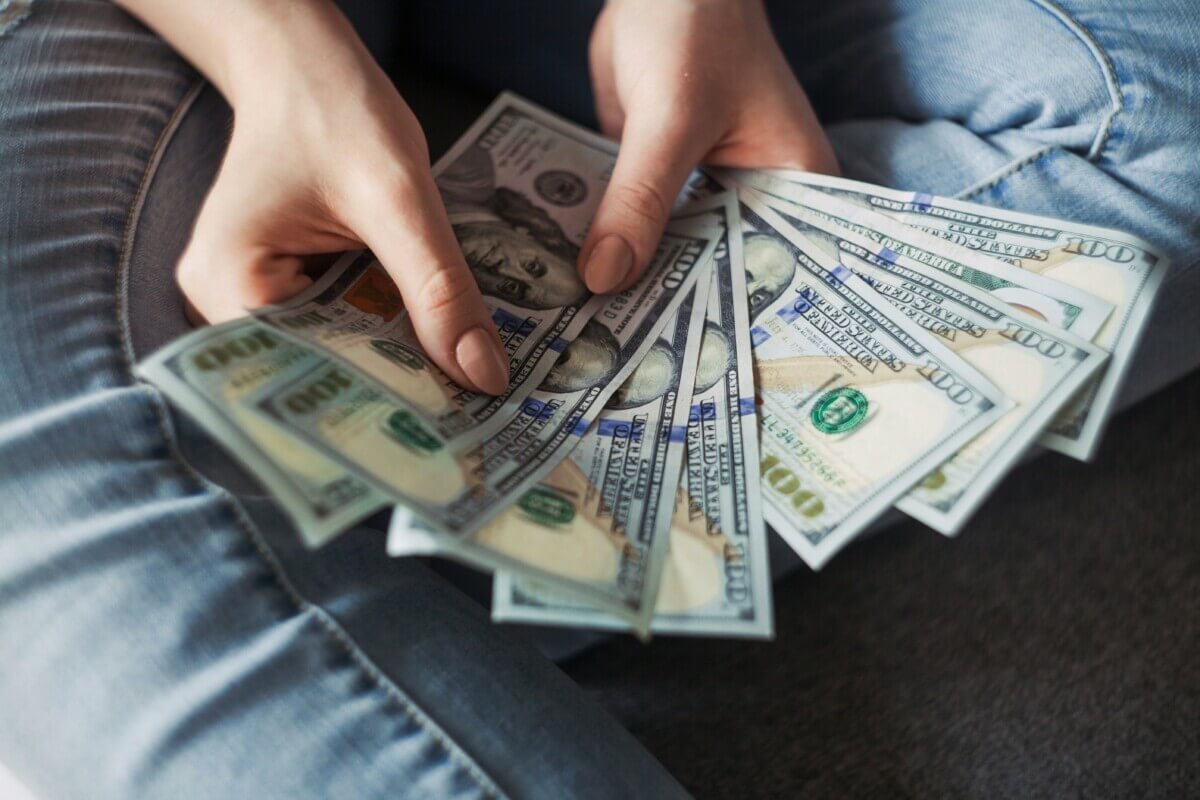
Someone counting money (Photo by Alexander Mils on Unsplash)
How many people don’t have a bank account? And just how difficult has it become to live without one?
These questions are becoming increasingly important as more businesses refuse to take cash in cities across the U.S. People without bank accounts are shut out from stores and restaurants that refuse to accept cash.
As it happens, a lot of people are still “unbanked”: roughly 6 million in the U.S., the latest data shows, which is about the population of Wisconsin. And outside of the U.S., more than a billion people don’t have a bank account.
I am a business school professor who researches society’s transition from cash to electronic payments. I recently visited Seattle and was amazed by the mixed signals I saw in many storefronts. Numerous shops had one sign proudly proclaiming how welcoming and inclusive they were — next to another sign saying “No cash accepted.” This tells people without bank accounts that they aren’t welcome.
Why not have a bank account?
Why would someone want to avoid using banks? Every two years, the Federal Deposit Insurance Corporation surveys households about their connections to the banking system and asks people without bank accounts why they don’t have one. People can respond with multiple answers. In 2021, the top reason — with over 40% of respondents choosing it — was that they didn’t have enough money to meet the minimum balance.
This is consistent with data showing that poorer households are less likely to have bank accounts. About one-quarter of those earning less than $15,000 a year are unbanked, the FDIC found. Among those earning more than $75,000 a year, almost every person surveyed had some type of bank account.
The second- and third-most common answers show that some people are skeptical of banks. Roughly one-third of survey respondents agreed that “Avoiding a bank gives more privacy,” while another one-third said they simply “don’t trust banks.”
Rounding out the top five reasons were costs of dealing with a bank. More than one-quarter of respondents felt bank account fees were too high, and about the same proportion felt fees were too unpredictable.
While many middle-class and wealthy people don’t pay directly for their bank accounts, fees can be costly for those who can’t maintain a minimum balance. A recent Bankrate survey shows basic monthly service fees range between $5 and $15. Beyond these steady fees, banks earn $4 to $5 each time people withdraw cash from an ATM or need services like getting cashier’s checks. Unexpected bills can result in overdraft fees of about $25 each time an account is overdrawn.
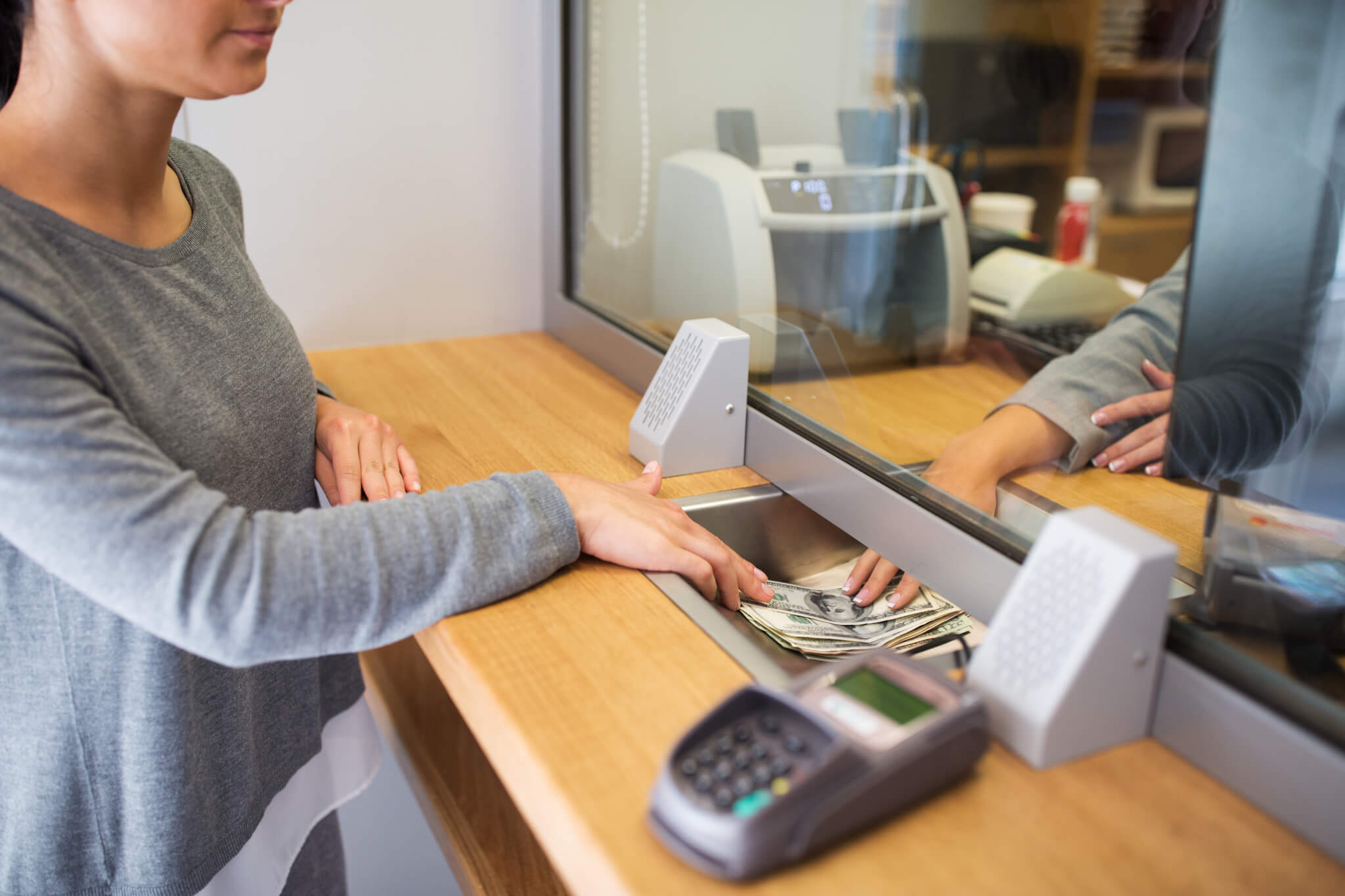
Being unbanked in America
The FDIC calls people without a bank account “the unbanked.” People with a bank account but who primarily rely on alternative services such as check cashing outlets are called “the underbanked.”
The latest FDIC data shows almost 6 million unbanked and 19 million underbanked U.S. households. Given that 2.5 people live in the average household, this means there are over 15 million people living in a home with no connection to banks, and 48 million more in homes with only a tenuous connection to banks.
Combining the two figures means roughly one out of every five people in the U.S. has little or no connection to banks or other financial institutions. That can leave them shut out from stores, restaurants, transportation and medical providers that don’t take cash.
The true number of unbanked people is likely higher than the FDIC estimates. The questions on being banked or unbanked are supplemental questions added to a survey given to people at their homes. This means it misses homeless people, transients without a permanent address and undocumented immigrants.
These people are likely unbanked because you need a verified address and a government-issued tax-identification number to get a bank account. Given roughly 2.5 million migrants crossed the U.S.-Mexico border in 2023 alone, there are millions more people in the cash-only economy than the FDIC estimates.
How many people globally are unbanked?
While the U.S. has relatively high rates of people with bank accounts, the picture is different in other parts of the world. The World Bank has created a database that shows the percentage of each country’s population that has access to financial services. The World Bank’s definition of being banked is broader than the FDIC’s, since it includes anyone who uses a cellphone to send and receive money as having a bank account.
Overall, the World Bank estimates about one-quarter of the world’s adults don’t have access to a bank or mobile-phone account. But that varies dramatically by region. In countries that use the Euro, almost everyone has a bank account, while in the Middle East and North Africa, only about half the population does.
A more inclusive economy
Many of us swipe our credit cards, tap our phones or insert a debit card to pay without thinking. However, there are at least 6 million people in the U.S. and almost 1.5 billion worldwide who are unbanked.
When businesses stop accepting cash, the unbanked are forced to use payment methods like prepaid debit cards. However, these prepaid cards are costly. For example, Walmart, one of the largest U.S. retailers, offers a reloadable basic debit card. The card costs $1 to buy and charges $6 per month in fees, in addition to $3 each time someone wants to load the card with cash at Walmart’s registers. Paying a minimum of $10 just to set up a debit card for a few purchases is a steep price.
The next time you see a sign in a shop or restaurant window stating “No cash accepted,” you’re really looking at a business excluding many unbanked and underbanked people. Insisting that all businesses accept cash is a simple way to ensure everyone is financially included in the modern economy.
Article written by Jay L. Zagorsky, Clinical Associate Professor of Markets, Public Policy and Law, Boston University
This article is republished from The Conversation under a Creative Commons license. Read the original article.
You might also be interested in:
- Looking for love? Big savings accounts and living debt-free will help
- Best Banks For 2023: Top 5 Financial Institutions Most Recommended By Experts
- Should couples who live together open a joint bank account?
- Want a longer, happier marriage? Study says open a joint bank account
- Cashless future? Nearly 6 in 10 Americans want to stop using paper money


It is against federal law to not accept cash. It is legal tender for all debts.
They may not have to give change, but they can’t refuse cash.
WRONG!
Here’s a breakdown of the key points:
Federal Law: No federal statute mandates that private businesses must accept cash as payment. The Federal Reserve states that businesses can set their own policies on payment methods.
State and Local Laws: Some states and municipalities have enacted laws requiring businesses to accept cash, particularly for specific transactions or industries. For example, New Jersey, Massachusetts, and San Francisco have such laws in place.
Exceptions: Certain situations might involve legal obligations to accept cash, such as public transportation or government services.Here’s a breakdown of the key points:
Federal Law: No federal statute mandates that private businesses must accept cash as payment. The Federal Reserve states that businesses can set their own policies on payment methods.
State and Local Laws: Some states and municipalities have enacted laws requiring businesses to accept cash, particularly for specific transactions or industries. For example, New Jersey, Massachusetts, and San Francisco have such laws in place.
Exceptions: Certain situations might involve legal obligations to accept cash, such as public transportation or government services.
Are you sure about this? Almost every online shop doesn’t take cash.
No basis in reality or facts about about comment. Try again, thanks.
Not true.
https://www.federalreserve.gov/faqs/currency_12772.htm
Correct.
You’re wrong, Boomer. A purchase isn’t a debt.
And it’s racist besides, hitting the under-served extra hard.
This is wrong. Retail services are not a debt.
They just don’t want to be robbed.
Yes. No mention in this article of the fact that cash is legal tender.
Not true
It is against federal law to refuse the US dollar. Regardless if it is cash, debit, check or MO. They can refuse payment type but they have to accept the US dollar based
There is no federal statute mandating that a private business, a person, or an organization must accept currency or coins as payment for goods or services. Private businesses are free to develop their own policies on whether to accept cash unless there is a state law that says otherwise. If you know of a Federal law, please cite the specific law.
On the otherhand, Section 31 U.S.C. 5103, entitled “Legal tender,” states: “United States coins and currency [including Federal Reserve notes and circulating notes of Federal Reserve Banks and national banks] are legal tender for all debts, public charges, taxes, and dues.” This statute means that all U.S. money as identified above is a valid and legal offer of payment for debts when tendered to a creditor. This does not require acceptance of this form of payment.
From the FED website, “There is no federal statute mandating that a private business, a person, or an organization must accept currency or coins as payment for goods or services. Private businesses are free to develop their own policies on whether to accept cash unless there is a state law that says otherwise.” So yes, they can refuse cash based on the policies they set for their business.
Spot on.
Yes businesses can refuse cash. The Federal Reserve indicates on its website that there is no federal statute mandating that a private business, person or organization must accept cash or coins as payment.
Which federal law are you referring to? This Federal Reserve Bank page says the exact opposite of what you are saying.
https://www.federalreserve.gov/faqs/currency_12772.htm
Been in Pre-paid “Gift” card and Debitcard World for decades…until you see the Government remove these cards…
Available at any Drug Store and many Big Box stores…this cashless society will take decades to be removed!! The BRICS+ are making certain of that! But times a wasting… IMHO get out of Banks NOW!!
https://www.federalreserve.gov/faqs/currency_12772.htm
for the folks who think that you have to accept cotton and coins.
My bank eats my money. Yummybuxx lol. One of their execs hopped out of a skyscraper window couple months ago. I think maybe the cartels took it over, or something.
$20 entrance fee, cash only.
OK, here’s a $100 bill, keep the change.
Welcome, come on in!
That’s easy… Don’t do business with those that do not accept cash. Only 1 motivation to remove cash, and that is control.
The “I don’t have enough for a minimum balance” argument is bogus. There are plenty of banks that don’t have that requirement.
There is no federal law requiring businesses to accept cash payments. However, some states have passed such laws, and surprisingly, most of them are blue states. Among these are Massachusetts, Connecticut, New Jersey and Colorado. Massachusetts has had their law on the books since 1978. Even DC has pro-cash laws. There are other states: look up your state to see what the current state of law is.
So there are places that won’t take cash. Would you believe there are places or circumstances where they will not process bank cards too? I went to 7-11 last year and because I was low on cash I tried to buy some grocery items with my bank card using my checking account. The person behind the counter said she didn’t know if they could process that kind of transaction. Ultimately I was turned away as they took cash and food stamp cards only. Looks to me like there’s problems ahead even if though most of us have bank accounts. Cash accepted here, cards not accepted … and vice versa. Crazy mixed up world.
There are thousands if not milloins cheating the system and not paying their share of taxes. Why should I or any other American who work hard pay all the taxes while our neighbor doesn’t fairly claim theirs?
How many tip earners claim 100% of their cash tips, I guarantee you a lot do not. What about all the Uber, and other delivery drivers receiving cash tips, does anyone really think the majority are claiming for taxes?
Someone in the comments mentioned a garage sale, actually there is a tax code regarding that where you can sell items you own, but if you went out and bought something specifically to sell (i.e. resellers) why shouldn’t they pay taxes on income like the rest of us? What about the permanent garage sales that are up every weekend, that’s a business and should be taxed. If everyone who was avoiding taxes actually paid their share then taxes wouldn’t be as high for the rest of us.
The story is bogus regarding banks – not ALL banks have fees with a certain minimum balance, that is cherry picking for the story. Also, most banks do not charge atm fees for taking cash unless you use an ATM not in their system, very rare and again cherry picking example.
How about businesses that don’t want to deal in cash, they don’t have to spend the extra employee hours counting, taking it to the bank, securing it let alone employee theft of said funds OR getting robbed which in this day an age, some segments of our society think it’s ok to rob everyone. So why deal with cash when you can avoid the problems it brings?
As for those saying the banks and gov’t are tracking what they are doing, those very same people have used credit cards, most do have a bank account, most do use an ATM card, most employers already do direct deposit…i.e. digital money.
From what I see, most of those complaining about not using cash are some of the very ones trying to avoid taxes. How many Millions of dollars are paid under the table in this country? Again, how is that fair to the average person working and playing by the rules?
The fix is in for CBDC’s. The central bank said they would not pursue CBDC’s without approval from congress. Now, are you so brainwashed as to believe members of congress give a schit what you think and will vote for whats best for you?
An amusing juxtaposition to the increasing number of locations in the rural Midwest that are cash only, offer a discount for cash, or impose significant fees on charge card users. Whether this is an effort to trim transaction costs for the merchant or evade taxes is a matter of debate.
YAAWWWWWNNNNNN. The same headline and article comes out every few years extolling the Death Of Cash! Given that 18% of the U.S. workforce is paid in cash and cash is the preferred method of payment for 22% of the US population, it’s not going away anytime soon. Here’s how it works: When a biz stops taking cash, people go elsewhere. Then the biz starts taking cash again. Rinse and repeat. Cash is going absolutely nowhere.
No problem whatsoever. You dont take cash, I dont pay. Problem solved.
Serving the unbanked in a cash-only business model offering thrift items – basic groceries, auto parts, used clothing and furniture, etc. – might be a viable business model. I would support it and I do honor local businesses who prefer cash, such as a locally-owned hardware store. Alternate currencies or barter might substitute for submission to the Visa/MC duopoly. Credit card issuers get paid for every transaction they process. They are the real winners in a cashless society- along with cyber-thieves who no longer have to rob you in person to steal your money.
As we move closer to a civil war . . . ????
Remove the question marks Robert.
Any businesses that do not accept cash are only screwing themselves. I live in Chicago and a lot of family owned restaurants that are trully worrking their butt’s off have signs that say if your are going to use a credit card, there is a minium charge of 10$ even if your order costs less. I don’t blame them. It is kind of funny that the writer and many others think we should get rid of cash. I have another suggestion. Maybe the US government ought to investigate what few payment processing firms we can accept for anti trust? Oh I forgot, all of our wonderful elected officials are bought and paid for by corporate lobbyists which is why my idea will never work. Enjoy your corporatist payment processing overlords my fellow citizens because oligopoly controls America and nothing will change until we out law lobbying. It will never happen from our elected officials but it could happened if we all came together and organized an Constitutional Convention!
Everyone should stop patronizing those businesses. A cashless society is an ASTOUNDINGLY bad idea. I have a bank account but I don’t like the idea of a handful of people controlling my funds. It starts ok…but then it’s ” Oh you had a garage sale? We’re taking half in taxes”. Can’t give a kid $20 to mow the lawn. Then it’ll be “We don’t feel comfortable with you buying (insert whatever they deem objectionable product) and we don’t think we’ll let you use your money for that. Micro control over one of the most important aspects of our lives.
Exactly right Jeffrey. And I won’t patronize these places. We are seeing a lot of them in Hell-A these days. I walk into a restaurant and if I see they won’t accept cash- I turn right back around. It is all about control yet most people are too blind to see that.
“A cashless society is an ASTOUNDINGLY bad idea.” – Crazy Old Man
Get with the present Old Man. It’s 2024 and you are still living in 1824.
People like you are always the first ones to give up your rights – and the first ones to whine when they are gone.
Read Revelation in the Bible….a cashless society will turn into taking “The Mark”. People are already getting microchips in their hands. And the covid vaccine passport? Already hit Europe
Ja wohl!
Life is better when government can track your every move and every action. Like with cashless “money.”
(rolls eyes)
“Allowing full Government Control of my spending habits is a Wonderful Idea” – Scott Nudd
It’s 2024 where the majority of thinking people know better than to trust the Government. And only clueless liberals think the Government actually cares about people.
Refusing to accept US legal tender is a federal crime. Prosecute a couple of these folks and the trend will end.
You might as well take the bar exam and just officially become a lawyer. Brilliant.
Read the word on the front of a FRN (Federal Reserve Note) aka “money”. It states, “This note is legal tender for all debts, public and private”. They have to accept cash.
Internet lawyers are the best! Free and brilliant – what more could you ever want? (except when you get arrested, sued, or need a divorce)
According to the Constitution, ONLY silver and gold coin are tender for payment of debts. The paper crap we have was declared not allowed in 1787 when the Framers decided NOT to let the government emit bills of credit, as paper is properly known. Still the feds have done whatever to bypass the Constitutional. The feds are not empowered to decide what is legal tender, that power was left to the states (Art 1 Sec 10). That paper stuff is from a private bank, run by world bankers.
Please cite the United States Code for your claim.
Federal Reserve notes say that they are legal for all debts, public and private.
All cash says “legal tender for all debts”
You don’t even need to cite a law or US code.. it states on bills “for all debts public and private”.
Unfortunately, none of those replying to me actually understand what “legal tender” means.
“Legal tender” DOES NOT need to be accepted for cash & carry transactions.
“Legal tender” DOES NOT need to be accepted for any non-debt.
“Legal tender” is only valid in extinguishing a DEBT, meaning, something someone sold to you or did for you ALREADY, and now you are paying for that. And even then, there are limits; for example, you are not legally-entitled to pay in pennies.
THIS is why I asked for the United States Code reference.
Right on. This Legal Tender law is already on the books as are the Nuremberg Code laws that we have just saw broken by organized crime. Book em and sue em, Danno.
The requirement for using Legal Tender only applies to government.
Apparently, they claim private individuals and private businesses don’t have to accept Legal Tender. They can accept whatever they want.
But, it doesn’t matter, government ignores the law.
Take war for example. Constitution says we can’t go to war “UNLESS ACTUALLY INVADED”, but USA has NOT been invaded since War of 1812.
And war has to be declared by Congress, which hasn’t happened since WW2.
Americans are war criminals, according to their own law.
Hypocrites.
Bannerman Netanyahu is going to spend a long time in prison for violating those laws. Unless of course the U.S. (Who tortures POW’s) acts to abolish the Nuremberg Code.
Doing so is the Republican plan.
Wow.. little grasp on law or reality of such.
They already tried that in CA and lost. A business is allowed to refuse cash and accept only cards.
There is no federal statute making the refusal of legal tender a crime. Here is a Federal Reserve link and verbiage:
https://www.federalreserve.gov/faqs/currency_12772.htm
“Is it legal for a business in the United States to refuse cash as a form of payment?
There is no federal statute mandating that a private business, a person, or an organization must accept currency or coins as payment for goods or services. Private businesses are free to develop their own policies on whether to accept cash unless there is a state law that says otherwise.”
Please note the last sentence phrase “…unless there is a state law that says otherwise.” There are states that have passed laws prohibiting the elimination of cash as a payment as well as some cities.
Is that what they taught you in Libertarian La La school?
Just don’t shop at any of these places. they’ll get the message.
Why? A cashless society benefits everyone.
If you’d read the article, you’d know why this is not true.
Cash = Freedom. You must be a lib on that slave plantation.
Typically it costs the store/restaurant 3-4% so their revenue is reduced by that much. They can raise their prices to compensate and then we all pay. Where does that 3-4% go? To the bank.
So the $100 you gave the restaurant actually has $97 gross income. Who got the money? The bank. They pay their vendors, say, $50 via credit card, but the vendor only nets $48 because of the fees. Who got the $2? The bank.
The reality is the banks are the ONLY ones to benefit from a cashless economy.
Did you read the article, at all? The majority of cash customers either can’t afford to maintain bank accounts, or can’t afford fees on pre-loaded debit cards.
In my neck of the woods, I’ve eaten at several restaurants that add a “convenience fee” if you pay with a credit card. And most gas stations have a lower cash price vs credit card.
A cashless society benefits banks…not “everyone”.
No, it benefits the government only. And it makes it easier to rob you. Only it will be the government doing it. And you better do everything they tell you to do. Take your shots, pay your taxes, whatever. You displease your masters in a cashless society, you will find your ability to purchase goods is no longer under your control. They can turn OFF your money with a switch. And they can control in real time, what you can spend it on. Or even if you get to keep it. No more fines for speeding on your way to work. No more appeals either. The fine will be deducted from your account before you get to the office. You should rethink your position…
Banks are controlled by the Federal Government and the Feds want to know what you are involved in. Just saying.
It’s not that I don’t trust banks, I don’t trust the government. I use cash for everything. If I go to a grocery store and get to the checkout lane and they tell me I can’t use cash I just leave the groceries on the belt and walk away. A cashier asked me “what do you want me to do with all these groceries?”, I replied “I don’t care what you do with them, they aren’t mine”.
Get with the present Old Man. It’s 2024 and you are still living in 1824.
Your owner masters in government are getting rid of cash. Get used to it. You will be using CBDC, which is essentially government bitcoins. These CBDC will only be usable within 5 miles or similar short distance of your home, keeping you on a short leash. They are calling it 15 Minute cities. The CBDC will expire at end of month so you won’t be able to save up money. They also won’t let you buy meat, gas, or anything they feel will harm climate. You won’t be able to buy extra, only a ration. And they will tax you at deposit and at withdrawal. This isn’t the worst of it. You will also be taxed for breathing with a carbon tax.
What you should be buying and using are Privacy cryptocurrencies, which unlike CBDC, or bitcoins, or nearly every other cryptocurrency, will not reveal how much you have, what you buy, and to who you donate.
The problem we have is that governments think they own us.
The solution is a revolution, not another fake one, but a real revolution.
The easiest form of revolution is tax revolt. Be like Jesus, and get charged for tax crimes.
When the temple was destroyed by Romans, it was for back taxes, because they were following Jesus. You can’t serve god and mammon, aka government. Render means, put it back where you got it. Put the fake fiat back where it came from and start using Privacy cryptos, or gold and silver.
FYI… the Privacy cryptos are Monero, Dero, and Pirate Chain.
In the U.S. banks are private institutions. In fact it is the lack of control that government has over banks that led to the 2008 banking collapse that almost caused another depression in America, and which Obama spent his 4 years in office pulling America out of.
Thanks Obama.
It says right there that “This note is legal tender for all debts public and private” and on the other side it says “In God We Trust” do we?
Yes, they are private institutions but they are completely controlled and ruled over by the Federal government through the Federal Reserve and FDIC systems.
The Federal reserve is ostensibly a private institution, but does anyone actually believe that? What private institution has it’s board of directors selected by the Executive branch of the government?
It isn’t private. And it is absolutely unconstitutional and unAmerican! In the land of the free and supposedly the biggest capitalist economy in the world, the cost of capital is centrally planned by the government appointees.
The banks themselves, while we maintain the charade of them being private, are in fact government controlled. The banks have a de facto guarantee of all deposits now that SVB tanked and everyone was bailed out because they were all large Dem donors.
The banks can take excessive risks and keep the profits, to be funneled back to the preferred bureaucrats ‘campaigns”, and if they lose they get cash from the “private” Fed. We have a system that is no different than handing someone a million dollars and telling them to go into the casino and bet as you wish. You get to keep the cash you win and if you lose well that’s fine too.
The doom porn that is the 2008 crisis is ridiculous. The fear was used to get you to accept the bailout, which did not need to happen! In fact we did need a bank crisis where the bad banks were allowed to fail to clear out the system of stupid people.
Depositors were insured to the limits of FDIC. The bailouts were for the stock holders and executives! They should all be broke and many in prison rather than billionaires.
MSNBC listener? It was two Dem Senators/Reps that questioned the solvency of banks and set off the crisis….fall before thw wlection. Your parry can never win fairly…..
It is actually against federal law, to refuse to accept Treasury Notes as payment. I ONLY do business in cash. Period. Other than online purchases, the only things I didn’t pay for with paper dollars were houses and cars. If you don’t take cash. You don’t get my business…
Yeah, I mean at what point did these companies ignore “for ALL debts public and private” actually means what it says? If I run into any of these establishments refusing cash I’ll simply ignore their refusal and let them know that they are required to accept cash. Period.