Vacutainer with monkeypox blood sample for testing. (© blackday - stock.adobe.com)
PHILADELPHIA — Remember mpox? The virus that caused a global health scare back in 2022? Well, it’s back in the headlines, and this time with a more dangerous twist. But here’s the kicker: while the threat has returned, our knowledge about it seems to have vanished into thin air.
A recent survey by the Annenberg Public Policy Center of the University of Pennsylvania has revealed a startling decline in public awareness about mpox, formerly known as monkeypox. This comes at a time when a deadlier strain of the virus is spreading in Africa, and the original U.S. strain is showing signs of resurgence.
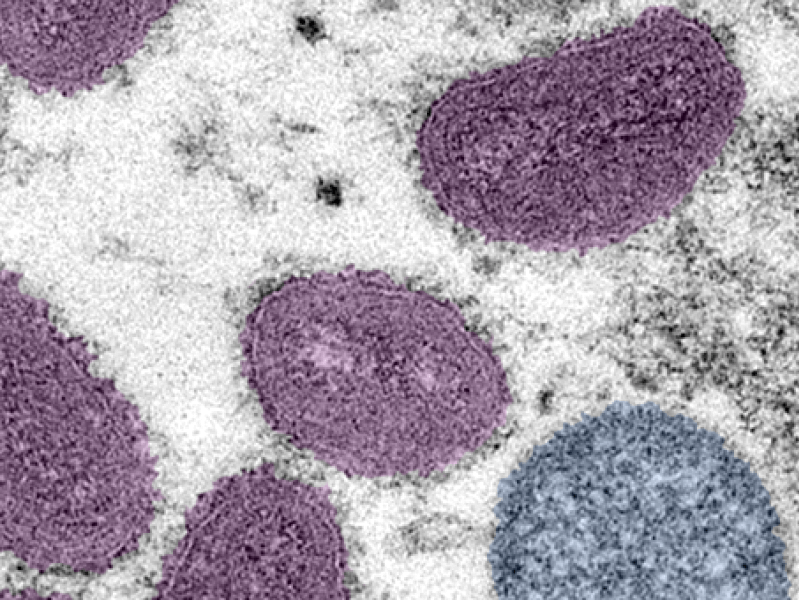
Let’s rewind a bit. Mpox, discovered in 1958, is a rare disease caused by a virus related to smallpox. It can cause fever, chills, and those infamous painful rashes. In 2022, it made headlines when it spread beyond its usual stomping grounds in Africa, leading the World Health Organization (WHO) to declare a global health emergency.
Fast forward to 2024, and the world is facing a new challenge. A more dangerous strain of mpox, known as clade I, is wreaking havoc in parts of Africa. This version is particularly nasty for young children. Meanwhile, the strain that hit the U.S. in 2022 (clade II) is still lurking around, albeit at lower levels, according to the Centers for Disease Control and Prevention (CDC).
So, what’s the problem? Well, according to the Annenberg study, our collective memory about mpox seems to have short-circuited. Let’s break down some of the findings:
- Only 5% of Americans are worried about getting mpox in the next three months. That’s a massive drop from 21% in August 2022.
- Just 17% of people know that mpox is less contagious than COVID-19. In 2022, 41% knew this fact.
- Only a third of people remember that men who have sex with men are at higher risk of mpox infection. This knowledge has plummeted from 63% in 2022.
- Less than half of the population knows there’s a vaccine for mpox. That’s down from 61% two years ago.
“The speed with which the public learned needed information about mpox in the summer of 2022 was a tribute to effective communication by the public health community,” says Kathleen Hall Jamieson, director of the Annenberg Public Policy Center (APPC) and director of the survey, in a statement. “That same expertise should now be deployed to ensure that those at risk remember mpox’s symptoms, modes of transmission, and the protective power of vaccination.”
However, it’s not all doom and gloom. While the public’s knowledge about monkeypox has taken a nosedive, people’s willingness to get vaccinated hasn’t dropped as dramatically. In July 2024, 70% of respondents said they were likely to get vaccinated if exposed to mpox or were already vaccinated. That’s only a slight dip from 76% in October 2022.
So, what does this all mean for you? Well, it’s a wake-up call. Mpox hasn’t gone away, and with new, more dangerous strains emerging, it’s crucial to stay informed. Remember, mpox spreads through close contact, including sexual contact, contact with an infected individual, and contact with a patient’s scabs or body fluids. It can also spread through contaminated materials like towels or bedding.
The good news is that we have tools to fight it. There’s a vaccine available, and the CDC recommends two doses for those at risk or those who’ve been exposed. And here’s a fun fact: 70% of people think the benefits of the mpox vaccine outweigh the risks.
In the end, knowledge is power. While researchers say the public shouldn’t panic, staying informed about mpox – its symptoms, transmission, and prevention – is key.
Survey Methodology
The Annenberg Public Policy Center used what’s called a “nationally representative panel.” Think of it like a mini-America. They gathered a group of 1,496 U.S. adults who represent a cross-section of the country’s population.
This group, first assembled in April 2021, has been surveyed multiple times. The current data comes from the 20th round of surveys conducted from July 11-18, 2024. The survey was carried out by SSRS, an independent market research company.
When interpreting the results, it’s important to note the margin of error. In this case, it’s ± 3.6 percentage points at the 95% confidence level. In simpler terms, if they ran this survey 100 times, 95 of those times, the results would fall within 3.6 percentage points of the reported numbers.
This type of ongoing panel study allows researchers to track changes in knowledge and attitudes over time, giving us valuable insights into how public understanding evolves (or doesn’t) in response to health crises and information campaigns.


