
Photo by Ross Sokolovski on Unsplash
NEW ORLEANS — Science may have finally led us to one of the greatest innovations of humankind: ice cream that doesn’t melt quickly on a hot day. The secret, according to scientists? Banana plant waste.
Not only do researchers say their concoction will last longer, but it’s creamier and potentially even healthier than your typical frozen treat.
Keeping ice cream from melting has been a mystery that has eluded research teams from around the world for years. In 2017, Japanese scientists developed a melt-resistant ice cream using polyphenol compounds from strawberries, but never before has a compound been found to improve the creaminess and texture of low-fat ice cream as well.
So, Columbian researchers Dr. Robin Zuluaga Gallego and Jorge A. Velásquez Cock teamed with scientists from the University of Guelph in Canada to see what would happen when they added tiny cellulose fibers from the banana plants into an ice cream recipe. When bananas are harvested, the remaining plant matter is disposed of as waste.
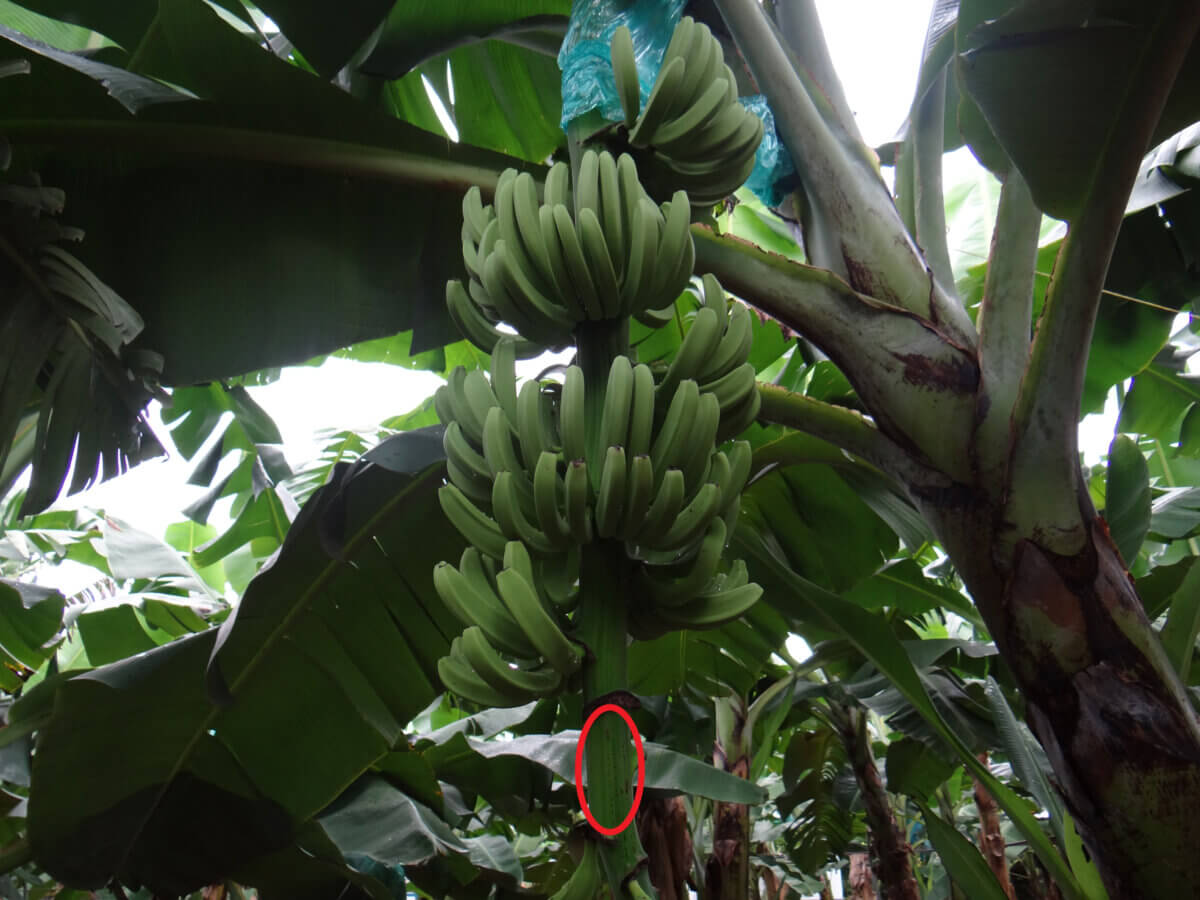
The research team used the microscopic fibers — thousands of times smaller than the width of human hair — from the banana plant stems, or rachis, to slow the melting in ice cream, as well as replace some of the fats used to make the frozen delicacy.
The study found that when mixed with the banana fibers, ice cream melted far slower than the dessert normally does. Even better, the shelf life of the product was longer and the ice cream’s creaminess and texture wasn’t worsened. Velásquez Cock believes their discovery may even lead to a lower-fat ice cream product as the fibers could potentially replace fats used in conventional products.
Healthier product aside, it’s good enough to give ice cream lovers a product that won’t leave their hands sticky and pants stained.
“Our findings suggest that cellulose nanofibers extracted from banana waste could help improve ice cream in several ways,” explains Gallego in an American Chemical Society media release. “In particular, the fibers could lead to the development of a thicker and more palatable dessert, which would take longer to melt. As a result, this would allow for a more relaxing and enjoyable experience with the food, especially in warm weather.”
This breakthrough could mean big-time changes to a huge industry. The United States alone produced 1.3 billion gallons of ice cream in 2016, according the US Department of Agriculture. On average, each American consumes approximately 23 pounds of ice cream each year.
The research was presented at the 255th National Meeting & Exposition of the American Chemical Society in 2018.
Note: This article was first published March 26, 2018.


Spray this stuff on the icebergs to keep them from melting. That should shut up all the global warming false alarmists.
and poison our water supply? Lets just send the global warming kooks back to 4th grade science, it debunks the whole global warming bull crap.
When did bananas become a poison?
we had ‘melt resistant’ ice cream 40 years ago when I was in grade school. it just has so much gelatin in it that it holds it’s shape
“….that has eluded research teams from around the world for years.”
Really? Like it was some Holy grail of science? TEAMS of researchers working around the clock….? /smh
Neat, Can we cure something this century next
Yeah. Keeping ice cream from melting is more important than finding a cure for cancer with these people.
but Ali G already invented the ice cream sleeve
https://www.youtube.com/watch?v=PDu9CvbrnlM
Yeah, that sounds like a great idea. Has anyone read the ingredients in ice cream? It’s already garbage. One is much better off making their own and if you don’t want it to melt, put it back in the freezer!
I kind of tune out when an article writer appears ignorant about fat. You need fat. Your body can’t process vitamins and food without fat. Have fun eating cardboard. Sugars lead to heart disease, not fat content.
I love the assertion that the product is healtheir. Nothing to back that assertion up. I see thi new ice cream hit the shelf, I won’t buy it. Yes I do go into frozen foods for veggies and berries, full stop.
I don’t like bananas.
sucks to be you
This sucks….
Soylant Green keeps it cold and fresh.
It’s not Ice Cream now, is it?
Yep, no clue as to what rhe article is about. This crap has already been around for a few years. There are some videos of this garbage on youtube including whic brands to avoid. In one of these videos, there was a test where several ice cream brands were left out in a dish. Most of them melted. The test was discontinued after twenty one days. All of the ones which melted grew mold in their dish, except the ones which didn’t melt. He mentioned phenol as a binding agent in the article. Phenols are plastics. Who cares if you get them out of strawberries? It boils back down to fake food. Hell, everything else is.
Take a chemistry course. Phenols are not plastics.
Obviously, your type of chemistry is taking meth or some other type of brain eradicator. Among other things several hundred million tons of plastics are made each year with bpa or BADGE as the building block. I’ll bet that you drink soy milk while you are on drugs. Can’t get it up? No sperm in the tank from all the phenolic acid screwing with your body as endocrine disruptors?
Isn’t that the ice cream OJ was eating?
It’s horrible and barely different than what Mcdonalds already sells as “ice cream” in its shakes. Its neither ice nor cream. Just a hodgepodge of non-dairy, fibrous, gelatinous goo that can be grown by slave labor, harvested prior to ripeness, processed by machines, irradiated, sterilized and preserved by chemicals so the sewer-like conditions of the factories or the month long boat ride from the third world, enroute to our tables won’t cause food poisoning or toxic disease. Nothing better than good old fashioned full fat ice cream on a summer evening after supper, or after the ball team finishes the game. Avoid the modern fakes.
Willy Wonka already came up with that idea. They must have been the ones who stole the idea from Willy
Why would anyone want to eat that?
Just don’t breath in those nano fibers.
Dr. Cock makes it possible to lick again
Please don’t mess with our Blue Bell Ice Cream!