
(Image by zimmytws on Shutterstock)
In A Nutshell
- A yearlong study found that young adults bet more during weeks when they believed their friends approved of betting or were actively wagering, even if that perception was inaccurate.
- Two mental routes drive sports betting: a deliberate, planned path shaped by personal attitudes and peer approval, and a reactive path triggered by social identity and perceived friend behavior.
- Awareness of risk had no meaningful effect on willingness to bet, suggesting that warning labels and general harm messaging may not be enough to change behavior.
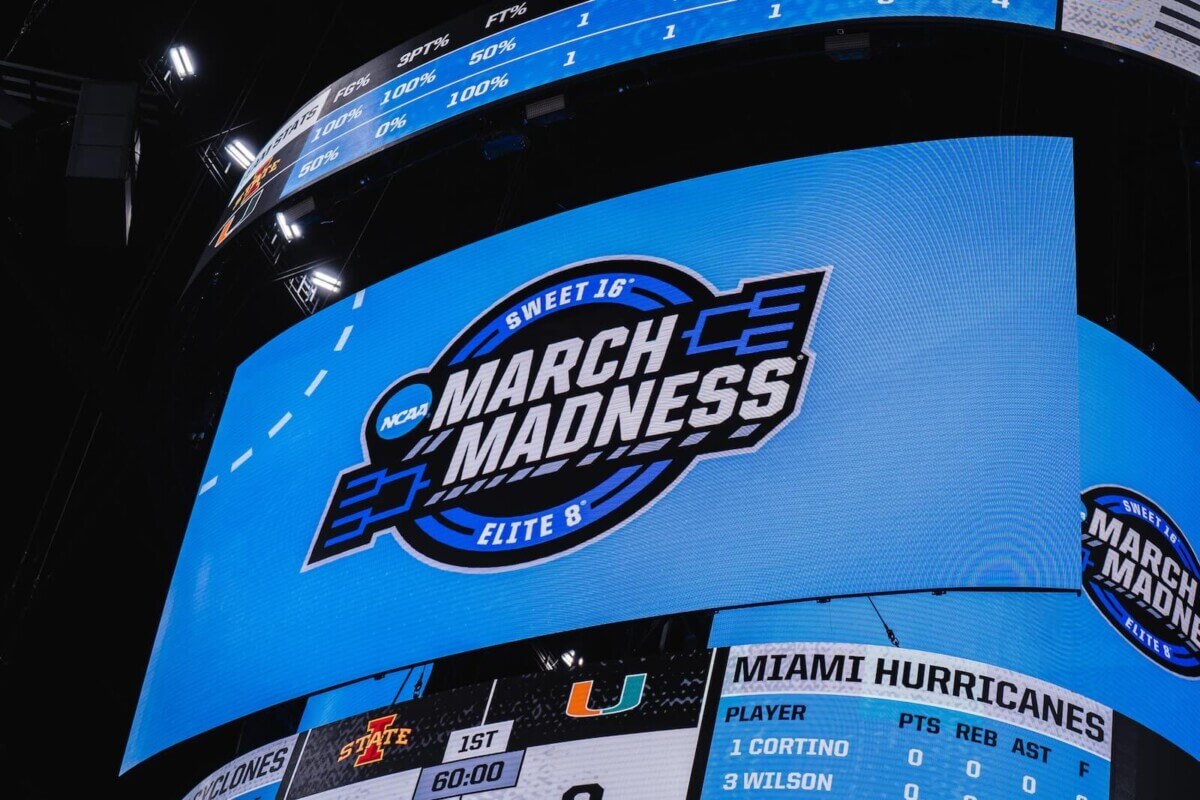
- Researchers say events like March Madness may amplify all the social and psychological triggers identified in the study, making the tournament a high-risk period for young bettors.
Every March, millions of Americans fill out brackets, join office pools, and open sportsbook apps. For young adults especially, the NCAA tournament has become as much about betting as basketball. And according to a new yearlong study, a major force pushing many of them to wager isn’t a love of gambling. It’s the belief, often wrong, that everyone around them is doing it.
Research published in the Journal of Gambling Studies tracked the betting habits of 210 young adults over 12 months and found that week-to-week swings in wagering closely tracked shifting perceptions about friends. When participants believed their social circle approved of betting more than usual, or sensed that more friends were actively placing bets, their own frequency climbed. Researchers suggest events like March Madness can amplify those perceptions, regardless of what friends are actually doing.
“When you look at how March Madness is advertised on social media and in groups, it creates the perception that everyone is doing it,” said co-author Dr. Melissa Lewis, a social work professor at the University of Texas at Arlington. “That may not affect people who already plan to bet, but it can definitely influence those who haven’t done it before and are willing to try because it now seems so normative.”
About 36% of adults aged 21 to 34 report placing at least one sports bet in any given month, with roughly 19% betting at least weekly. As sportsbook apps compete for screen time alongside social media and streaming platforms, researchers are racing to understand what is actually pulling young adults toward the betting window, and when the pull is strongest.
The Psychology Behind Sports Betting Decisions
Researchers from the University of Washington School of Medicine and the University of Texas at Arlington applied a behavioral framework called the Prototype Willingness Model to sports betting for the first time in a study that followed the same individuals over time, rather than surveying them once and moving on. The model identifies two mental routes to risky behavior. One is deliberate: a person consciously plans to act, guided by their own attitudes and their read on what friends approve of. The other is reactive: no plan exists, but the person finds themselves open to betting when the moment arrives, particularly when the social atmosphere seems to call for it.
Both routes predicted higher betting, but different things triggered each one. Planned betting rose when a young adult’s attitude toward wagering was more favorable than usual and when they sensed stronger peer approval. Reactive betting climbed when participants thought more friends were wagering than usual and when they saw themselves as resembling a “typical sports bettor.”
“Some individuals plan their betting throughout the year, while others are open to gambling but haven’t had the right context,” Lewis said. “March Madness provides that context: It’s one of the biggest betting events of the year and heavily involves young adults and college students.”
How Peer Pressure Drives Sports Betting Frequency
Participants were recruited via Instagram and Reddit, all aged 18 to 29 and having placed at least two bets in the prior month. Each completed up to 26 surveys every two weeks over the course of a year, reporting how many bets they had placed and answering questions about their attitudes and social perceptions around betting. They came from 35 states, were 77.1% male, and averaged 24.5 years old, placing just over 14 bets per two-week period on average.
When attitude toward betting and sense of friend approval were both running higher than a person’s own usual baseline, their intention to bet rose sharply. That shift statistically accounted for about 89% of the link between favorable attitudes and actual betting frequency. On the reactive side, identifying more closely with the image of a typical sports bettor explained about 68% of the willingness-to-betting connection, and perceiving that more friends were wagering explained about 42%.
One variable didn’t seem to make much difference: awareness of risk. Participants who acknowledged that something bad might happen to them as a result of betting showed no significant link between that awareness and willingness to wager. Researchers suggested that general risk awareness tends to reflect vague, long-term concerns like financial strain rather than the immediate question of whether to bet on tonight’s game.
Co-author Dr. Dana Litt, also from the University of Texas at Arlington, said knowing which mental route is driving a person’s betting matters enormously for anyone trying to help them.
“All of that matters because interventions for someone with strong intentions differ from interventions for someone who is simply willing if a friend suggests placing a bet,” Litt said. “Understanding why people choose to engage is what helps design effective interventions.”
Why March Madness Is a High-Risk Period for Young Bettors
March Madness does more than draw bettors into the market. It shifts attitudes toward wagering, floods social feeds with betting content, and distorts how many people believe their friends are actually placing bets. All three of those forces align with what this study identified as the primary drivers of elevated betting frequency.
A young adult who gives little thought to wagering in January can find themselves in an entirely different headspace by mid-March: 67 games over three weeks, wall-to-wall advertising, bracket pools in every group chat, and a social media feed that makes it look like the whole country has skin in the game. Attitude warms. Perceived peer approval spikes. Identity as “someone who bets during March Madness” can take hold surprisingly fast.
Researchers suggested these patterns could help inform future prevention tools. When a person’s attitudes, perceived peer approval, and willingness are all running above their own personal baseline, a targeted nudge delivered at that moment, such as a prompt correcting inflated beliefs about how many friends are actually wagering, could potentially help interrupt the climb before betting escalates.
Sports betting has been linked in prior research to depression, anxiety, loneliness, increased alcohol use, and higher odds of developing other addictive behaviors. For a generation raised on sportsbook advertising and celebrity-endorsed betting apps, the social pressure around wagering is genuinely difficult to tune out, especially when 67 games in three weeks make it feel like the whole world is in on it.
Disclaimer: This article is based on an observational study and reflects associations between psychological factors and sports betting frequency, not proven causes. Findings are drawn from a self-selected sample of young adults who were already active sports bettors and may not represent the broader population.
If you or someone you know is struggling with problem gambling, confidential support is available through the National Problem Gambling Helpline at 1-800-522-4700.
Paper Notes
Limitations
Surveys were completed every two weeks, so the study could not detect day-to-day shifts in attitudes or behavior. Biweekly intervals may have caused some associations to appear weaker than they would at a finer timescale. All data relied on self-report, with the usual risk of underreporting, though analyzing within-person change over time makes it unlikely that a consistent tendency to downplay gambling accounts for the patterns found. Each psychological variable was captured with a single question rather than a validated multi-item scale, which may have reduced measurement precision, particularly for perceived vulnerability. Participants in active treatment for gambling disorder were excluded, so results may not apply to those with more severe problems. At 77.1% male, the sample skews heavily toward men. State-level betting legality was omitted from the analysis because of wide variation in state regulations and evidence that bettors routinely bypass geographic restrictions through VPN use.
Funding and Disclosures
Funding came from a grant through the International Center for Responsible Gaming, itself funded by Bally’s Corporation. Authors stated the funder had no role in study design, data collection, analysis, interpretation, or the decision to publish. Additional support for data infrastructure came from the Institute of Translational Health Sciences, funded by the National Center for Advancing Translational Sciences of the National Institutes of Health under award number UL1TR002319. All five authors declared no conflicts of interest. Study design was not pre-registered.
Publication Details
Authors: Joseph Lambuth, Psychiatry and Behavioral Sciences, University of Washington School of Medicine; Dana M. Litt, School of Social Work, University of Texas at Arlington; Melissa A. Lewis, School of Social Work, University of Texas at Arlington; Ty W. Lostutter, Psychiatry and Behavioral Sciences, University of Washington School of Medicine; Scott Graupensperger (corresponding author), Psychiatry and Behavioral Sciences, University of Washington School of Medicine. Title: “The Prototype Willingness Model of Sports Betting: A Yearlong Within-Person Study of Young Adults.” Journal: Journal of Gambling Studies. DOI: https://doi.org/10.1007/s10899-026-10477-4. Published online February 13, 2026.


