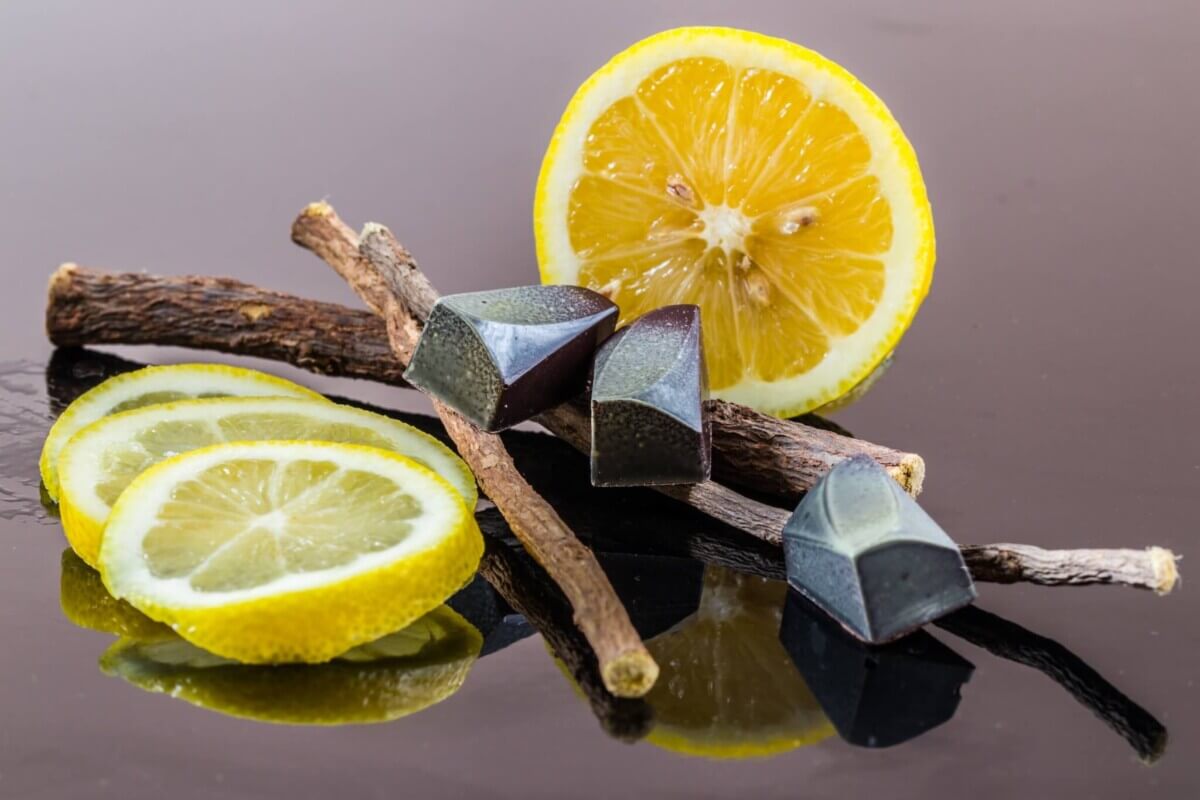
(Photo by Massimo Adami on Unsplash)
CHICAGO, Ill. — Offering a distinct, almost bitter flavor profile, licorice candy is a treat most people either love or hate. Well, just like medicine, a new study finds it might be wise to grin and bear the taste — because licorice root could also be good for your health. As polarizing as its flavor is, researchers from the University of Illinois Chicago say licorice may one day help prevent and even treat certain types of cancer.
Gnanasekar Munirathinam, an associate professor in the department of biomedical sciences at the College of Medicine Rockford, authored these remarkable findings while studying substances derived from the licorice plant Glycyrrhiza glabra. At that time, Prof. Munirathinam and his team were focusing specifically on the effect of licorice on prostate cancer.
Study authors speculate that a substance derived from licorice, glycyrrhizin, can help create new “agents” for clinical cancer treatment.

“When we look at the research out there and our own data, it appears that glycyrrhizin and its derivative glycyrrhetinic acid have great potential as anti-inflammatory and anti-cancer agents,” Prof. Munirathinam says in a university release. “More research is needed into exactly how these could best be used to develop therapies, but this appears to be a promising area of cancer research.”
Don’t fill your cart with licorice treats just yet
Before you run out to the grocery store for some licorice, study authors say they aren’t suggesting that anyone and everyone start eating more licorice. To start, that can influence blood pressure, interact with various medications, and ultimately result in a number of adverse health outcomes. For now, researchers suggest indulging in the occasional licorice candy or tea until further research projects clarify these findings.
“Very few clinical trials in humans have been conducted,” Prof. Munirathinam concludes. “We hope our research on prostate cancer cells advances the science to the point where therapies can be translated to help prevent or even cure prostate and other types of cancer.”
The study is published in the journal Pharmacological Research.


