(© fotodiya83 - stock.adobe.com)
Is (artificial) laughter really the best medicine? Trials indicate nitrous oxide may be a legitimate depression treatment option.
In A Nutshell
- Nitrous oxide eased depressive symptoms within 2–24 hours in several early trials.
- Single sessions helped briefly; repeated sessions showed stronger and longer-lasting effects.
- Side effects were mild and temporary, with fewer issues at the 25% dose.
- Researchers still need clearer data on long-term use and the best dosing schedule.
Laughing gas, the same substance dentists use to calm nervous patients, might offer a surprisingly fast way to ease severe depression. While typical antidepressants can take weeks to start working, nitrous oxide reduced depression symptoms within hours in early clinical trials.
A research review published in eBioMedicine looked at seven clinical trials involving 247 participants. People who inhaled nitrous oxide at medical doses showed measurable improvements in depression scores as early as two hours after treatment. For those battling major depression or depression that hasn’t responded to other treatments, this speed could make a real difference.
Depression affects over 300 million people worldwide. Current first-line treatments like Prozac and Zoloft don’t work for 30-50% of patients. Even when these medications do work, people often wait four to eight weeks before feeling better. Scientists have started exploring treatments that work through different brain pathways.
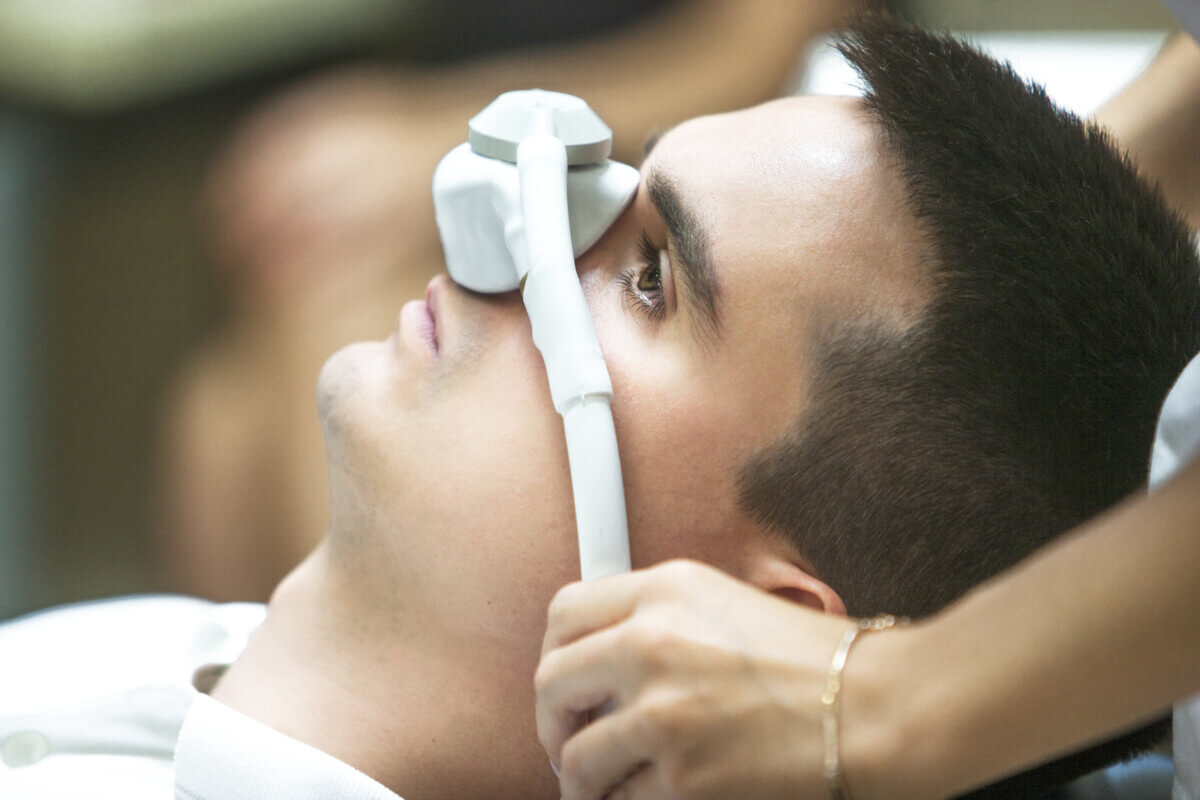
Nitrous oxide affects the brain differently than traditional antidepressants. It works similarly to ketamine, another drug that’s shown rapid effects on depression. In these trials, researchers gave participants 25% or 50% nitrous oxide through a mask for 20-60 minutes.
Depression Relief Came Fast But Didn’t Last Long
When researchers combined results from three trials using 50% nitrous oxide in a single session, participants showed meaningful drops in depression scores. At two hours after treatment, their scores dropped an average of 2.74 points. At 24 hours, the drop reached 3.32 points compared to people who got placebo.
But here’s the problem: these improvements faded by the one-week mark. Depression scores at seven days after treatment looked about the same whether people got nitrous oxide or placebo.
One study with 20 adults whose depression hadn’t responded to other treatments found that 20% improved with nitrous oxide compared to 5% with placebo. About 15% of the nitrous oxide group saw their depression go into remission, while none of the placebo group did. Another study followed 44 patients after one session of 50% nitrous oxide. The treatment group felt better at both two hours and 24 hours, but the difference disappeared by one week.
A third study with 30 people found that 45% of depressed participants felt significantly better by day seven. Those who responded showed bigger improvements at both 24 hours and day seven compared to people who didn’t respond.

Multiple Sessions Worked Better
One study treated 23 patients with major depression using eight sessions over four weeks, twice a week. In this group, 91.7% showed improvement compared to 44.4% who got placebo. About 75% went into remission compared to just 11.1% with placebo.
Another trial compared three sessions of 25% or 50% nitrous oxide versus placebo in 24 people whose depression hadn’t responded to other treatments. At week two, the 25% dose lowered depression scores by 5.19 points and the 50% dose lowered them by 7.00 points compared to placebo. Each 25% increase in dose led to an additional 3.15-point drop in scores.
A recent study with 81 people compared four weekly sessions of 25%, 50% nitrous oxide, or placebo. Depression symptoms improved more with nitrous oxide, especially right after the final session. After one week, 38% of the nitrous oxide group was in remission compared to 13% of the placebo group.
Most Side Effects Were Mild
People generally tolerated nitrous oxide well. Common side effects included nausea, dizziness, and headaches. All of these went away on their own without needing medical help. The 25% dose caused fewer side effects than the 50% dose.
When researchers looked at safety data together, 25% nitrous oxide increased the risk of dizziness and nausea compared to placebo. The 50% dose increased the risk of headaches, dizziness, and nausea even more.
Comparing the two doses directly, 25% nitrous oxide caused significantly less nausea and vomiting than 50%, though the differences in dizziness and headache rates weren’t as clear. No serious side effects happened in any of the trials.
How Does Nitrous Oxide Compare to Ketamine for Depression?
Both nitrous oxide and ketamine work on similar brain systems, but they have some key differences. Studies of ketamine given through an IV show it reduces depression symptoms at 24 hours, with effects declining by one week—similar to single doses of nitrous oxide.
Nitrous oxide affects the brain in a weaker, more partial way than ketamine. It also affects other brain systems beyond the one it shares with ketamine. These differences might explain why nitrous oxide causes fewer intense side effects than ketamine’s stronger dissociative effects (like feeling detached from reality).
More people respond to ketamine (50-70%) than to single doses of 50% nitrous oxide (20-45%) at 24 hours, though no studies have directly compared them head-to-head. Ketamine more commonly causes dissociation, strange perceptual experiences, and cardiovascular changes. Nitrous oxide more often causes nausea, vomiting, and headaches.
What’s Next for This Research
Eight studies are currently testing nitrous oxide for depression. They range from 30 to 172 participants, with some focusing on older adults and people with suicidal thoughts or cognitive problems.
Most research so far has focused on short, early-phase studies in adults with major depression or treatment-resistant depression using one-time treatments. Studies looking at repeated sessions, long-term results, teenagers, and bipolar disorder are still rare.
The fast symptom relief in early trials offers hope for people with severe depression, especially those in crisis or those who haven’t gotten better with standard treatments. But the short-lived benefits from single sessions raise practical questions. Would patients need weekly appointments indefinitely? Could the treatment stop working over time?
Recreational use adds complications. Surveys show 8.7% of young adults in the UK have used nitrous oxide recreationally, often at concentrations above 89%. Heavy use at these levels can cause vitamin B12 deficiency, leading to nerve problems. These usually reverse with supplementation but can become serious with continued use.
Medical use differs substantially from recreational patterns. Clinical protocols use lower concentrations (25-50%) mixed with oxygen, given in monitored medical settings. But widespread recreational use could complicate efforts to make nitrous oxide more widely available for depression treatment.
Whether laughing gas moves from dentist offices into mainstream mental health care depends on answering key questions about lasting benefits, optimal treatment schedules, and long-term safety. Current research hasn’t tackled these questions yet.
Disclaimer: This article is for general information only. It’s not medical advice, and it isn’t a guide for diagnosis or treatment. If you’re concerned about your mental health or considering any new treatment, please talk with a qualified healthcare professional.
Paper Summary
Limitations
Only two studies calculated how many participants they needed before starting. The other trials were small early-phase studies that didn’t do these calculations, making their results less certain. Studies used different depression scales, outcome definitions, timing for assessments, and comparison treatments. Most studies only looked at short-term results after one nitrous oxide session, leaving big gaps about repeated treatments and longer-term results. Differences in study design, other medications people were taking, and varied participant groups make it hard to apply findings broadly.
Equipment for delivering nitrous oxide also varied across studies. Some used anesthesia machines and FDA-approved breathing circuits, while others used nasal masks, non-rebreathing circuits, and pre-mixed cylinders. These differences could affect the exact dose people received.
The review itself had limitations. With few studies and small participant numbers, researchers couldn’t look closely at subgroups, dose-response patterns, or publication bias. A chart checking for potential bias at the 24-hour mark showed some asymmetry, but with only four studies, it’s hard to say what that means.
Funding and Disclosures
The research was supported by the Office for Life Sciences and the National Institute for Health and Care Research Mental Health Translational Research Collaboration Mission, Midlands Translation Centre. The lead author receives funding from MRC Trials Methodology Research Partnership Doctoral Training Partnership. Several authors receive support from NIHR Clinical Lectureships and NIHR Oxford Health Biomedical Research Centre. The funders had no role in study design, data collection, analysis, interpretation, or writing.
Conflicts of interest vary among authors. One author is a Managing Editor for Trials journal. Several receive support from professional associations or hold grant funding from NIHR. One author has received consulting fees from drug companies and holds grant income from J&J. Another has consulting arrangements with UCB and grant income from Zogenix, J&J, and ADM. One author has a contract with Compass Pathways.
Publication Information
This systematic review and meta-analysis was authored by Kiranpreet Gill, Angharad N. de Cates, Chantelle Wiseman, Susannah E. Murphy, Ella Williams, Catherine J. Harmer, Isabel Morales-Muñoz, and Steven Marwaha. The research team included collaborators from the Institute for Mental Health at University of Birmingham, Department of Psychiatry at University of Oxford, Severe Mood Disorders Clinic at Birmingham and Solihull Mental Health NHS Trust, and Oxford Health Foundation Trust at Warneford Hospital.
The article was published in eBioMedicine on November 30, 2025 with DOI: 10.1016/j.ebiom.2025.106023.


