
.(Photo by YASAMIN JAFARI TEHRANI on Shutterstock)
Former President Joe Biden has been diagnosed with an aggressive form of prostate cancer that has already spread to his bones. A statement Biden’s office issued on Sunday revealed Biden was diagnosed after experiencing urinary issues. Biden’s office said his cancer has a Gleason score of nine out of ten. It also said his cancer “appears to be hormone-sensitive, which allows for effective management”.
So what is a Gleason score? And what does it mean for a cancer to be hormone-sensitive?
What Is Prostate Cancer?
Prostate cancer is any cancer that begins in the prostate, part of the male reproductive system. This small golf ball-sized gland is located below the bladder.
Prostate cancer is the second most common cancer in men worldwide. Some types of prostate cancer are low risk, grow very slowly, and may not require immediate treatment. Others are highly aggressive and can spread to other tissues and organs.
What Are Symptoms Of Prostate Cancer?
Early prostate cancers do not usually cause symptoms, and therefore can be difficult to detect.
At later stages, prostate cancer symptoms can include frequent urination, pain and/or a weak stream while urinating, blood in urine/semen, back/pelvic pain, and weakness in the legs or feet.
Advanced prostate cancer which has spread to bones can cause pain, fatigue and weight loss.
What Is The Gleason Score?
The Gleason score is one way of measuring the aggressiveness of prostate cancers. It assists doctors in categorizing prostate cancers into different groups and in selecting appropriate treatments for patients.
To calculate the Gleason score, clinicians take multiple samples of the tumor, called biopsies. To obtain each sample, a small needle is inserted into the tumor and a sliver of tissue (usually around 12 millimeters long) is extracted for testing.
Because the different regions of the tumor can have different cancer cells present, pathologists then pick two different sections of the tumor biopsy they think best represent the whole tumor.
Then, they grade each of the two sections with a score from 1 to 5. Grade 1 means the cancer cells present look a lot like normal, healthy cells. Grade 5 means the cancer cells look very abnormal. To get a patient’s Gleason score, the two grades are added together.
Patients with a Gleason score of 6 or less are considered low risk and may not require immediate treatment. A Gleason score of 8–10 indicates a highly aggressive prostate cancer that will likely grow quickly.
The Gleason score is only one tool health-care professionals use to guide the diagnosis and treatment of patients.
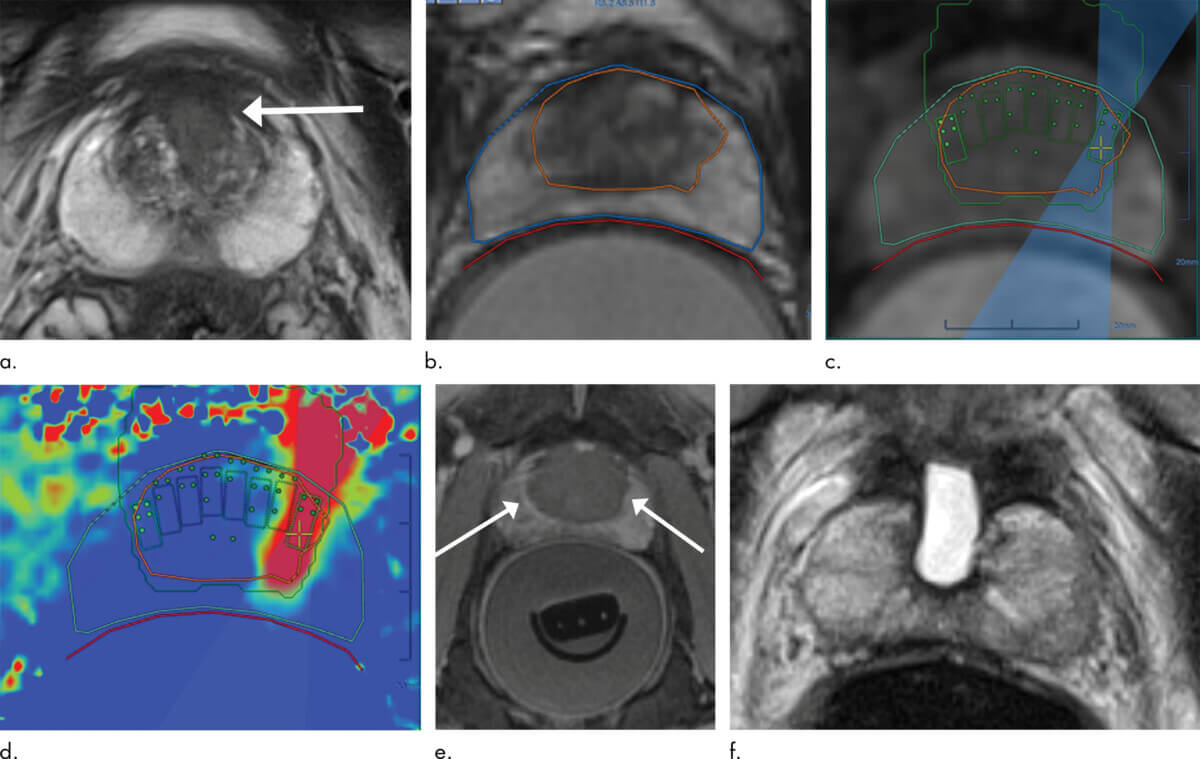
Other tools include blood tests for prostate-specific antigen (PSA, which is often elevated in prostate cancer patients), physical examinations (such as a digital rectal examination), and imaging of the tumor (such as via CT scans, MRI, or ultrasounds).
While we don’t have all of the information about Biden’s diagnosis, a Gleason score of 9 indicates that his cancer is very aggressive.
What Is Hormone-Sensitive Prostate Cancer?
Hormones are chemical signals made by various glands in our bodies. They are released into the bloodstream and can activate different processes in different cells and tissues.
Hormones are very important for the normal functioning of our bodies, but some types of cancers also need hormones in order to grow.
Prostate cancers that are “hormone-sensitive” need male sex hormones (also called androgens) to grow. Testosterone, which is primarily produced in the testicles, is an example of an androgen.
How are hormone-sensitive cancers treated?
Hormone therapies work either by reducing androgen levels, or by blocking the function of androgens. This can slow down or even kill hormone-sensitive prostate cancers, since they depend on androgens for their continued growth and survival.
Androgen-deprivation therapy is usually the first hormone therapy those with prostate cancer will receive. It aims to reduce the levels of androgen produced by the testicles, either through surgical or chemical castration.
Other types of hormone therapy, which can also be used in combination with androgen-deprivation therapy, include androgen-receptor blockers. These drugs bind to cell receptors, blocking the interaction between the androgens and the cancer cells. This means the cancer cells can’t access the androgens they need to grow.
Of course, hormones are also necessary for normal bodily functions, meaning blocking them has side effects. Hormone therapies for prostate cancer commonly have side effects such as erectile dysfunction, weight gain, fatigue and osteoporosis, which causes bones to become weak and brittle.
While hormone therapy may not be pleasant, it is an effective treatment option. Prostate cancers which become insensitive to hormone therapies are much more difficult to treat and generally considered incurable.
Besides hormone therapy, prostate cancer may also be treated with surgery, radiotherapy and chemotherapy – it depends on the patient.
In addition, many new treatments for prostate cancers are currently under investigation, including laser procedures to remove cancer cells and CAR T therapy, which involves transforming a patient’s own immune cells into cancer-fighting cells.
For patients whose prostate cancer has spread to their bones, treatments are usually aimed at stopping the cancer from spreading further and reducing symptoms.
Biden and his family are now said to be reviewing treatment options.
Sarah Diepstraten and John (Eddie) La Marca are senior research officers in the Blood Cells and Blood Cancer Division at WEHI (Walter and Eliza Hall Institute of Medical Research).
Diepstraten receives funding from Cure Cancer Australia and My Room Children’s Cancer Charity. La Marca receives funding from Cancer Council Victoria. He is affiliated with the Olivia Newton-John Cancer Research Institute and the Walter and Eliza Hall Institute of Medical Research.
This article is republished from The Conversation under a Creative Commons license. Read the original article.


