
(Credit: © Peter Hermes Furian - stock.adobe.com)
In A Nutshell
- Hospital staff faced life-threatening conditions just getting to work, forcing commanders to abandon standard emergency staffing procedures and rely on volunteers who showed up on their own.
- Frequent emergency drills held every three months allowed staff to operate almost automatically under extreme stress, freeing up leaders to focus on the rapidly changing situation.
- Official sources had only limited, incomplete information during the attack, and staff had to piece together what was happening using social media videos, patient accounts, and reports from military personnel.
When rockets started falling on the morning of October 7, 2023, medical staff at a hospital in southern Israel faced a decision most people will never have to make: leave their families in communities under active attack, or drive through missile fire to get to work. One nurse recalled having to stop the bus more than once, get out, and lie flat on the ground as missiles and shrapnel fell nearby. A senior hospital manager described the drive in as “apocalyptic,” with smoke visible everywhere. For those who made it in, the full scale of what was unfolding became clear only slowly.
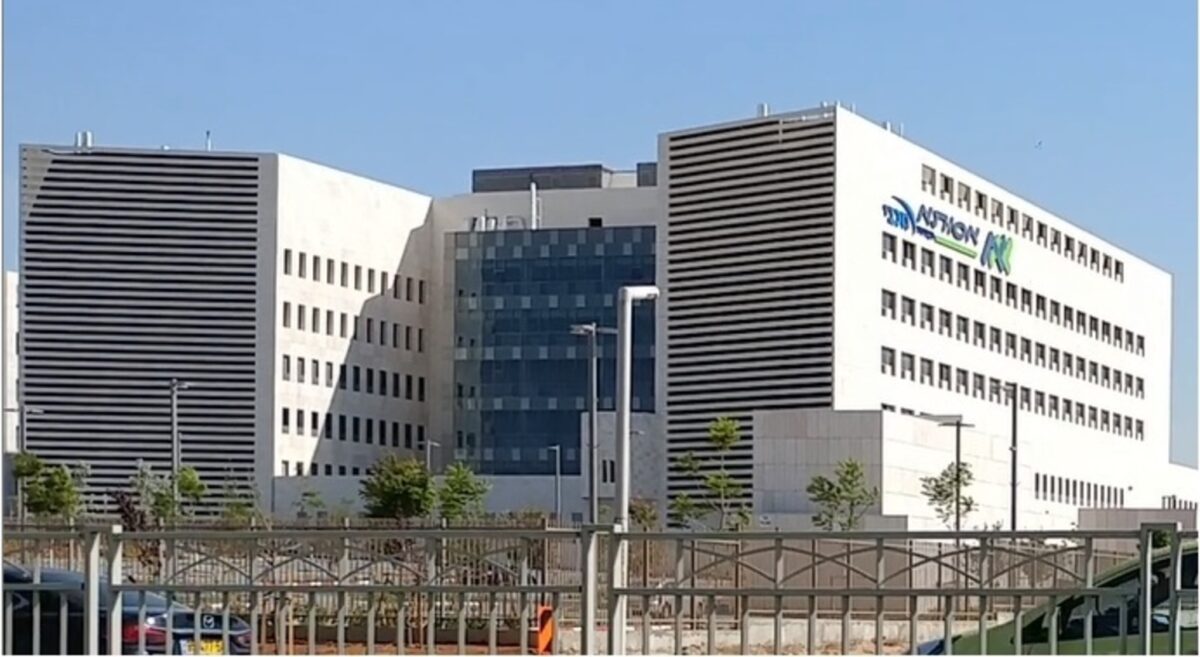
What unfolded that day at Samson Assuta Ashdod Medical Center, a 300-bed hospital located approximately 17 miles from the Gaza Strip, was unlike anything its staff had trained for. Roughly 3,000 armed Hamas terrorists had crossed into Israeli territory in a coordinated assault that began with a massive rocket barrage. Approximately 1,200 people were killed and many others wounded during the attack that day. Staff activated the hospital’s mass casualty incident plan, which stayed operational for 12 hours as 87 casualties were received and treated, all while the building itself remained under ongoing rocket fire.
A newly published study based on interviews with 19 hospital staff members who worked that day offers a rare look inside what it actually takes to run a hospital during an active attack, and what no drill had ever prepared them for.
For hospitals across the United States and Europe weighing how to prepare for the possibility of treating mass casualties when terrorists strike, the findings are a sobering reality check.

Getting to Work Was Already a Crisis
Under a normal mass casualty emergency plan, a hospital calls in off-duty staff as soon as the plan is activated. On October 7, that didn’t happen. Commanders held back on recalling personnel because the rocket attacks were so severe that sending people out on the roads posed a serious safety risk.
Recognizing that something extraordinary was unfolding, many staff members showed up anyway, on their own initiative. As one senior social worker put it, in Ashdod “there was never that amount of sirens in such a short time.” That spontaneous response helped fill some of the gaps left by the modified recall, but it created new problems too.
Administrative staff, many of them mothers with young children at home in communities that were also under attack, largely stayed home. Those workers were responsible for checking that every patient had an identification bracelet, that files were filled out, and that transfers were properly documented. A senior emergency department manager described the result plainly: “There wasn’t a single one filled out because the secretaries weren’t there.”
Complicating matters further, some health care workers faced a direct conflict between their hospital duties and their military reserve obligations. Hospital leadership had to decide, in real time, where each person was needed more.
No Drill Had Prepared Them for This
One of the most telling findings in the study involves a gap in the hospital’s emergency plan that no one had thought to address before that day. Standard procedure calls for moving non-emergency patients out of the emergency department to make room for incoming casualties. On October 7, that couldn’t happen.
Much of Assuta Ashdod had been purpose-built with reinforced concrete to withstand rocket attacks. But the medical wards where those patients would normally be transferred were outside that protected zone. Moving vulnerable patients into unprotected areas during an active rocket attack wasn’t a viable option.
Staff improvised by splitting the emergency department in two, with internal medicine physicians taking over care of non-emergency patients in one section while trauma teams worked in the other. It worked, but as a senior emergency department manager acknowledged, the gap exposed a flaw in how drills had been run: “We’ve never drilled evacuating the [ED]… what you don’t do in practice, you don’t do in real life.”
Researchers point out that a logistically demanding task like this is often left out of full-scale exercises because planners consider it too disruptive to routine hospital operations to rehearse safely. According to the authors, that rationale needs to be reconsidered for hospitals trying to prepare for true wartime conditions.
Running a Hospital Under Fire Without Good Information
Throughout the day, the hospital’s leadership tried to maintain contact with the Ministry of Health, emergency medical services, the military, and police. None of those agencies had a clear picture of what was happening either. As a senior logistician put it: “If they didn’t have information, we didn’t have information. There wasn’t a lot of information that came from the field.”
Staff filled that void however they could. Social media became one alternative source of situational awareness. A senior surgeon recalled seeing the first such video around 11:30 in the morning, describing footage from a bomb shelter. Patients themselves became information sources. So did military personnel who brought in wounded fighters and, crucially, knew details about the situation that emergency medical services personnel often did not.
That last point reflects an important breakdown in how information moved through the system. When emergency medical services couldn’t reach affected areas because of lost territorial control in some communities, military units stepped in to evacuate casualties. By the time patients were handed off to emergency medical services and then to the hospital, some of that information had already degraded. Military units with direct knowledge of where and how patients were injured often provided more complete details than the subsequent handoffs captured.
Frequent Drills Kept the Hospital Under Fire Standing
Despite everything, the study’s participants reported that standards of care were maintained. Patients with gunshot wounds, blast injuries, and burns were treated. Staff moved with purpose and focus. Many credited that to one thing above almost everything else: frequent drilling.
Assuta Ashdod conducted mass casualty drills every three months. A global survey cited in the study found that fewer than half of hospitals worldwide conducted such drills at all, and about 28% did them only once a year. At Assuta, the repetition meant that when the real event hit, the basic mechanics of the response ran almost automatically. A senior surgeon described it this way: “the basic things to do for the preparations went on autopilot… it gave me and the rest of the team a little more time [and] ability to think [about] what we do… what’s coming?”
That mental space mattered enormously in a situation that kept evolving hour by hour. Casualties didn’t arrive in one wave. Patients trickled in across the full operational period, with the last arriving around 3 in the morning. For comparison, the authors note that about 78% of casualties from the 2013 Boston Marathon bombing arrived within the first 90 minutes. October 7 instead demanded that the hospital stay in full emergency mode for hours on end without knowing when it would stop.
Staff also encountered situations that no amount of clinical training fully prepares someone for. One emergency physician described a soldier who walked in asking for ear drops, saying he couldn’t hear and needed to get back to the fight. When the physician examined him, his pelvis was full of shrapnel. He had not realized he was injured. A pediatric emergency physician recalled a separate case: a man who arrived barefoot with blood on his feet, having just carried two critically wounded friends from a kibbutz near Gaza.
Another emergency physician, reflecting on feeling clinically ready but emotionally unprepared, put it this way: “even if you were prepared, we were not prepared to see young people, young soldier, and this kind of injuries.”
Beyond the individual cases, the authors argue that Assuta’s experience points to issues other hospitals may need to consider, including better coordination between civilian hospitals and military forces, predictable vulnerabilities like holidays and weekends when staffing is already reduced, and physically protecting hospital infrastructure so staff can function under fire.
October 7 was, by the study’s own account, one of the very few documented cases in which a civilian hospital in a high-income country operated under conditions of temporary loss of territorial control, disrupted emergency services access, and ongoing attack, all at once. That combination put the emergency plan under a kind of pressure it was never designed to handle. Participants credited frequent drilling and a well-rehearsed plan as central to how the response held together, though the authors are explicit that the system was never pushed to its absolute limits. Whether the plan would hold under even greater strain, or what role drilling specifically played in the outcome, remains beyond what this study can prove.
Paper Notes
Limitations
This is a single-center qualitative study, which means its findings may not apply directly to hospitals with different resources, organizational structures, or national contexts. While the Israeli healthcare system is comparable to those of other high-income countries in terms of resources, differences in how it is organized may limit how readily the findings transfer elsewhere. Interviews were conducted approximately nine months after the events of October 7, which introduces the possibility of recall bias, though participants generally did not report difficulty remembering what happened, likely because of the emotional intensity of that day. The traumatic nature of the event may also have led to some degree of emotional reinterpretation in how participants recalled and described their experiences. Selection bias is possible, as only a limited number of participants from each professional category were interviewed. Because interviewers were medical professionals themselves, there is also potential for social desirability bias, meaning participants may have shaped their answers based on what they thought the researchers expected to hear. Finally, due to the ongoing security situation in Israel and the demands of working in an active emergency department, it was not possible to return interview transcripts to participants for review and correction.
Funding and Disclosures
All three authors declared no conflicts of interest. The study was granted exemption from ethical review by the Assuta Ashdod Helsinki Committee, and ethical approval was granted by the Swedish Ethical Review Authority (approval number 2024-06955-01). The authors stated that no artificial intelligence technology was used in preparing the manuscript.
Publication Details
Authors: Maximilian P. Nerlander (Center for Disaster Medicine and Traumatology, Linköping University, Linköping, Sweden; Hebrew University of Jerusalem Braun School of Public Health and Community Medicine, Jerusalem, Israel), Adam J. Rose (Hebrew University of Jerusalem Braun School of Public Health and Community Medicine, Jerusalem, Israel), and Debra Gershov West (Emergency Department, Samson Assuta Ashdod Medical Center, Israel). | Paper Title: Wartime Mass Casualty Incident Plan Operation: Staff Experiences from a Civilian Hospital in Southern Israel on October 7, 2023 | Journal: Disaster Medicine and Public Health Preparedness, Volume 20, e135, pages 1–9 | DOI: 10.1017/dmp.2026.10407 | Published by: Cambridge University Press on behalf of the Society for Disaster Medicine and Public Health, Inc. Published as Open Access under the Creative Commons Attribution licence.


