(Credit: SIMON SHIM/Shutterstock)
DUNEDIN, New Zealand — One of the most fundamental questions in biology is whether the actions of humans can directly cause evolutionary changes in wild species. Now, researchers from the University of Otago have documented what may be the clearest example yet of human-induced evolution, showing how deforestation in New Zealand has driven rapid color changes in native insects.
The study, published in Science, reveals how widespread forest clearing has forced a species of stonefly to abandon a protective disguise it no longer needs. This research represents a more definitive case than even the famous example of England’s peppered moths, which changed color in response to industrial pollution in the 1800s.
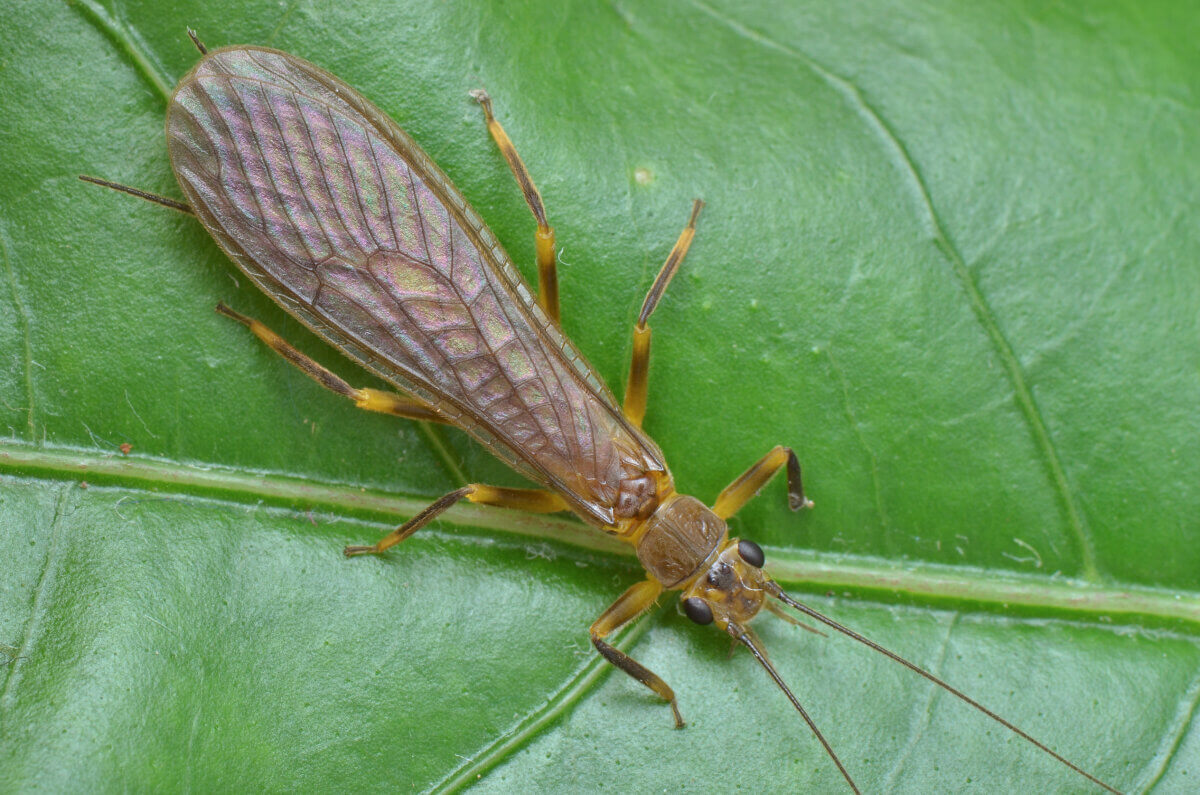
The story centers on two types of stoneflies found in New Zealand’s streams. One species, Austroperla, produces cyanide as a defense mechanism and has distinctive warning coloration that signals its toxicity to predators. The other species, Zelandoperla, evolved to mimic this dangerous relative’s appearance – a survival strategy known as Batesian mimicry.
In natural forested streams, this mimicry serves as effective protection for Zelandoperla. Birds learn to avoid anything resembling the toxic Austroperla, providing a protective umbrella for the harmless imposters. However, this relationship began to unravel when humans started clearing New Zealand’s forests.
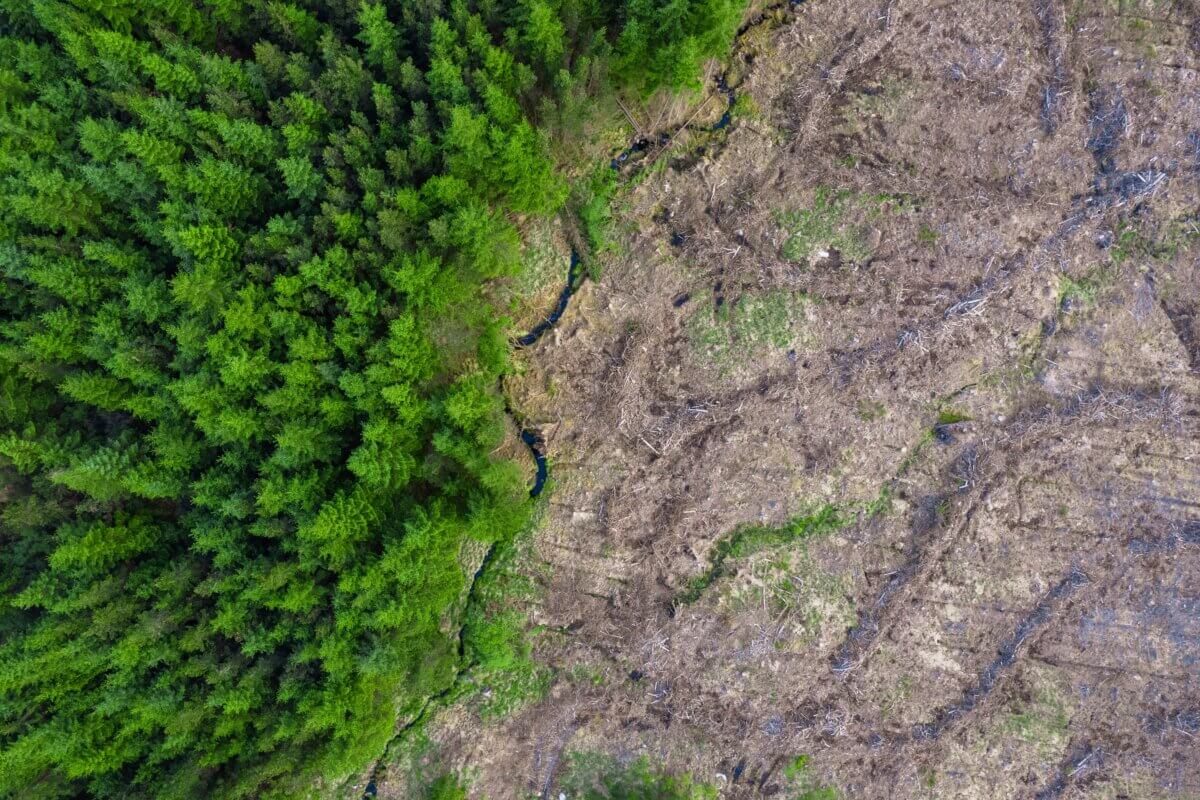
The research team analyzed over 1,200 stonefly specimens from 19 different locations across southern New Zealand, including both forested and deforested sites. They discovered that in areas where forests remained intact, about 40% of Zelandoperla displayed the dark warning coloration. In contrast, deforested areas showed a dramatic reduction, with only 14% maintaining this protective disguise.
“In natural forested regions, a native species has evolved ‘warning’ colors that mimic those of a poisonous forest species, to trick predators into thinking they are poisonous too,” says study co-author Jon Waters, a professor with Utago’s Department of Zoology, in a statement. “But the removal of forests since humans arrived has removed the poisonous species. As a result, in deforested regions the mimicking species has abandoned this strategy – as there is nothing to mimic – instead evolving into a different color.”
Through genetic analysis, the scientists identified that these color changes were controlled by a single gene called ebony. The same pattern of genetic change occurred independently across multiple populations, demonstrating how similar environmental pressures can drive parallel evolution.
The timing of these changes proved particularly revealing. In regions deforested earliest – during the initial Polynesian settlement 550 to 750 years ago – the frequency of dark-colored mimics dropped below 10%. Areas cleared more recently (within the last 180 years) showed intermediate levels, suggesting evolution is still ongoing.
The researchers also discovered why this shift occurred. Through predation experiments using model insects, they found that while birds in forested areas actively avoided dark-colored mimics, this advantage disappeared in deforested regions. Furthermore, producing dark coloration comes at a reproductive cost – darker females laid fewer eggs than their lighter counterparts.
“This study is important because it shows that, at least for some of our native species, there is the possibility of adapting to the environmental changes caused by humans, even when the change is rapid,” explains study co-author Dr. Graham McCulloch. “It also shows that independent populations have undergone similar changes in response to deforestation – there have been similar shifts independently in different parts of the species’ range – showing that evolution can be a predictable process.”
As we continue to modify Earth’s landscapes, this study reminds us that our actions have consequences that extend beyond the immediate environmental impact. We are not just changing habitats – we are becoming active participants in the evolution of species that inhabit them.
Paper Summary
Methodology
The researchers collected 1,204 adult Zelandoperla stoneflies from 19 different locations across southern New Zealand – 9 forested sites and 10 deforested sites. They measured the darkness of each insect’s coloration and analyzed their DNA, focusing particularly on the ebony gene known to influence insect color. They also conducted predation experiments using artificial models of both light and dark stoneflies to test how birds responded to different color patterns in both forest and deforested environments.
Key Results
The study found a consistent pattern across all sites: forested areas maintained high levels of dark-colored mimics (around 40%), while deforested areas showed much lower levels (around 14%). This pattern was linked to specific genetic changes in the ebony gene. The researchers also discovered that darker females produced fewer eggs, suggesting a reproductive cost to maintaining the mimetic coloration.
Study Limitations
While the study provides strong evidence for human-induced evolution, it focuses on a single species in one geographic region. Additionally, while the researchers documented changes over different time periods, they didn’t have direct historical samples from before deforestation, instead relying on comparing different sites deforested at different times.
Discussion & Takeaways
This research demonstrates how human activities can drive rapid evolutionary change through altering species interactions. The study is particularly powerful because it shows the same pattern occurring independently in multiple locations, rules out alternative explanations, and identifies the specific gene responsible for the changes. It suggests that species can adapt relatively quickly to human-modified environments, though such adaptation may come with costs.
Funding & Disclosures
The research was funded by the Royal Society Te Apārangi through a Marsden contract. The authors declared no competing interests. All data has been made publicly available through the Dryad digital repository and the Sequence Read Archive.


