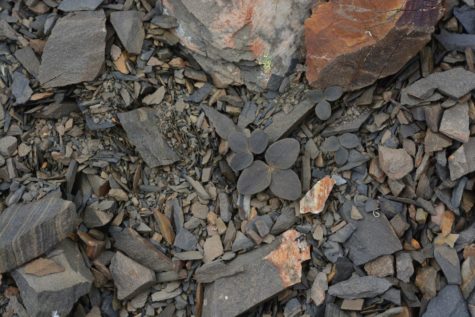
Camouflaged plants use the same tricks as animals (Corydalis hemidicentra in south-west China, photo credit Yang Niu)
EXETER, England — Plants may appear still and lifeless to a degree, but they’re far craftier than you might believe. A new study found that many plants use the same camouflage strategies as animals to avoid damage and protect themselves.
The review of research by scientists from the University of Exeter and the Kunming Institute of Botany (Chinese Academy of Sciences) say techniques such as blending into a natural background have many of the same benefits to plants as they do to animals.
“It is clear that plants do more than entice pollinators and photosynthesize with their colours – they hide in plain sight from enemies too,” says Martin Stevens, a professor with Exeter’s Centre for Ecology and Conservation, in a release. The authors found that both plants and animals use several types of methods for camouflaging: background matching to blend in with their environment; disruptive coloration, which are markings designed to distort their shape; masquerade, in which plants take on the appearance of something else that a predator might otherwise ignore; and decoration, or acquiring camouflaging material from the environment.
“From ‘decoration’, where they accumulate things like dust or sand on their surface, to disruptive coloration, they use many of the same methods as animals to camouflage themselves. We now need to discover just how important a role camouflage has in the ecology and evolution of plants,” says Stevens.
Since plants need chlorophyll, the substance that turns them green, to live, changing their colors to anything else comes as a cost.
“Animal camouflage has provided scientists with arguably the best examples of evolution in action,” says Stevens. “It has been widely studied since the first pioneers of evolutionary biology, but relatively little research has been done into plant camouflage. Plants give us a fascinating parallel way of understanding how evolution works.”
The paper, published in the journal Trends in Ecology and Evolution, is entitled: “Plant camouflage: ecology, evolution, and implications.”


