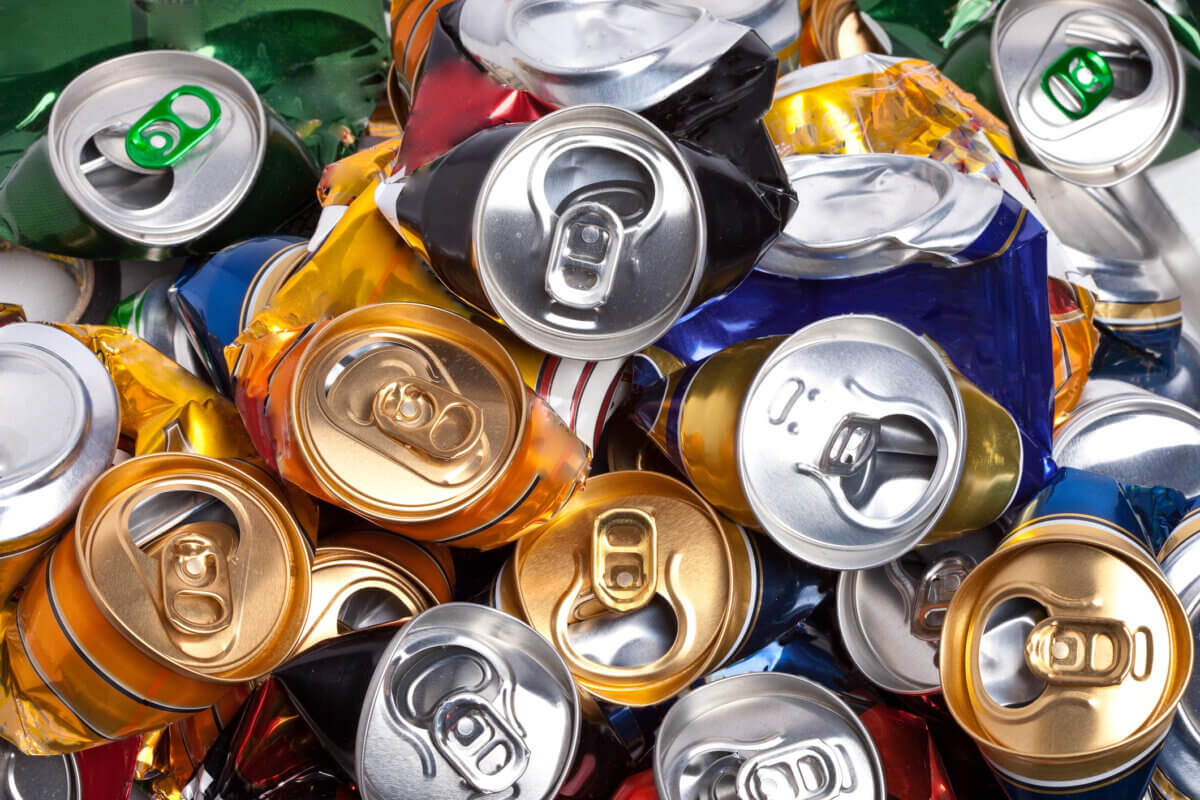
(Credit: ID 23404954 © Konstik | Dreamstime.com)
CAMBRIDGE, Mass. — Something as simple as old soda cans and seawater could help power our clean energy future. Scientists at the Massachusetts Institute of Technology have developed an innovative way to generate hydrogen fuel using aluminum and seawater, potentially transforming sustainable energy systems for maritime applications and beyond.
Most people know aluminum as the material in soda cans and foil wrap, but this common metal actually packs an impressive energy punch. When properly treated, aluminum can react with water to produce hydrogen gas, a clean fuel that only emits water vapor when burned. While this basic reaction has been known for some time, making it practical and cost-effective at scale has remained challenging.
A research team led by Aly Kombargi at MIT found that by coating aluminum with a special liquid metal mixture of gallium and indium (called eGaIn), they could trigger its reaction with seawater to efficiently generate hydrogen. While aluminum naturally wants to react with water to produce hydrogen, it faces a fundamental challenge: the moment aluminum contacts oxygen in air, its surface forms a protective oxide layer that prevents further reactions. This barrier explains why hydrogen doesn’t bubble up when you drop a soda can in water.
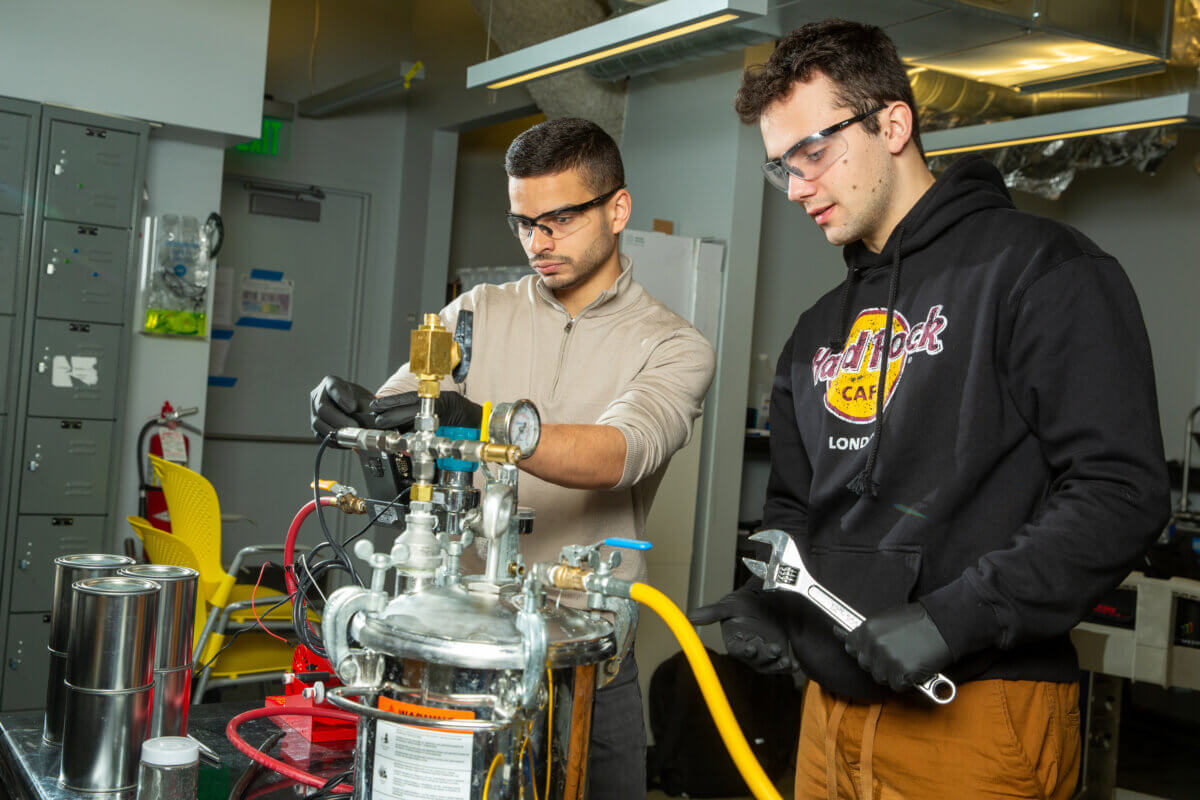
The breakthrough came when researchers discovered that seawater’s natural saltiness actually helps collect and recover over 90% of the gallium-indium coating after the reaction. This is possible because the salt ions in seawater create what’s called an “electrical double layer” around the liquid metal droplets, preventing them from breaking apart and allowing them to be gathered back up – a crucial factor since gallium and indium are relatively expensive and rare metals.
In an unexpected twist, the team found that coffee grounds dramatically accelerated the reaction when added to the mixture. This serendipitous discovery in the lab led them to investigate caffeine’s active ingredient, imidazole, which proved to be the key accelerant. “That was our big win,” says Kombargi. “We had everything we wanted: recovering the gallium indium, plus the fast and efficient reaction.”
The researchers tested their system using actual seawater collected from Revere Beach near Boston. “I literally went to Revere Beach with a friend and we grabbed our bottles and filled them, and then I just filtered out algae and sand, added aluminum to it, and it worked with the same consistent results,” says Kombargi.
When testing various solutions, they found that adding a small amount of imidazole dramatically speeds up the reaction while still maintaining high recovery rates of the liquid metal coating. When combined with pre-heating the seawater to around 80°C (176°F), they could generate hydrogen in under 10 minutes – much faster than previous methods that could take hours.
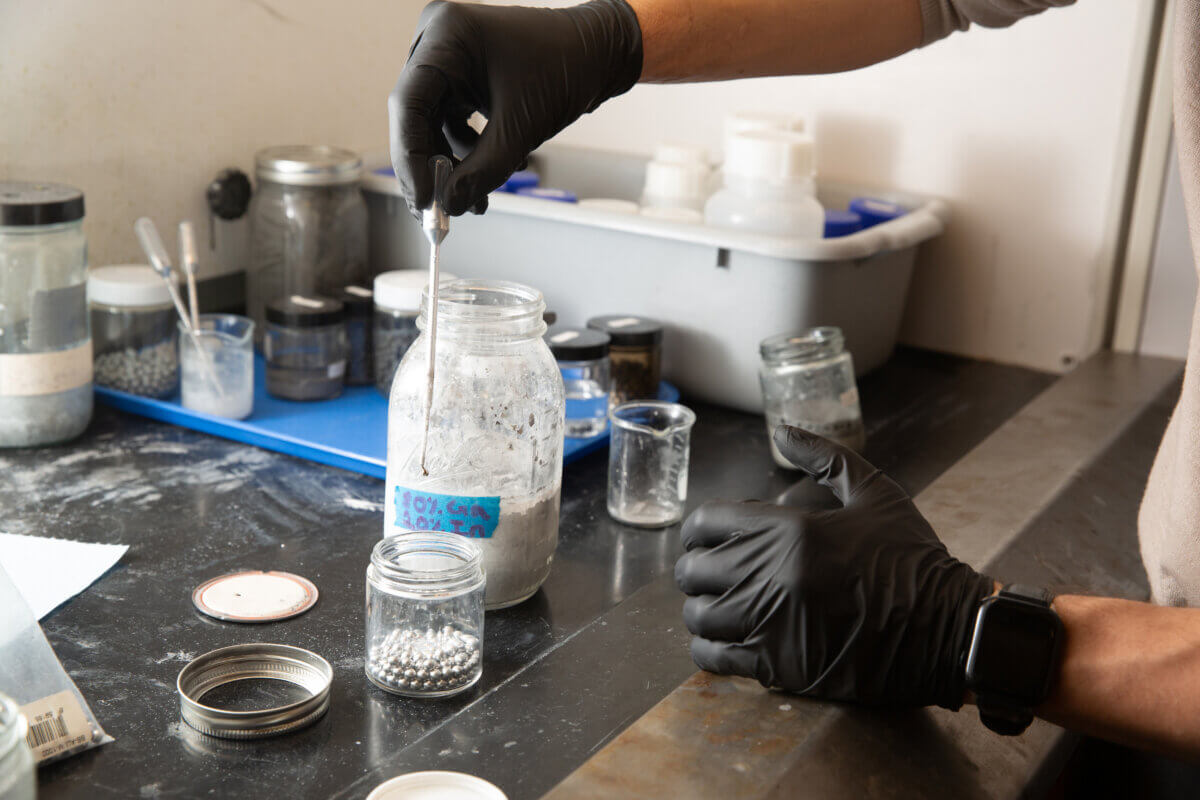
To verify their findings weren’t just a laboratory curiosity, the team scaled up the reaction to use 50 grams of aluminum with 5 liters of seawater, maintaining similar efficiency. The researchers are now developing a small reactor for marine vessels and underwater vehicles. The system would store recycled aluminum pellets along with small amounts of gallium-indium and imidazole, combining these ingredients with surrounding seawater to generate hydrogen on demand. They’ve calculated that a reactor holding about 40 pounds of aluminum pellets could power a small underwater glider for approximately 30 days.
This technology addresses a key challenge in hydrogen fuel adoption – the need to transport and store volatile hydrogen gas. “This is very interesting for maritime applications like boats or underwater vehicles because you wouldn’t have to carry around seawater — it’s readily available,” explains Kombargi. “We also don’t have to carry a tank of hydrogen. Instead, we would transport aluminum as the ‘fuel,’ and just add water to produce the hydrogen that we need.”
Paper Summary
Methodology Explained
The researchers prepared aluminum pellets by coating them with a gallium-indium mixture at 200°C, allowing it to penetrate the metal’s structure over 48 hours under an argon atmosphere to prevent oxide formation. They tested the reaction under both constant-volume and constant-pressure conditions, measuring hydrogen production rates and yields. Various experiments explored different salt concentrations, temperatures, and chemical additives, with special attention paid to recovering the gallium-indium coating afterward.
Results Breakdown
The team achieved significant results across different testing conditions. In freshwater testing, one pretreated pellet of aluminum produced 400 milliliters of hydrogen in just five minutes. In seawater testing, adding just 0.02M imidazole reduced reaction times from hours to under 10 minutes while maintaining over 90% recovery of the liquid metal coating. Pre-heating the seawater to 80°C further improved performance without compromising metal recovery.
Study Limitations
The process shows reduced efficiency at temperatures above 90°C, where metal recovery rates drop significantly. The system’s overall energy density is lower than pure aluminum when accounting for the needed seawater volume. The researchers note that further research is needed on long-term durability and scaling to industrial levels.
Discussion and Takeaways
This research demonstrates a practical method for generating hydrogen from aluminum using seawater, with efficient recovery of expensive components. The process works with real seawater and can be scaled up while maintaining performance. The findings are particularly relevant for maritime applications where seawater is readily available.
Future Applications
Researchers are exploring potential applications beyond maritime use. As Kombargi notes, “The next part is to figure out how to use this for trucks, trains, and maybe airplanes. Perhaps, instead of having to carry water as well, we could extract water from the ambient humidity to produce hydrogen. That’s down the line.”
Funding and Disclosures
The research was funded by the MIT Portugal Program under their flagship project “Knowledge and Data from the Deep to Space.” Lead author Aly Kombargi has filed a patent on the hydrogen generation process, and co-author Peter Godart is founder/CEO of Found Energy Co., which is commercializing clean energy production from aluminum-water reactions.
Publication Information
Published in Cell Reports Physical Science (Volume 5, 102121) on August 21, 2024. The paper is titled “Enhanced recovery of activation metals for accelerated hydrogen generation from aluminum and seawater” by Aly Kombargi, Enoch Ellis, Peter Godart, and Douglas P. Hart from the Massachusetts Institute of Technology.


