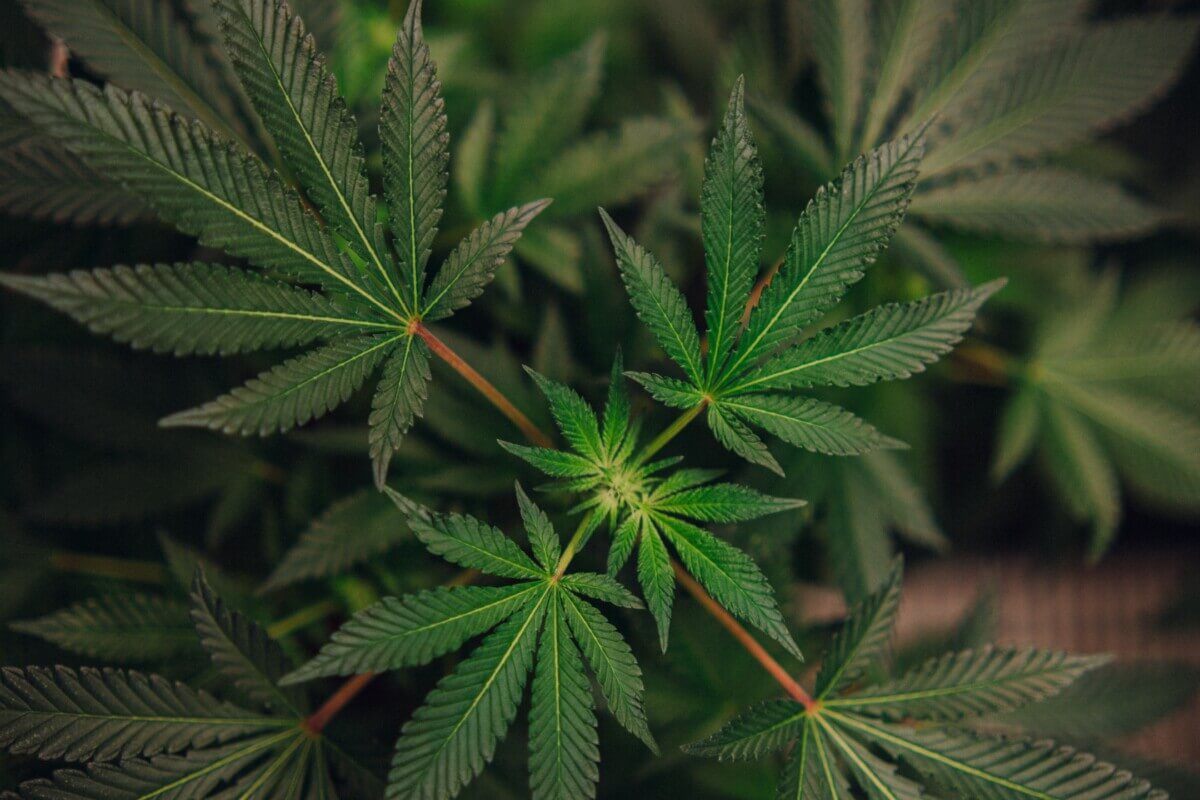
(Credit: Photo by Unsplash+ in collaboration with George Dagerotip)
In a Nutshell
- A single dose of a cannabis-like drug made brain cells tied to fear, called SOM neurons, fire harder and pushed mice to avoid a threatening predator smell more strongly.
- Shutting down those same fear-circuit neurons stopped the drug from boosting avoidance, but it did not stop the drug from increasing freezing, suggesting the two responses run through different brain circuits.
- Rather than stepping on the gas directly, the drug worked by weakening the brain’s own built-in brake on these fear cells, releasing a restraint instead of forcing the cells to fire.
Marijuana is supposed to mellow people out, yet for some users a hit brings dread instead of calm. A new mouse study points to why: a single dose of a cannabis-like drug made fear-related brain cells fire harder, and switching those cells off stopped the drug from driving the animals to avoid a threatening smell. Freezing in fear, though, kept happening even with those cells shut down, pointing to two separate brain pathways for two different panic responses.
Researchers at Northwestern University, writing in the journal Nature Communications, traced the effect to a small group of neurons in the central amygdala, a deep brain region built for processing threats. A cannabinoid drug weakened the natural calming signal that normally keeps these cells quiet, making the fear cells far easier to excite and setting off bursts of activity tied to approaching, fleeing and freezing behavior.
Beyond the mouse cage, the findings carry weight for people. Cannabis use has climbed sharply in recent years, and a study tracking 12 million people found that cannabis-related emergency room visits were linked to about three times the risk of a later medical visit for an anxiety disorder. This new research cannot prove cannabis causes anxiety in humans, but it lays out, cell by cell, one way the drug could push a calm high toward sudden panic.
How Scientists Linked Cannabis and Anxiety in the Lab
To study this, the team used a lab-made drug called CP55940, which activates the same brain receptor as THC, the main mind-altering chemical in marijuana. Mice received different doses of the drug or a plain control solution, then were exposed to a chemical that mimics predator odor, a standard way to trigger natural fear in rodents without using an actual predator. Researchers tested both male and female mice, with roughly 18 to 22 animals per dose.
Researchers tracked how much the mice moved, whether they froze, and how much time they spent avoiding the area with the strongest smell. A low dose made the mice slightly more active, while the highest dose slowed them down. Higher doses increased freezing and avoidance across the board. Even so, the animals largely kept their ability to move, so the extra freezing and avoidance weren’t simply the drug slowing them down.
Fear Cells Light Up After Cannabis Exposure
A closer look came next. Researchers used a tiny camera mounted on each mouse’s head, letting them watch individual brain cells fire in real time while the animal moved freely. They focused on cells in the brain’s fear center that release a signaling chemical called somatostatin, nicknamed SOM cells, which earlier work had already tied to fear, avoidance, and freezing.
After the mice got the cannabinoid drug, these SOM cells fired in stronger bursts, and at the highest dose, more of them switched on overall. These cells also stopped acting in sync, splitting into competing activity patterns rather than firing as one unit.
When the mice were then exposed to the predator smell, these same cells showed busier, more layered responses tied to approaching, fleeing, and freezing. A computer model trained on this brain activity could predict, just by watching the cells fire, whether a mouse had taken the drug, especially as it approached the smell. These cells also began tracking more information at once, such as the mouse’s location combined with whether it was moving, and this effect grew stronger at higher doses.

How Cannabis Loosens the Brain’s Natural Brake
To confirm these fear cells were driving the behavior, not just along for the ride, researchers used a tool that blocks these SOM cells from sending signals, then compared those mice with a control group.
With those cells silenced, the cannabinoid drug could no longer make mice avoid the smell more. But freezing told a different story: the drug still increased freezing even with the cells switched off. That split points to more than one brain route for processing a threat. The drug appears to boost avoidance through this group of cells, while its effect on freezing seems to run through other brain circuits.
Lab experiments on thin slices of brain tissue revealed how. Normally, these fear cells receive a steady calming signal from neighboring cells, carried by a brain chemical called GABA, which acts like a built-in brake and keeps them from firing too easily. The cannabinoid drug weakened that brake. With less resistance holding them back, the fear cells became easier to excite. When researchers blocked the GABA brake directly with a separate chemical, they saw the same jump in cell activity that the cannabinoid drug produced, and combining both treatments didn’t push activity any higher than either one alone, pointing to that same natural brake as the route behind the drug’s effect.
Researchers also traced two separate signal routes feeding into these fear cells, one carrying alarm-type signals from elsewhere in the brain, and another arriving through the thalamus, a relay station that passes along sensory information. The cannabinoid drug weakened the GABA brake more on one of these routes than the other, which may help explain why its effects on anxiety seem to shift depending on the situation rather than playing out the same way every time.
What the Cannabis and Anxiety Link Could Mean Next
None of this means every cannabis user is at risk of a panic attack, and this research was done in mice, not people. But it offers a concrete, cell-level explanation for something doctors and users have noticed for years: the same drug that calms one person down can send another into a spiral of dread, often depending on dose and setting. The study’s authors propose that cannabinoids may trigger these panic-like reactions partly by activating this exact fear circuit, and that repeated use might even leave lasting changes in the wiring behind it.
As cannabis use keeps rising and legalization spreads, its psychological downsides are no longer a side issue. This study won’t settle the debate over whether cannabis causes anxiety disorders, but by pinpointing a single fear circuit and the brake that holds it back, it gives scientists a clear target to test next.
Disclaimer: This research was conducted in mice using a synthetic cannabinoid, not in humans using cannabis. Animal findings do not always translate to people, and the study does not prove that cannabis causes anxiety or panic in humans. It identifies a possible biological mechanism that will need further research to confirm.
Paper Notes
Limitations
The authors note several open questions in their own discussion. The synthetic drug used, CP55940, activates two different cannabinoid receptors in the brain, and this study could not pin down which receptor, or which exact location in the brain, was responsible for the effects observed. The central amygdala also contains other types of cells beyond the SOM neurons studied here, and the paper notes it remains unknown whether cannabinoids act similarly on those other cell types. The authors also point out that comparing drug concentrations used in isolated brain tissue experiments to doses given to whole, living animals is inherently difficult, since the tissue experiments used a maximal concentration to establish the largest possible effect rather than mimicking real dosing conditions. Additionally, the study found differing results compared to some prior research regarding the role of these fear-related cells in freezing behavior, and the authors state the reasons for these discrepancies remain to be determined.
Funding and Disclosures
The study was supported by grants from the National Institutes of Health, including grant MH100785 and grant K08 MH126166, as well as NARSAD Young Investigator Awards. The authors declared no competing interests.
Publication Details
Paper Title: “Cannabinoid modulation of central amygdala population dynamics during threat investigation”
Journal: Nature Communications in 2026 (volume 17, article 10127)
Authors: Farhana Yasmin, Saptarnab Naskar, Danyal Zaidi, Isaac Kandil, Michelle Kwon, Luis E. Rosas-Vidal, and Sachin Patel, affiliated with the Stephen M. Stahl Center for Psychiatric Neuroscience, Department of Psychiatry and Behavioral Sciences, Northwestern University Feinberg School of Medicine, Chicago, Illinois.
The paper was received on February 12, 2025, and accepted on September 9, 2026.
DOI: 10.1038/s41467-026-77957-4
Correspondence may be addressed to Sachin Patel ([email protected]).


