
(Credit: © New Africa - stock.adobe.com)
In A Nutshell
- Arthritis link: Human observational studies have not shown that habitual knuckle cracking causes hand osteoarthritis. The evidence is limited, though, and does not cover every condition called arthritis.
- What makes the sound: A University of Alberta MRI study of one adult man linked the pop to a gas-filled pocket that forms as the joint surfaces pull apart.
- Other findings: A 1990 study in Annals of the Rheumatic Diseases linked habitual cracking to hand swelling and weaker grip. A smaller 2017 University of California, Davis study did not find those differences.
- When symptoms matter: The National Institute of Arthritis and Musculoskeletal and Skin Diseases lists joint pain, stiffness, swelling and changes in how a joint moves among the common symptoms of osteoarthritis.
Crack. One sharp pop from a pulled finger, and someone nearby is bound to issue the old warning: keep doing that and you’ll end up with arthritis. A sound that loud seems like it must be doing damage.
Doctors who studied the habit in 1990 wrote that the arthritis link had long been considered “an old wives’ tale” with no experimental support behind it. Starting with their study of 300 patients, researchers have tested the idea several ways. They have compared hand X-rays of crackers and non-crackers, measured grip strength and swelling with examiners kept unaware of who cracked, and watched a knuckle crack inside an MRI scanner.
None of the human studies has found that habitual cracking raises the risk of hand arthritis. One older finding, that crackers had weaker grips and more hand swelling, was not reproduced in a smaller, blinded study. And imaging suggests the pop itself comes from a pocket of gas forming in the joint fluid.
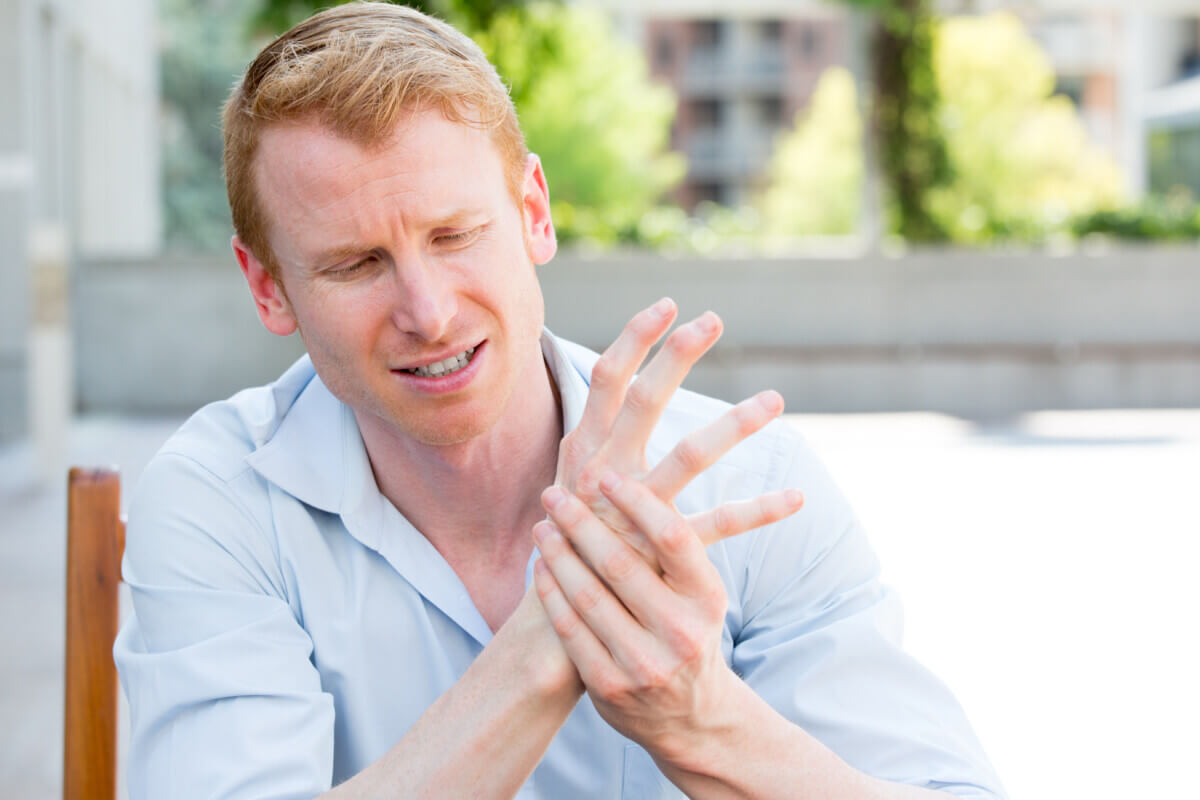
Does Cracking Actually Lead To Arthritis?
No, based on the available human evidence. Most of that research has looked at osteoarthritis in the hands, the most common type of arthritis, rather than every disease that falls under the broad label “arthritis.”
You’ve probably heard that the sharp pop is a sign of joint damage. If that were true, people who crack their knuckles for decades should have more arthritis than people who don’t. Studies have not found that pattern.
In 1990, Jorge Castellanos and David Axelrod of Mount Carmel Mercy Hospital in Detroit examined 300 patients ages 45 and older for Annals of the Rheumatic Diseases. Of those patients, 74 had cracked their knuckles habitually, on average for 35 years, and 226 had not. Based on medical histories and physical exams, hand arthritis was no more common among the crackers.
A 2011 study in the Journal of the American Board of Family Medicine took a different approach. Researchers surveyed 215 people ages 50 to 89 who had hand X-rays on file. Some had osteoarthritis visible on those X-rays and some did not. Participants described how often and for how long they had cracked their knuckles. Neither the number of years someone had cracked nor their total cracking exposure (how often per day, multiplied by years) was significantly linked to osteoarthritis in the joints they cracked.
Both of these were observational studies. Researchers looked at people’s existing habits and health rather than assigning anyone to crack their knuckles. A 2018 review in Clinical Anatomy summed up the field this way: the evidence on knuckle cracking and osteoarthritis comes mainly from observational studies, and those studies have failed to show a link.
What Is Making That Popping Sound?
A pocket of gas forming inside the joint, according to a 2015 MRI study in PLOS One. A University of Alberta-led team put one adult man’s fingers, one at a time, into a finger trap attached to a cable. Inside an MRI scanner, the cable slowly pulled on each of 10 knuckles until it cracked, while the scanner recorded what happened inside the joint.
At the moment of each crack, the joint surfaces separated quickly and a dark, gas-filled space appeared in the fluid between them. That space was still visible after the sound. The researchers said this fits a process called tribonucleation. Two surfaces coated in fluid cling together until enough force pulls them apart all at once. The pressure in the joint fluid drops, and dissolved gas comes out of the fluid. The findings challenged the older idea that the crack comes from a bubble collapsing.
The question is not fully settled. The 2018 Clinical Anatomy review found agreement that a bubble forms, but said it is still unclear how the bubble forms and what produces the sound. And because the MRI study involved one person, it offers an explanation for the noise, not evidence about long-term health effects. The Alberta team also noted a puzzle in the research. The energy released by a crack has been thought to exceed the level that can damage joints, yet habitual knuckle cracking has not been shown to increase joint degeneration.
The pop is also a different event from osteoarthritis. The National Institute of Arthritis and Musculoskeletal and Skin Diseases describes osteoarthritis as a joint disease that happens when the tissues in a joint break down over time.
Could The Habit Cause Other Problems?
Possibly, but the two studies that looked most closely disagree. In the 1990 Detroit study, habitual crackers were more likely to have hand swelling and lower grip strength. The authors concluded that the habit “results in functional hand impairment.” But the crackers in that study were also more likely to do manual labor, bite their nails, smoke and drink alcohol. That makes it hard to tell whether cracking itself caused the difference.
A 2017 study in Clinical Orthopaedics and Related Research, led by researchers at the University of California, Davis, tested those findings more directly. The team examined 400 knuckle joints in 40 adults with no hand symptoms. Thirty cracked their knuckles daily and 10 did not. Two orthopedic surgeons who did not know which participants were crackers checked grip strength, swelling and range of motion before and after participants tried to crack their knuckles. Everyone also filled out a standard questionnaire about arm, shoulder and hand problems.
The researchers found no differences between crackers and non-crackers in questionnaire scores, grip strength or joint looseness. No one had swelling, even right after a crack. The one measurable change was a small increase in range of motion in joints that had just cracked. Describing the team’s initial findings in a 2015 RSNA news release, lead researcher Robert Boutin, a UC Davis radiology professor, said they found “no immediate disability in the knuckle crackers in our study.” The study focused on immediate effects, and the authors called for more research on any long-term benefits or harms.
What’s The Practical Takeaway?
For painless cracking, the published human studies give no evidence-based reason to expect arthritis from the habit. That conclusion has limits. None of these studies randomly assigned people to crack their knuckles for decades, and the 2011 study relied on older adults recalling years of behavior. The lack of a demonstrated link is not a guarantee of zero risk.
Pain is a different matter. Grinding, catching or popping that hurts, or that comes with lasting swelling, weakness, stiffness, lost motion or a joint that feels loose or unstable, should not be blamed on an ordinary habit. Several of those overlap with the common osteoarthritis symptoms NIAMS lists, and they are worth having a doctor check. The familiar pop on its own is the part researchers have not been able to tie to arthritis.


