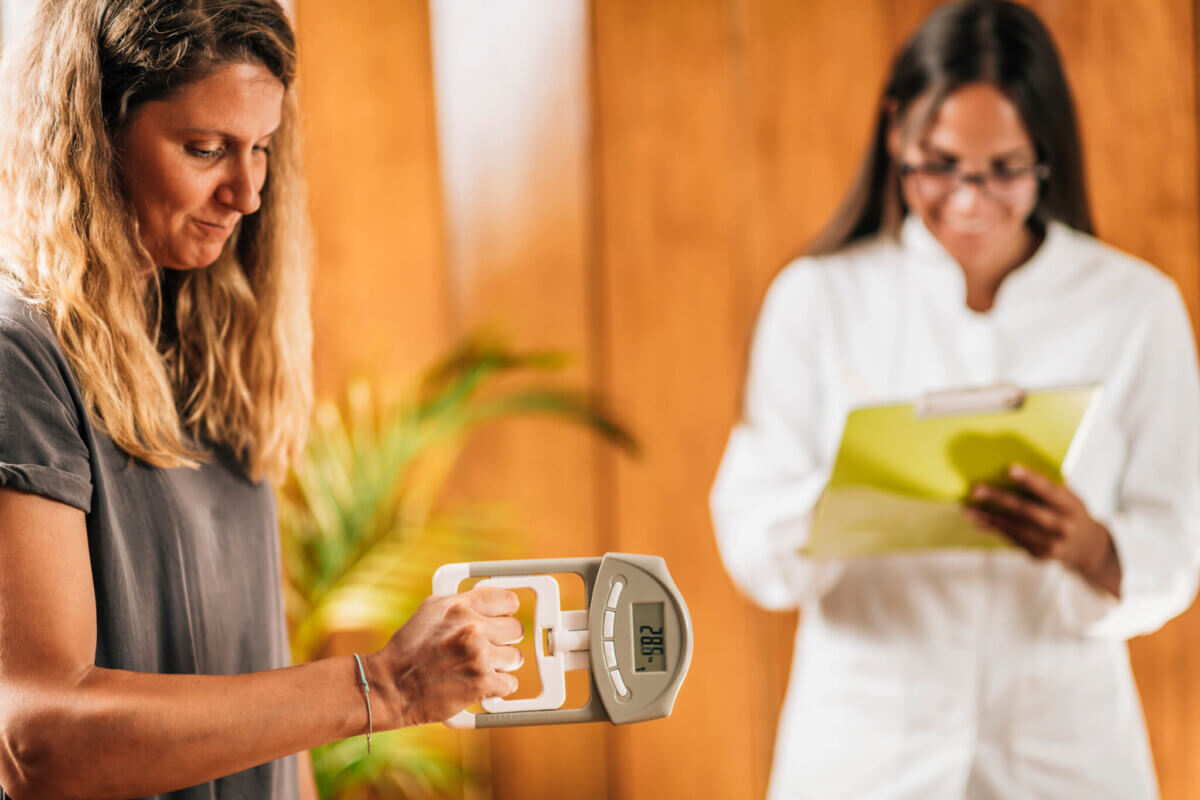
Handgrip strength test with digital hand dynamometer. (© Microgen - stock.adobe.com)
A study from Syracuse University shows that just four weeks of simple handgrip exercises can significantly improve nerve conduction speed in both young and older adults. Published in Medicine & Science in Sports & Exercise, the research found that participants who performed basic grip training at home experienced a 5.6% increase in how fast electrical signals traveled through their median nerves, improvements that could translate to faster reflexes and reduced fall risk.
Perhaps most surprising was that older adults, ranging up to age 84, showed the same dramatic improvements as their younger counterparts. This challenges long-held assumptions that the aging nervous system becomes less adaptable to exercise. While previous studies have shown that older adults typically see smaller gains in muscle size and strength compared to younger people, nerve function appeared to remain remarkably responsive to training regardless of age.
The training protocol was deliberately simple and accessible. Participants used basic handgrip equipment at home for 30-45 minute sessions three times per week, with no supervision required. Nearly every participant in the training groups showed improvement, suggesting that consistent, moderate-intensity grip training can produce measurable neurological benefits. Here’s a similar approach you can try home.
What You’ll Need
Basic Equipment:
- Adjustable hand gripper or grip strengthener
- Stress ball or tennis ball
- Resistance bands or rubber bands
- Small towel
Optional Equipment:
- Grip rings (various resistance levels)
- Finger stretcher bands
- Putty or therapy clay
You can also purchase a handgrip strength kit rather than buying these tools individually.
The Training Schedule
Frequency: 3 times per week Duration: 30-45 minutes per session Total program: 4+ weeks
Allow at least one day of rest between sessions

Core Exercises
1. Hand Gripper Squeezes
- Use adjustable gripper set to moderate resistance
- Squeeze fully, hold for 2-3 seconds
- Release slowly
- Reps: 10-15 per hand, 2-3 sets
- Progression: Increase resistance weekly
2. Stress Ball Compressions
- Hold ball in palm, squeeze firmly
- Hold for 3-5 seconds
- Release and repeat
- Reps: 15-20 per hand, 2 sets
3. Finger Extensions with Bands
- Place rubber band around all fingertips
- Spread fingers apart against resistance
- Hold for 2-3 seconds
- Reps: 10-15 per hand, 2 sets
4. Towel Wringing
- Hold small towel with both hands
- Twist in opposite directions as if wringing water
- Alternate direction every 5 twists
- Duration: 1-2 minutes
5. Finger Walks
- Place hand flat on table
- “Walk” fingers forward while keeping palm down
- Walk backward to starting position
- Reps: 5-10 forward-backward cycles per hand
Progressive Resistance Guidelines
Week 1: Start with comfortable resistance Week 2: Increase resistance by 10-15% Week 3: Add 1-2 extra sets or increase resistance again Week 4+: Continue progressing resistance or duration
Safety Tips
- Start with lighter resistance and build gradually
- Stop if you experience pain (mild fatigue is normal)
- Keep sessions consistent rather than sporadic
- Focus on controlled movements, not speed
- Warm up hands with gentle stretches before starting
What the Study Participants Used
The research participants received kits containing:
- Adjustable hand grippers
- Stress balls
- Grip rings (10-50 pound resistance range)
- Finger stretcher resistance bands (8-21 pound range)
- Grip masters (multi-finger exercise tools)
You don’t need all this equipment to get started. A simple hand gripper and rubber band can provide an effective workout. You can also purchase handgrip strength kits which provide many tools similar to ones mentioned here.
Signs You’re Making Progress
- Exercises feel easier at the same resistance level
- You can complete more repetitions without fatigue
- Your grip feels stronger during daily activities
- Better control when handling small objects
When to Expect Results
Based on the study findings, participants saw measurable improvements in nerve conduction speed within 4 weeks. However, individual results may vary, and some people may need 6-8 weeks to notice functional improvements in daily activities.
Note: This information is based on the research protocol and is for educational purposes. Consult with a healthcare provider before starting any new exercise program, especially if you have existing hand, wrist, or neurological conditions. This article contains affiliate marketing links through Amazon in which StudyFinds receives a commission if you make a purchase. We’re grateful for your support.


