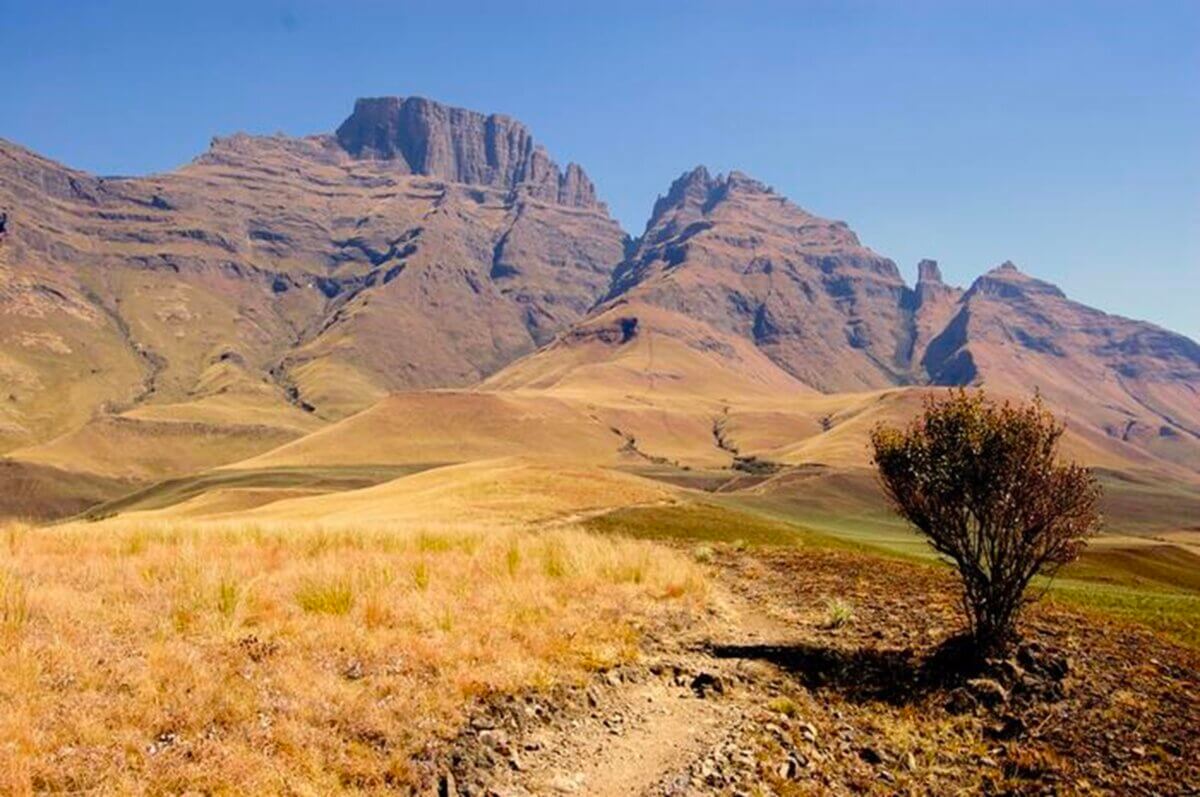
Drakensberg escarpment in Southern Africa. (Credit: Prof Jean Braun, GFZ Potsdam)
SOUTHAMPTON, United Kingdom — When the ancient supercontinent Gondwana started to break apart millions of years ago, it left behind some of the most dramatic landscapes on Earth. Towering cliffs, known as “great escarpments,” run for thousands of kilometers along the edges of ancient cratons – the stable cores of continents. These steep slopes divide elevated inland plateaus from lower coastal regions. But the formation of these escarpments and the simultaneous uplifting of the craton interiors has long puzzled scientists.
Now, a team of researchers has uncovered a surprising connection between these dramatic landscape features and the deep inner workings of our planet. Their findings, published in the journal Nature, reveal how the rifting and breakup of Gondwana was driven by complex processes occurring deep in the Earth’s mantle. These mantle processes not only shaped the dramatic rifted margins, but also triggered a synchronized wave of uplift and erosion that swept across the interiors of the separating continents, carving out the elevated plateaus we see today.
“Scientists have long suspected that steep kilometer-high topographic features called Great Escarpments — like the classic example encircling South Africa — are formed when continents rift and eventually split apart,” says Tom Gernon, Professor of Earth Science at the University of Southampton and lead author of the study, in a media release.
“However, explaining why the inner parts of continents, far from such escarpments, rise and become eroded has proven much more challenging. Is this process even linked to the formation of these towering escarpments? Put simply, we didn’t know.”
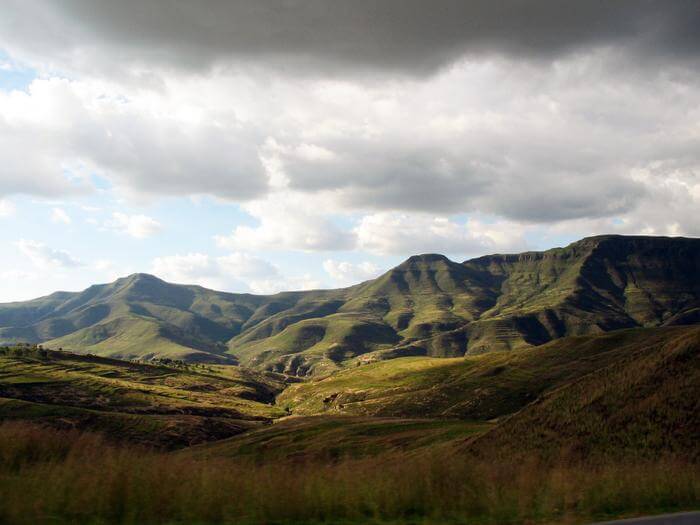
The researchers integrated geological observations, computer simulations, and landscape evolution models to piece together this dynamic story of how rifting and mantle convection have sculpted the interiors of continents over millions of years. At the heart of the process are convective instabilities – complex swirling motions – that develop in the mantle beneath the rifting continental margins.
“This process can be compared to a sweeping motion that moves towards the continents and disturbs their deep foundations,” explains Professor Sascha Brune, who leads the Geodynamic Modelling Section at GFZ Potsdam.
As rifting takes hold, these mantle instabilities start migrating inwards, away from the rift zone, at a rapid pace of 15-20 kilometers (9-12 miles) per million years. As the instabilities reach beneath the craton interiors, they progressively remove and thin the rocky root, or “keel,” that anchors the ancient continental core. This loss of the dense keel causes the overlying crust to uplift, forming the elevated plateaus we see today.
The researchers’ landscape evolution models show how this migrating wave of uplift and erosion can explain the key features of the great escarpments and plateaus. The escarpments initially form at the rift zones, but then slowly retreat inland over millions of years through headward erosion. Meanwhile, the uplift of the craton interiors persists for tens of millions of years, as the convective instabilities continue to migrate toward the craton.
“Our landscape evolution models show how a sequence of events linked to rifting can result in an escarpment as well as a stable, flat plateau, even though a layer of several thousands of meters of rocks has been eroded away,” says Jean Braun, Professor of Earth Surface Process Modelling at GFZ Potsdam, also based at the University of Potsdam.
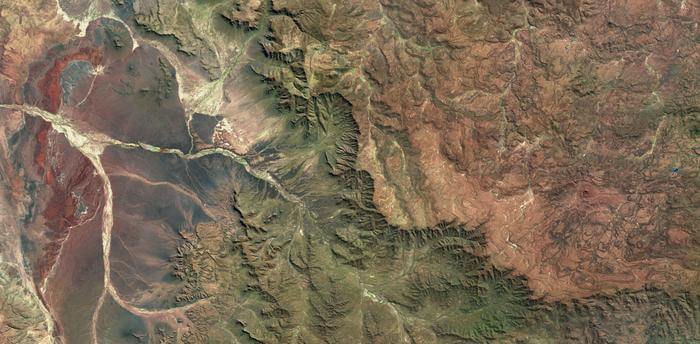
The researchers’ findings not only shed light on the dramatic landscape evolution of rifted continental margins, but also upend the prevailing view of ancient cratons as geologically static regions. Instead, the study reveals how even the most stable parts of continents can be dramatically sculpted by the ever-shifting convection currents deep within the Earth’s interior.
“What we have here is a compelling argument that rifting can, in certain circumstances, directly generate long-lived continental scale upper mantle convection cells, and these rift-initiated convective systems have a profound effect on Earth’s surface topography, erosion, sedimentation and the distribution of natural resources,” concludes Dr. Steve Jones, Associate Professor in Earth Systems at the University of Birmingham.
Paper Summary
Methodology
To study the formation of great escarpments and continental plateaus, the research team used a multi-pronged approach. First, they carefully mapped the locations and geometric characteristics of major escarpments around the world, comparing them to the locations of ancient rift zones and continental margins. This allowed them to establish a clear spatial relationship between rifting and escarpment formation.
Next, the researchers turned to computer models of mantle dynamics, simulating how convective instabilities can develop beneath rifting continental margins. These models showed how such mantle instabilities, driven by density differences in the underlying rock, can migrate inwards over time, progressively removing and thinning the dense lithospheric roots beneath cratonic interiors. This mantle process is what triggers the uplifting of the continental interiors.
To quantify the potential amount of uplift and erosion driven by this mantle process, the team developed simple analytical models based on the principles of isostasy – the way the Earth’s crust and mantle adjust to changes in mass and density. These calculations showed that the removal of dense lithospheric material could drive up to a kilometer or more of surface uplift, which could then be further amplified by erosion.
Finally, the researchers turned to thermochronology – the study of how minerals in rocks record changes in temperature over time. By compiling data from previous thermochronology studies across cratonic interiors, they were able to reconstruct the detailed timing and spatial patterns of exhumation and erosion. This allowed them to test whether the migrating wave of uplift and erosion predicted by their models matched the geological record.
Key Results
The key findings of this study are:
- Escarpments form primarily at the edges of continental rifts, closely mirroring the location of ancient rift zones and continental margins.
- Mantle convection models show how instabilities develop beneath rifting margins and then migrate toward the craton over time, progressively removing the dense lithospheric roots beneath continental interiors.
- This process of mantle root removal can drive up to a kilometer or more of surface uplift, which is then further amplified by erosion as the landscape adjusts.
- Thermochronology data across cratonic interiors confirms a migrating wave of exhumation and erosion that persists for tens of millions of years after rifting, matching the predictions of the mantle-driven model.
Study Limitations
While the researchers’ integrated approach provides a compelling explanation for the formation of great escarpments and continental plateaus, there are some limitations to their study:
- The mantle convection models are relatively simple, and do not account for factors like melt generation, chemical changes, or the full complexity of 3D mantle flow.
- The analytical uplift calculations make simplifying assumptions and cannot fully capture the long-term, dynamic interplay between uplift, erosion, and landscape evolution.
- The thermochronology data, while extensive, is still limited in spatial coverage, especially in some continental interiors. More data is needed to fully validate the migrating exhumation patterns.
- The applicability of the model may vary in different rifted margin settings, especially where continental geometry or tectonic history is more complex.
Discussion & Takeaways
This study represents a major advance in our understanding of how rifting and deep mantle processes can dramatically reshape the surface of continents over millions of years. By linking mantle convection models to landscape evolution, the researchers have uncovered a dynamic, interconnected system driving the formation of great escarpments and elevated continental plateaus.
The key takeaway is that even the most stable, ancient regions of continents – the cratonic cores – are far from static. Deep within the Earth, convective instabilities triggered by rifting can gradually remove the dense lithospheric roots, causing the overlying crust to uplift and the landscape to be extensively re-sculpted. This process leaves a distinctive imprint of migrating erosion and exhumation that can be traced across continental interiors.
Understanding this interplay between deep Earth processes and surface landscape evolution is not only of scientific interest, but also has practical implications. The dramatic uplift and erosion triggered by rifting can profoundly influence the formation of mineral deposits, sedimentary basins, and other economically important geological features. By cracking open the secrets of the Earth’s interior, this research provides new insights into how the deep forces within our planet have sculpted the landscapes we see on the surface today.


