(© bobex73 - stock.adobe.com)
In a Nutshell
- Patients with asthma or COPD who used more short-acting rescue inhalers had higher rates of heart failure, irregular heartbeat, and death compared to those who used fewer or none.
- Using three or more canisters of a standard rescue inhaler in a year was linked to a higher risk of death and heart failure, but using just one or two canisters was not.
- A combination inhaler containing two different rescue drugs showed some of the strongest links to heart attacks, stroke, and death in the study.
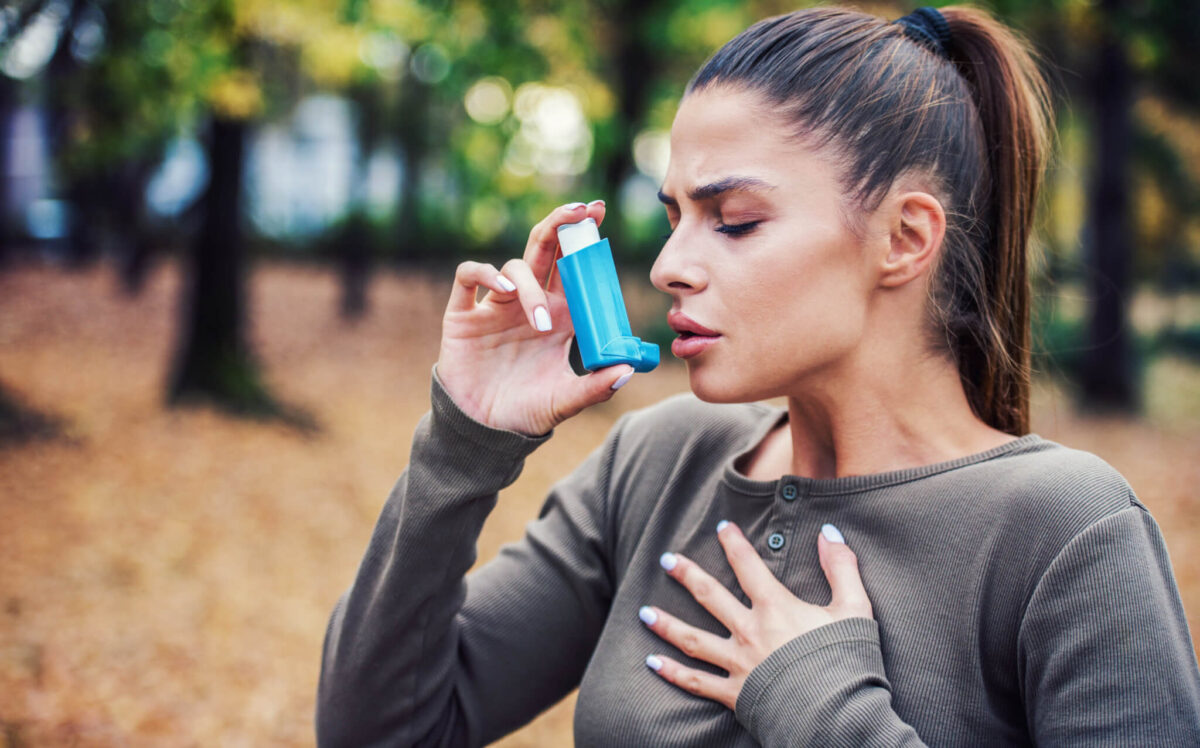
Millions of people with asthma and COPD carry a rescue inhaler in a pocket or purse, puffing on it whenever breathing gets hard. It feels harmless, almost like reaching for an aspirin. But a large new study out of Belgium suggests that leaning on these quick-relief inhalers too often may be a warning sign: heavier use was linked to a higher risk of heart problems and death.
Researchers tracked more than 283,000 patients with asthma or COPD over several years and found that those who used more rescue inhaler canisters were more likely to develop heart failure, irregular heartbeats, and other cardiovascular problems, and were more likely to die during the study period, than patients who used little or none. Risk climbed the most for people using a combination inhaler that mixes two types of short-acting rescue drugs, and for those using three or more canisters of a plain rescue inhaler in a single year.
Growing evidence in respiratory medicine has focused on rescue inhaler overuse. Doctors have long known that relying too heavily on these inhalers signals poorly controlled disease. This new work, published in the journal ERJ Open Research, raises a harder question: whether the inhalers might be actively contributing to heart harm, not just reflecting how sick someone already is.
How Researchers Tracked Rescue Inhaler Use
Scientists from Ghent University in Belgium, working with colleagues in the United Kingdom and the Netherlands, pulled health records from a nationwide Belgian database covering 2017 through 2021. They identified adults being treated long-term for either asthma or COPD, a lung disease often linked to smoking that makes breathing progressively harder.
Their final group included 226,314 people with asthma, whose average age was about 58, most of them women. It also included 57,446 people with COPD, whose average age was about 72, most of them men. That huge sample gives the findings weight, even though this kind of study cannot prove the inhalers directly caused the health problems.
Researchers counted how many “canisters,” a standard unit representing 200 doses, each patient picked up from the pharmacy in a year. Patients fell into three groups: those who picked up none, those who picked up one or two, and those who picked up three or more. From there, the team tracked who went on to have a heart attack, stroke, chest pain from reduced blood flow to the heart, an irregular heartbeat, heart failure, or who died from any cause.
Their calculations also accounted for age, sex, smoking history, income, history of flare-ups, other health conditions, and other medications. Those adjustments matter because sicker patients naturally use more rescue medication. They helped account for some of the differences between heavier and lighter inhaler users, though they cannot rule out other explanations for the higher risks, such as more severe underlying disease.
What the Rescue Inhaler Data Showed
Two types of rescue inhalers were part of the investigation. One is the classic rescue inhaler, a drug called a short-acting beta-agonist that relaxes tightened airway muscles. The other, called a short-acting muscarinic antagonist, opens airways through a different pathway in the body. Many patients, especially those with COPD, use a combination inhaler containing both.
Patients who used the muscarinic antagonist type, either alone or combined with the classic rescue inhaler, faced consistently higher risks. Heart failure risk climbed by roughly 20 to 40 percent, irregular heartbeat risk rose by about 10 to 40 percent, and death risk rose by 10 to 70 percent, depending on how much medication was used and which disease the patient had. Among asthma patients specifically, heavier use of the combination inhaler was also tied to higher rates of heart attack and stroke caused by blocked blood flow to the brain.
Results for the classic rescue inhaler alone took a more surprising turn. Patients who picked up just one or two canisters in a year actually had a slightly lower risk of death than patients who used none at all. That protective-looking pattern reversed once use climbed to three or more canisters a year, which was tied to a higher risk of death and heart failure in both asthma and COPD patients. Researchers suspect the low-use group may simply represent healthier patients with milder disease or better habits overall, rather than the inhaler itself protecting anyone.
Study authors used the shorthand SABD, for short-acting bronchodilators, to describe both rescue inhaler types together. They noted that in Belgium, “around 17% of asthma patients used ≥3 SABD canisters (SABD overuse) in the baseline period and 30% of COPD patients had SABD overuse,” showing that heavy reliance on rescue inhalers is not rare among the patients studied.
Harmful patterns were often stronger in patients who did not already have a diagnosed heart condition, a sign that the added risk was not limited to people who were already fragile.

Why Rescue Inhaler Overuse Matters for the Heart
Both beta-adrenergic and muscarinic receptors, the molecular docking points these drugs act on, exist not just in the lungs but in the heart and blood vessels too. That overlap gives a plausible biological reason why a medication meant to open airways might also nudge heart rhythm or blood flow in unwanted directions, something researchers have suspected for years but have had limited large-scale, real-world data to investigate across both asthma and COPD populations.
Study authors were direct about the takeaway, writing that their results “support the avoidance (or limited use) of SABD (especially SAMA and SABA+SAMA inhalers) within asthma and COPD patients.” They added that heavy use of these rescue inhalers “should be a trigger for healthcare providers to reassess disease management and closely monitor these patients.”
None of this means patients should panic or stop using prescribed rescue inhalers on their own. It does mean that going through three or more standard canisters in a year, each holding 200 doses, rather than simply using an inhaler three times, may be less of a harmless habit and more of a warning sign worth bringing to a doctor’s attention.
Disclaimer: This article summarizes findings from a single observational study and is for general informational purposes only. It is not medical advice. Observational research can show associations but cannot prove that rescue inhaler use directly causes heart problems or death, and the researchers noted that factors such as more severe underlying disease may help explain the results. No one should change, reduce, or stop using a prescribed inhaler based on this article. Anyone with questions about their asthma, COPD, or inhaler use should speak with a qualified healthcare provider.
Paper Notes
Limitations
Study authors acknowledged several limitations. Because the research relied on health insurance and hospital discharge records rather than direct clinical diagnoses, some patients may have been misclassified or coding errors may have occurred. Asthma and COPD status were identified through hospital diagnosis codes and medication patterns, which may have missed milder cases. Researchers noted that trends held up when they re-ran the analysis using stricter diagnostic criteria, which supports the reliability of the main findings.
Pharmacy records also showed only what was dispensed, not proof that patients actually took the medication as directed, and free samples from doctors would not have been captured. Emergency room visits that did not lead to hospitalization or a medical procedure may have been missed entirely, since Belgium does not require those visits to be logged with diagnostic codes. Researchers also could not separate deaths caused specifically by cardiovascular problems from deaths due to other causes, since the reason for death was not available. Finally, the authors noted that despite adjusting for many factors, some unmeasured influences, such as body weight, smoking intensity, or lung function test results, could not be fully ruled out as contributors to the patterns observed.
Funding and Disclosures
Funding was listed as “Not applicable.” Regarding competing interests, one author, Lies Lahousse, disclosed serving as a consultant for AstraZeneca, GlaxoSmithKline, and Sanofi; receiving travel support from AstraZeneca and Menarini; and giving paid lectures sponsored by several organizations, all paid to her institution and described as outside the scope of the manuscript. Another author, Chloe Bloom, disclosed receiving grants from NIHR, ALUK, ERS, and AstraZeneca, and consulting for AstraZeneca. All other authors reported no competing interests.
Publication Details
Paper Title: “Cardiovascular effects and mortality of short-acting bronchodilators in asthma and COPD”
Authors: Frauke Van Vaerenbergh, Delphine Vauterin, Chloe Bloom, Lies Lahousse Affiliations: Department of Bioanalysis, Faculty of Pharmaceutical Sciences, Ghent University, Ghent, Belgium; National Heart and Lung Institute, Imperial College London, London, UK; Department of Epidemiology, Erasmus Medical Center, Rotterdam, the Netherlands
Journal: ERJ Open Research (Early View, published ahead of copyediting)
DOI: 10.1183/23120541.00462-2026
Corresponding Author: Lies Lahousse, [email protected]


